


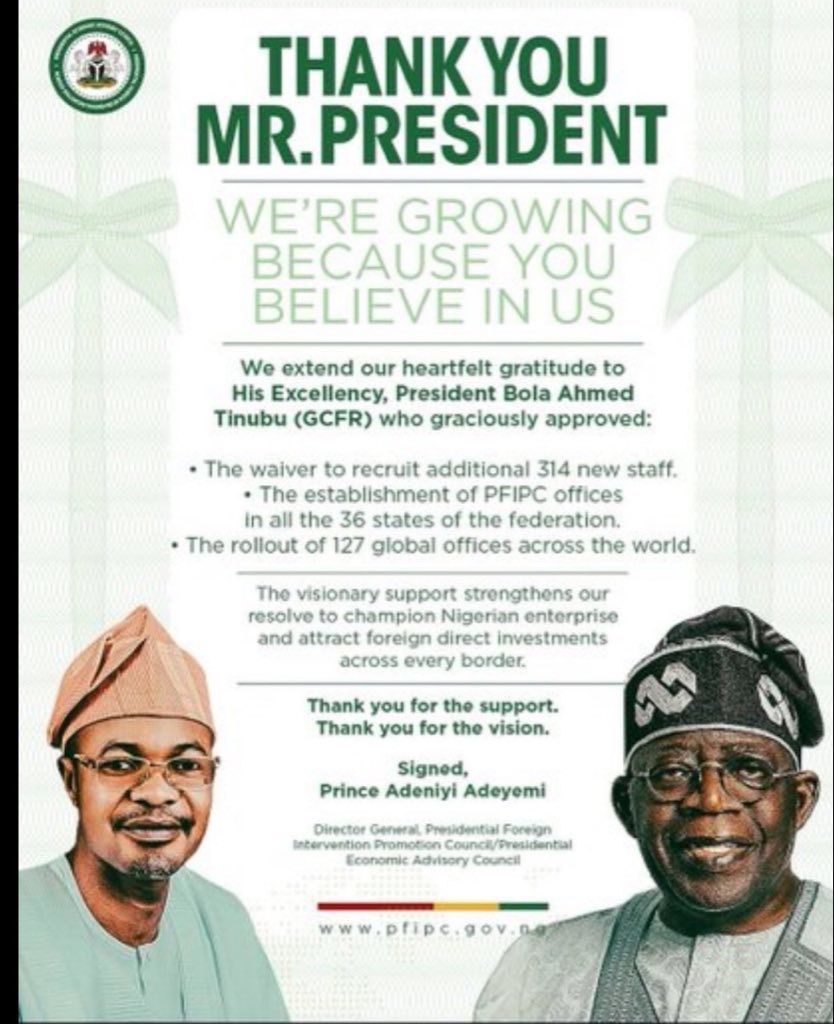
There are two kinds of stories that begin with a Nigerian prince.
The first is the familiar one: the email promising millions of dollars trapped in a foreign account if only you would kindly provide your bank details and a modest processing fee. It is the joke that has followed Nigeria around the world for decades. The famous “419” scam. The punchline writes itself.
The second kind is far less amusing. It is the story of governance failure.
Recent events surrounding the alleged creation of a phantom presidential council have all the ingredients of a classic Nigerian prince tale. Yet the disturbing aspect is not the alleged conduct of the individual at the centre of the controversy. It is the possibility that the machinery of government may have been so porous that a supposedly non-existent government institution somehow acquired an official life of its own.
If that is indeed what happened, then Nigerians should be worried.
The Nigerian Tradition of Paper Government
Nigeria has long suffered from a peculiar relationship with official documentation.
Banks have been known to advance loans to state governments without clear evidence of legislative approval. Yet under constitutional and statutory frameworks, borrowing by a state government is not supposed to be the private decision of a governor. Legislative authorisation is a fundamental requirement. Without it, difficult questions arise about the legality of the transaction and the accountability of everyone involved.
The principle is simple. Government authority is derived from law, not from assumptions, personal relationships or political convenience.
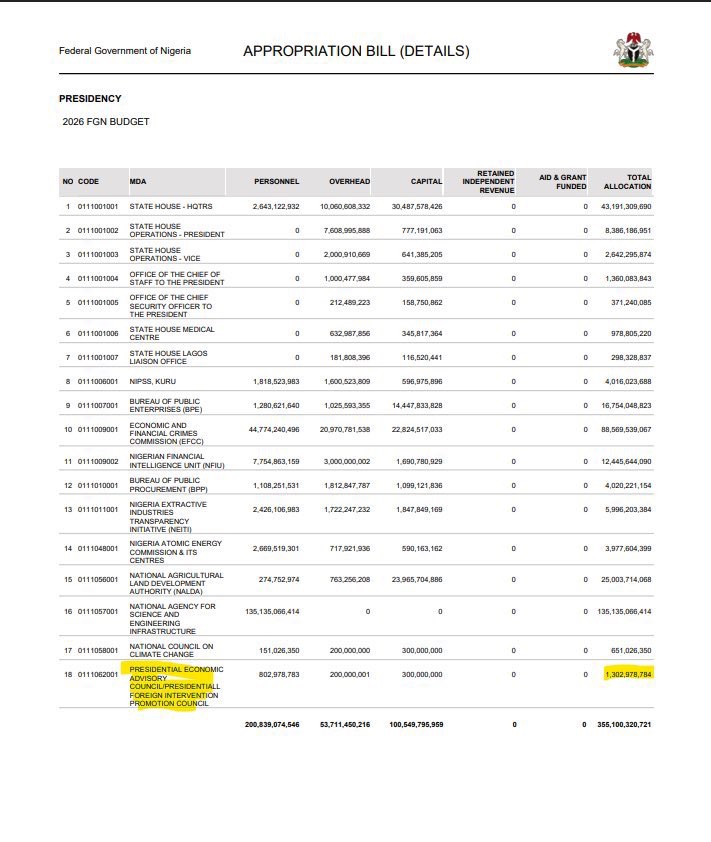
That is why the emergence of a presidential council complete with a line-item allocation in the 2026 Appropriation Act raises questions that cannot simply be brushed aside by a press statement.
According to the Presidency, the council never existed.
If so, how did it find its way into the national budget?
The Billion-Naira Magic Trick
The statement issued by Presidential spokesman Bayo Onanuga appears designed to defend the Chief of Staff to the President, Femi Gbajabiamila, and to distance the Presidency from the activities of Prince Adeyemi.
Instead, it has generated even more questions.
Let us assume, for the sake of argument, that every allegation against Prince Adeyemi is true.
Even on that assumption, the Presidency’s explanation remains deeply unsatisfactory.
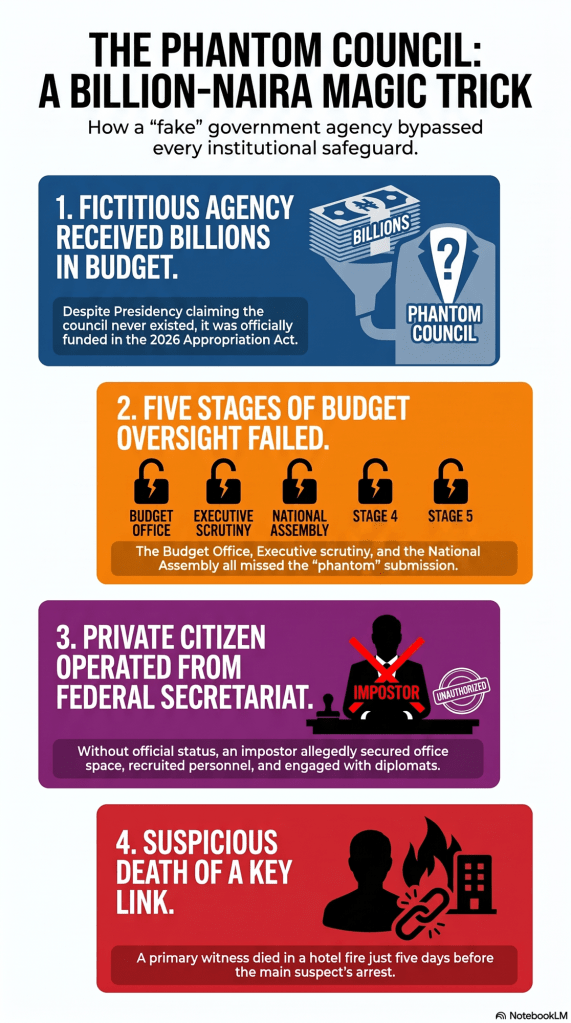
Nigerians are effectively being asked to believe that one private citizen woke up one morning and somehow managed to:
- Create a presidential council.
- Forge an appointment.
- Operate from office space within the Federal Secretariat.
- Recruit personnel.
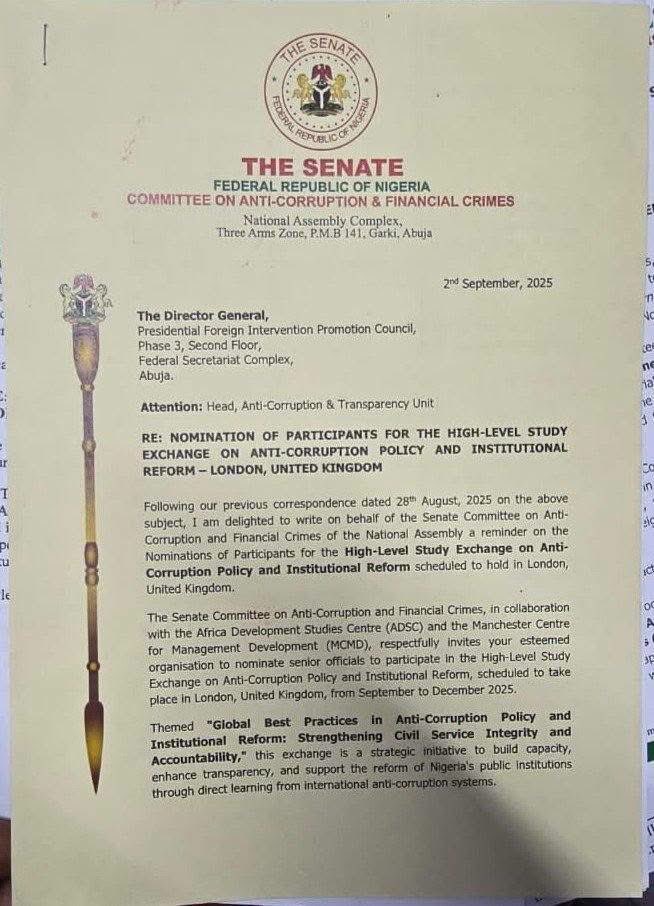
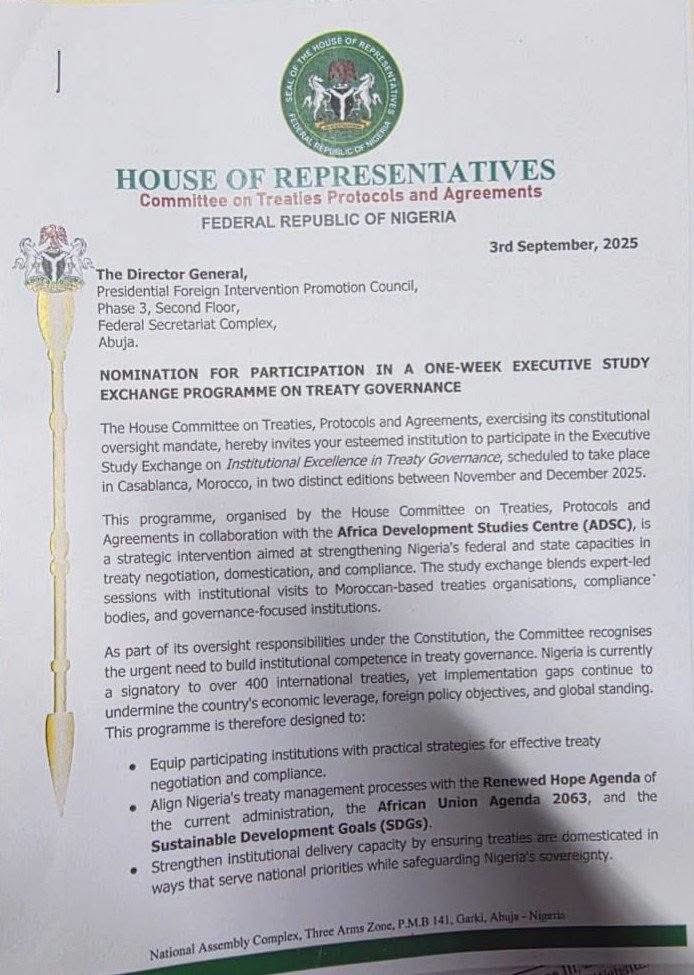
- Conduct official correspondence.
- Interact with government agencies.
- Engage diplomats and public officials.
- Allegedly secure official banking arrangements.
- And somehow see this supposedly non-existent institution receive a budgetary allocation running into billions of naira.
That is not merely a story about an alleged fraudster.
That is a story about the collapse of institutional safeguards.
Either government systems were astonishingly easy to deceive, or there are significant aspects of this story that remain unexplained.
There is no comfortable middle ground.
The Budget Question Nobody Wants to Answer
The most glaring omission in the Presidency’s statement concerns the budget itself.
The silence is deafening.
Appropriation bills do not descend from heaven on stone tablets.
Budget allocations pass through multiple stages:
- Ministries and agencies prepare submissions.
- The Budget Office reviews them.
- Executive officials scrutinise them.
- The President transmits the budget.
- The National Assembly examines and approves it.
Every stage leaves a documentary trail.
If the council was fictitious, who introduced the budget line?
Who processed it?
Who approved it?
Who signed off on it?
Who failed to ask whether the agency existed?
Most importantly, why has nobody been held accountable?
These are not political questions.
They are governance questions.
The Office That Should Not Have Existed
Then there is the matter of the Federal Secretariat office allegedly occupied by the council.
Government offices are not roadside kiosks.
They do not simply materialise because someone prints a letterhead.
Office allocations involve procedures, approvals, documentation and administrative oversight.
If the council never existed:
- Who allocated the space?
- Under whose authority?
- How long was it occupied?
- Which public officials interacted with its occupants?
- Who ignored obvious red flags?
Again, the Presidency offers little explanation.
The absence of answers only deepens public suspicion.
The Curious Death of a Key Figure
The statement also revealed a remarkable detail.
The individual allegedly identified as the link between Adeyemi and the purported appointment, Dolapo Babatunde Tanimola, reportedly died in a hotel fire just five days before Adeyemi’s arrest.
That is an extraordinary fact.
Yet the public has been given almost no information beyond the bare assertion.
Naturally, questions arise:
- Was an autopsy conducted?
- Was there a coroner’s inquest?
- What caused the fire?
- Were electronic devices recovered and examined?
- Were financial records analysed?
- Were communications reviewed?
These are not conspiracy theories.
They are the ordinary questions any competent investigator would ask when a potentially important witness dies shortly before a major arrest.
The public should not be criticised for asking them.
Accountability Is Not a One-Man Affair
The Presidency appears determined to frame this as the story of a single impostor.
The courts will determine whether that characterisation is correct.
However, accountability cannot begin and end with the prosecution of one individual.
Government institutions themselves must be subject to scrutiny.
If the council was fake, explain how it entered the budget.
If the appointment was forged, explain how it survived contact with multiple government institutions.
If official channels were deceived, identify where safeguards failed.
If there was no insider involvement, produce the documentary evidence showing exactly how the deception occurred.
Public confidence is restored through transparency, not through carefully crafted statements.
Where Is the National Assembly?
Perhaps the most disappointing aspect of this affair is the silence of the National Assembly.
The same legislature that passed the Appropriation Act containing the disputed budget line has shown little enthusiasm for investigating how it got there.
One would have expected immediate hearings.
Committee summons.
Requests for documentation.
Public examination of the budgeting process.
Instead, there is silence.
This is unfortunate because the issue transcends partisan politics.
The integrity of the appropriations process lies at the heart of constitutional governance.
If a non-existent agency can allegedly secure budgetary allocations without attracting scrutiny, then every future appropriation deserves closer examination.
The Real Scandal
The real scandal may not ultimately be whether a Nigerian prince impersonated a government official.
The real scandal may be that government systems appear incapable of explaining how such an impersonation could have succeeded for so long.
A functioning state should be able to tell the public precisely how an institution came into existence, how it was funded, who authorised its activities and who supervised it.
Instead, Nigerians have been offered a press statement that answers some questions while creating many more.
The Presidency may believe the matter is settled.
The public is entitled to disagree.
Until there are answers supported by documents, timelines and verifiable evidence, this story remains unfinished.
And if a phantom council can somehow find its way into the national budget, perhaps the old Nigerian prince email was not entirely fiction after all. It was merely waiting to be upgraded from cyberspace into government.


What? I’m not getting my free money 🙂 good post.
LikeLiked by 1 person
😂😂😂😂
LikeLiked by 1 person