

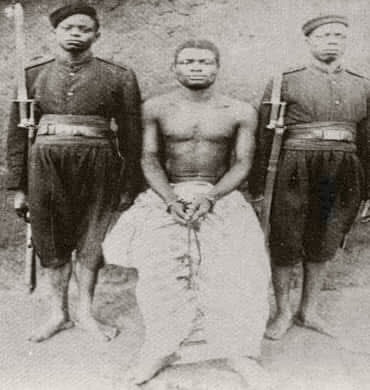
colonial police officers
Chief Ologbosere (Ologboshere): His personal birth name was Irabor.
“Ologbosere” was a high-ranking military title first created by Oba Akenzua I in the early 18th century. As the second-in-command of the entire Benin military, he is historically referred to as General Ologbose Irabor or simply Chief Irabor.
The British Empire loved many things: afternoon tea, aggressive cartography, and impeccable punctuality. So, it is entirely on-brand that when they decided to execute General Chief Irabor, the Ologbosere, a legendary war chief of the Benin Kingdom, they did it precisely at 8:00 a.m. on June 28, 1899.
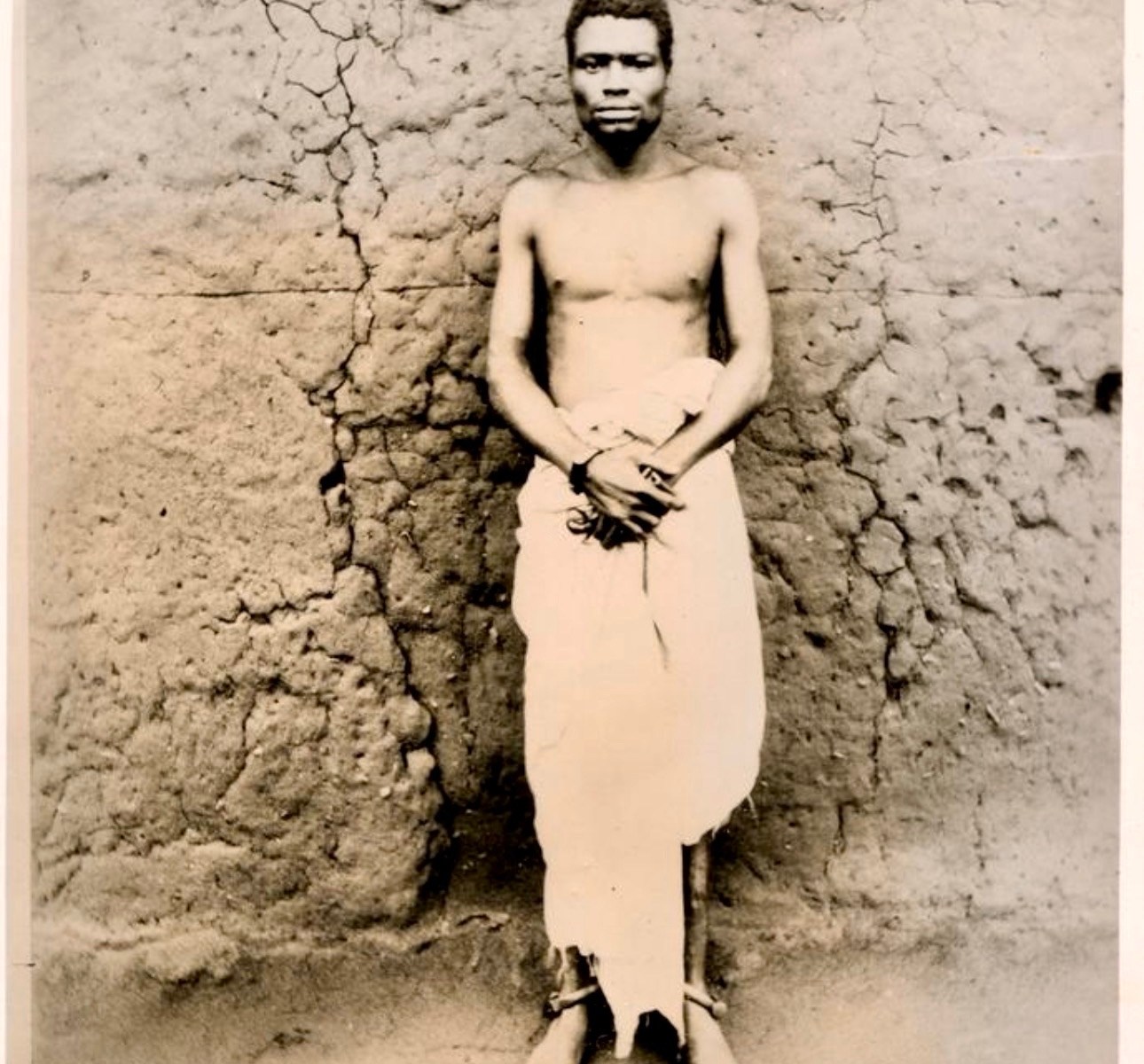
If you look at the famous photograph captured just moments before his hanging, you don’t see a broken man. You see a man who spent the last two years giving the world’s most powerful empire a severe, stress-induced migraine.
Here is the story of a man who refused to read the British script.
The “Insolence” of Self-Defense
To understand why the British were so eager to get the Ologbosere to the gallows by breakfast time, we have to look back to 1897.
Acting Consul-General James Phillips decided he was going to visit Benin City. The Oba (king) politely asked him to wait because a sacred religious festival was happening. Phillips, possessing the classic Victorian trait of ignoring local boundaries, decided to come anyway.
The Ologbosere and his fellow chiefs decided that if the British wouldn’t respect a “No Trespassing” sign, they would respect an ambush. Phillips and most of his expeditionary force were wiped out.
The British were utterly shocked. How dare these people defend their sovereign nation from an uninvited foreign military procession? The Empire immediately launched a “Punitive Expedition,” which is just a fancy 19th-century term for “we are going to steal your art, burn your city, and call it civilization.”
Two Years of Rainforest Hide-and-Seek
While the British managed to capture Benin City and exile the Oba, they couldn’t capture the Ologbosere.
For two straight years, the chief waged a relentless guerrilla war from the dense rainforests. While British soldiers were sweating through their heavy wool uniforms and complaining about the mosquitoes, Ologbosere and his fighters were running circles around them.
- The British Perspective: He was a “treacherous, bloodthirsty barbarian” who refused to accept the glorious benefits of being conquered.
- The Edo Perspective: He was a brilliant military strategist, a protector, and the ultimate symbol of resistance.
It took the British two years, an immense amount of resources, and a few local informants to finally capture him in May 1899.
The Trial and the Final Photo
When the Ologbosere was put on trial, the verdict was a foregone conclusion. The British staged a trial to give their vengeance a coat of legal paint. Throughout it all, the Ologbosere maintained his dignity, stating that he acted only under the traditional laws of his kingdom to protect his land.
Then came the photograph.
Captured just moments before his execution, the image is a stark study in contrasts. You see the British officers, looking smugly bureaucratic, and you see the Ologbosere. Even in chains, his posture is defiant. He isn’t looking at the camera with fear; he’s looking through it.
History is Written by the Victors (Until Now)
The British colonial records wrote the Ologbosere off as a villain. But history has a funny way of correcting the record when the ink dries.
Today, he isn’t remembered as a “barbarian” but as a fierce patriot who looked the largest empire in human history in the eye and said, “Not without a fight.” So, while the British kept time at 8:00 a.m. on that June morning, Chief Irabor the Ologbosere is the one who stood the test of time.

