

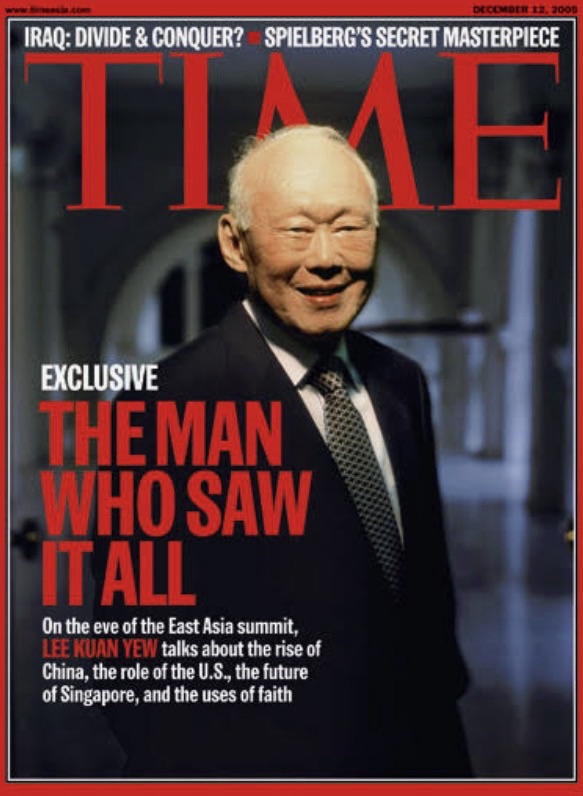
The question is a favourite among Nigerian intellectuals who enjoy comparing our sprawling, oil-soaked federal experiment with Singapore’s tidy city-state miracle. It is usually asked with a mixture of envy and self-flagellation, as if the late Lee Kuan Yew were some portable management consultant who could have been airdropped into Lagos in 1960 and promptly turned the place into a tropical Zurich.
Singapore in 1965 was a swampy, multi-ethnic entrepôt with no natural resources, a hostile neighbourhood, and a population small enough to fit inside one of Nigeria’s larger local government areas. Lee inherited a British administrative skeleton, a strategic port, and a population that, while diverse, could still be corralled into a single national project with a firm hand and a clear economic logic. He built a high-functioning bureaucracy, paid civil servants well enough to make corruption a career-ending risk rather than a lifestyle, insisted on merit over connections, and treated the state as an instrument for long-term wealth creation rather than a prize to be looted every four years.
Nigeria, by contrast, is not a city-state. It is a continental-scale federation of fiercely competitive ethnic blocs, religious fault lines, and resource rents that flow through a central pipeline designed for patronage. The British left behind not a lean administrative machine but a complex, multi-layered apparatus already infected with the habits of indirect rule and regional bargaining. Independence arrived with oil waiting in the wings. Once the petrodollars started flowing, the incentives flipped: why build institutions that constrain power when power itself is the shortest route to personal prosperity?
Imagine Lee Kuan Yew arriving in 1960s Nigeria and attempting the same playbook. First, the size problem. Singapore could be managed by a small, cohesive elite who met regularly and shared a rough consensus on what progress meant. Nigeria’s political class has never enjoyed that luxury. Any serious attempt to impose meritocracy would immediately collide with the arithmetic of federal character, zoning, and the iron law that every major appointment must satisfy competing regional claims. Lee’s famous intolerance for mediocrity would have been interpreted as ethnic bias before the ink on the first civil service reform dried.
Then there is corruption. Lee’s anti-corruption drive worked because the state was small, the elite was limited, and the costs of being caught were personal and immediate. In Nigeria the same drive would have required confronting not a handful of wayward officials but an entire political economy built on the redistribution of oil rents. The godfathers, the contractors, the security vote entrepreneurs, the party financiers who treat public office as collateral: these are not bugs in the system. They are the operating system. A leader who tried to shut it down would discover that the system has many more lives than any single reformer.
Lee was also fortunate in timing and scale. He could experiment with industrial policy, public housing, and education because the population was manageable and the external environment, while dangerous, did not include the full-blown resource curse. Nigeria’s oil wealth created the opposite incentive: the state became a prize rather than a platform. Successive leaders discovered that it was easier to manage scarcity of opportunity than abundance of rent. The result is a political culture in which competence is often less valuable than access, and long-term planning is routinely sacrificed to the next election cycle or the next oil boom.
None of this is to romanticise Singapore. Lee’s methods included detention without trial, tight control of the press, and a social engineering project that many found oppressive. The point is not moral superiority. It is that the conditions that allowed those methods to produce rapid development simply do not exist in Nigeria. A firm hand in Singapore could focus on results because the underlying political settlement was relatively coherent. A firm hand in Nigeria quickly becomes another factional weapon in a zero-sum contest over who gets to control the centre.
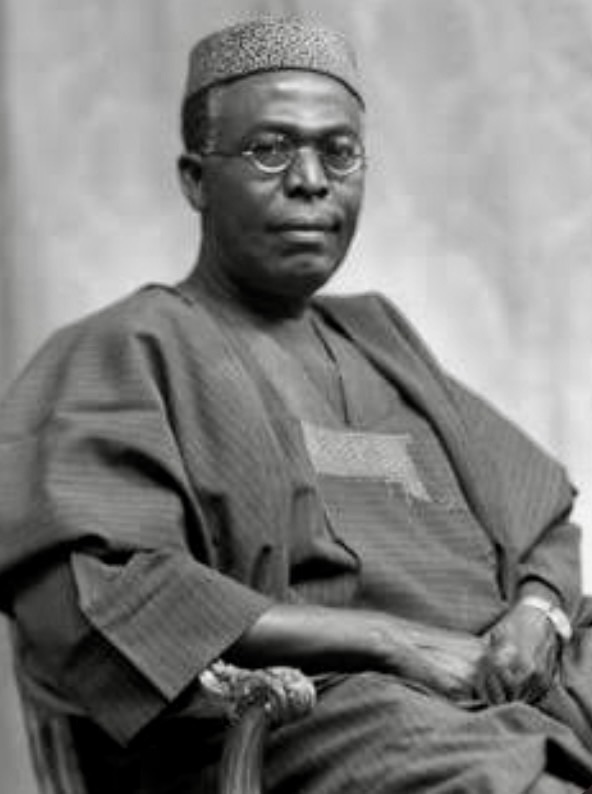
Yet the question has a sharper Nigerian twist. Was Obafemi Awolowo not already Lee Kuan Yew to the Western Region?
In the Western Region between 1954 and 1959, Awolowo ran one of the most purposeful developmental administrations postcolonial Africa had yet seen. Free universal primary education from 1955 produced an enrolment explosion that turned hundreds of thousands of children into the first mass-educated generation in the region. Free healthcare for children, farm settlements, industrial estates, road networks, Cocoa House, and Africa’s first television station followed. Education routinely took the largest single share of the regional budget. The Action Group’s slogan of “Life More Abundant” was not empty rhetoric. It was policy executed with discipline, fiscal seriousness, and a clear theory of human capital as the foundation of progress.
In that limited theatre, Awolowo was indeed a regional Lee Kuan Yew: pragmatic, results-oriented, intolerant of waste, and willing to spend political capital on long-term capacity rather than short-term patronage. The Western Region under him looked like a place that knew what it was trying to become.
Then he left.
In 1959 Awolowo resigned the Premiership to contest the federal elections. The calculation was straightforward and, in its own way, logical. The leader of a national party belonged at the centre. The Action Group failed to form a government. Awolowo became Leader of the Opposition. Chief S.L. Akintola took over the regional government. The subsequent split inside the Action Group, the 1962 crisis, the declaration of a state of emergency, the Coker Commission, the treason trial, and Awolowo’s imprisonment followed in grim sequence. The Western Region, once the showcase of purposeful governance, became the most visible theatre of the First Republic’s disintegration.
Would staying put have prevented that cascade? Possibly the Western crisis itself. Continuity of leadership and party discipline might have postponed or softened the intra-Yoruba rupture that handed the federal government a perfect pretext for intervention. A still-functioning Western Region under Awolowo would have remained a living demonstration that competent, progressive regional government was possible. That demonstration might have complicated the narrative of national failure that later justified military intervention.
It would not, however, have abolished the deeper structural problems. The 1959 federal election had already confirmed the numerical dominance of the Northern People’s Congress. Census disputes, electoral malpractice, the balance of power between regions, and the growing politicisation of the officer corps were national phenomena. The Western crisis was a powerful accelerant and a convenient symbol, but it was not the sole rationale for the January 1966 coup. Corruption, the breakdown of constitutional politics, and the perception that the civilian order had lost legitimacy were broader.
As for the claim that some of the plotters intended to hand power to Awolowo: the historical record is contested rather than conclusive. Certain participants, including Adewale Ademoyega and later testimonies associated with Nzeogwu, stated that the plan included releasing Awolowo from Calabar prison and installing him as a provisional civilian leader because of his integrity and developmental credentials. Other accounts note that when the coup appeared to be succeeding in Lagos, no serious effort was made to free him, that key plotters had different personal and ethnic networks, and that the operation quickly collapsed into something far messier than any clean handover. The aspiration existed in some minds. Whether it was operational doctrine or retrospective rationalisation remains disputed among those who actually lived the events.
The deeper point is this. Awolowo’s regional record proves that Nigerian political talent was capable of Singapore-style seriousness when the scale was manageable, the resources were controllable, and the political settlement inside the region was relatively coherent. The federal stage offered none of those conditions. Moving to the centre was not a personal vanity project; it was an attempt to scale a successful model. The attempt collided with the arithmetic of population, the logic of regional bargaining, and the absence of a national consensus on what the Nigerian state was for.
Lee Kuan Yew never had to solve that problem. His stage was small enough, and the external threats urgent enough, that a cohesive elite could impose a single developmental project. Awolowo’s Western Region offered a comparable laboratory. Nigeria as a whole did not. Remaining Premier might have preserved a high-performing region and delayed the particular pathway to the 1966 coup. It would not have rewritten the fundamental mismatch between regional success stories and the national political settlement that still haunts the country.
The parallel is real. The counterfactual is tempting. Neither is quite as simple as the original question implies. Singapore’s miracle rested on conditions Nigeria has never possessed at the federal level. The Western Region under Awolowo showed that those conditions could exist, at least for a time, inside one part of the federation. The tragedy is that the country has spent the decades since trying to solve a national problem with tools that only ever worked at regional scale.

