

The Woman Who Watched the Barracks
Ruth First did not write The Barrel of a Gun from a comfortable distance. She wrote it as a South African communist and anti-apartheid organiser who understood, with the intimacy of the hunted, exactly what state power looks like when it stops pretending to answer to anyone. First was assassinated by South Africa’s Special Branch in 1982, a letter bomb sent by people who had read her work closely enough to know it was dangerous. Published in 1970 and now returned to print with a new foreword, the book remains a study of coups d’état in post-colonial Africa, built on detailed case work in Nigeria, Sudan and Ghana, with excursions into Algeria and Egypt. Her thesis was blunt: the coup is not a mechanical event to be understood through tank manoeuvres and radio station seizures. It is a diagnosis. When the army walks into the presidential villa, it is usually because the civilian order left the door open, the treasury empty and the population unconvinced that anything of value was being defended.
First was careful to say she was not writing a manual on how armies work. She was writing about how power fails, and about the “general theory of power for newly independent states” that might explain why so many of them proved so vulnerable to men with guns. It is a diagnosis rather than a eulogy, and she made no secret of her own stake in the outcome. She called herself an African and said there was no cause she held dearer, which is precisely why her judgements on the continent’s post-independence leadership landed as hard as they did. Friendly fire, delivered with footnotes.
The Symptoms She Catalogued
The genius of the book, and the reason it refuses to date, is that First refused to treat each coup as a discrete national embarrassment. She went looking for the shared pathology: a state apparatus inherited wholesale from the colonial power, dressed in new flags but running on the same extractive logic, presiding over populations who had swapped one set of unaccountable rulers for another. Add an economy that could not deliver, a political class that treated the ballot as an inconvenience once in office, and an army that had been trained, equipped and flattered into believing itself the only functioning institution left standing, and the coup stops looking like an aberration. It starts looking like the default setting.
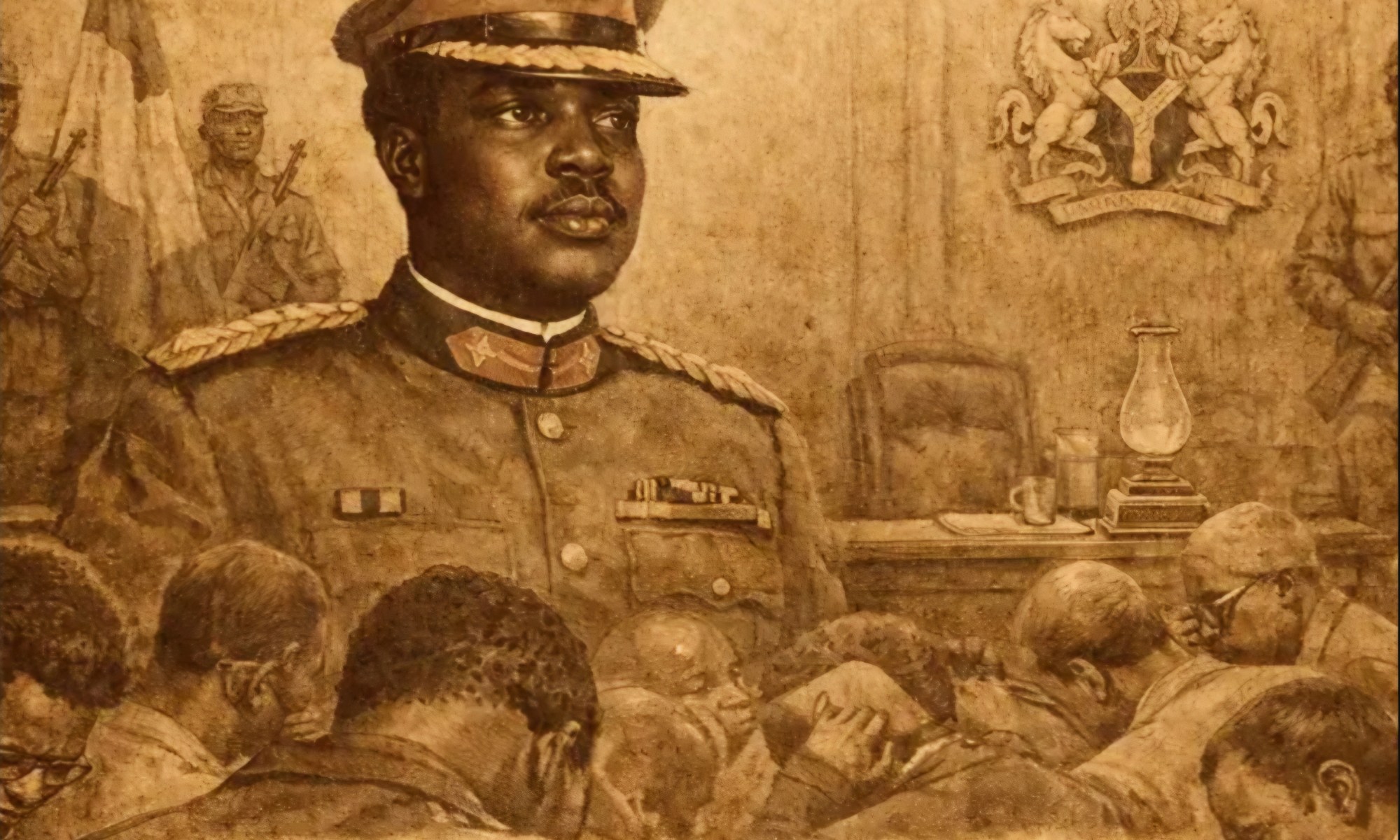
Nigeria, inevitably, features heavily, and any Nigerian reader arriving at this book already knows how the story does not end well. First was writing before the full catalogue of Nigerian military interventions had even been assembled, and yet the mechanics she identified in 1966 read like a template that subsequent decades filled in obediently. The pattern she traced in Lagos, Khartoum and Accra was less about the individual colonels than about the vacuum they were stepping into, a vacuum manufactured by civilian governments who mistook incumbency for legitimacy.
Africa, Still Auditioning for the Same Role
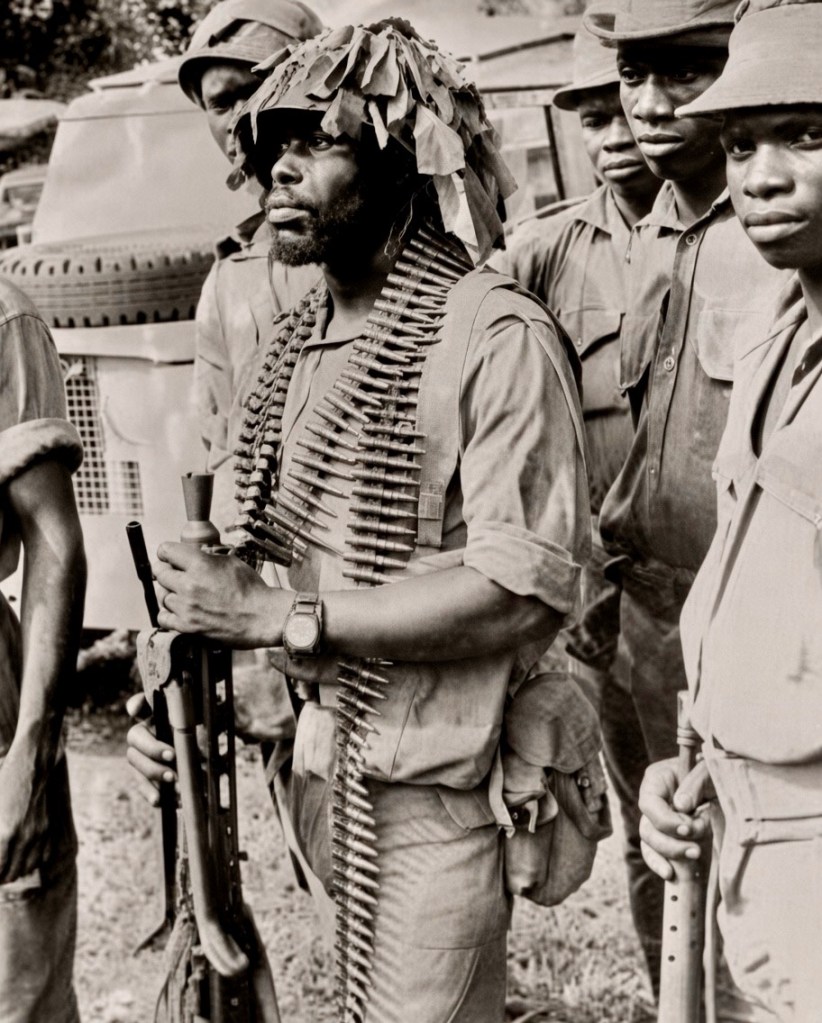
Here is where the book stops being history and starts being current affairs with a fifty-year head start. Between 2020 and 2023, the continent obliged First’s thesis with almost embarrassing enthusiasm. Mali fell twice, in 2020 and 2021. Chad, Guinea and Sudan went in 2021. Burkina Faso managed the feat twice in a single year, 2022, as one colonel deposed another before either had finished redecorating the presidential office. Niger followed in July 2023, and Gabon closed out the run that August, unseating a Bongo family dynasty that had treated the state as inherited furniture. Two of the coup leaders, Chad’s Mahamat Idriss Déby and Gabon’s Brice Clotaire Oligui Nguema, have since staged disputed elections to launder their rule into something resembling legitimacy, and Gabon’s Nguema formally assumed the presidency in 2025 after winning nearly ninety per cent of a vote held under constitutional changes he had a hand in writing himself, which is the sort of landslide that should make any credible democrat suspicious rather than reassured.
The junta belt now has a name, the Alliance of Sahel States, formed by Mali, Burkina Faso and Niger after all three walked out of ECOWAS, and the alliance has drifted from Western partners toward Russia, trading the language of sovereignty for the reality of a new patron. First would not have found this development remotely surprising. She wrote at length about foreign powers probing the weak points of fragile states, about agents and counter-insurgency teams working the margins where local politics runs thin, and about how what looks like an internal military drama is frequently a proxy contest wearing a beret. Swap Cold War intelligence services for a multipolar cast including Moscow, and the choreography barely changes.
What has changed, and what First could not quite have anticipated, is the crowd’s mood. Many of the recent coups have received genuine backing from citizens, not because populations have developed a taste for military rule but because elected governments kept failing to deliver freedom, security or development, and disputed elections and quietly amended term limits did the rest of the persuading. The soldiers did not seize power so much as get handed the keys by governments that had already lost the argument. That, too, is pure First: the coup as symptom of a civilian failure that arrived first and announced itself loudly, if anyone had cared to listen.
The most damning update to her thesis is the one about promises. Burkina Faso’s Ibrahim Traoré pledged to restore civilian government by July 2024, then extended the transition by another five years and declared himself eligible to contest the elections whose date he keeps moving. Transitional governments, in First’s telling and in the present tense, tend to discover that transitions are optional and thrones are not.
Curtain Call
The Barrel of a Gun endures because it was never really about guns. It was about the hollow state that makes the gun necessary, and about how easily a population’s patience gets mistaken for consent. Read today, alongside a Sahel that has rebranded its juntas as an alliance and a Gabon that dressed its coup leader in a landslide, the book stops being an archive of the 1960s and starts reading like a coroner’s report someone forgot to update the dates on. Ruth First would likely have found this less vindicating than exhausting. She did not want to be right about Africa’s vulnerability to the barracks. She simply was, and the continent has spent five decades proving it at intervals that no longer even qualify as surprising.

