


There is a new genre of justice in town: the frequent-flyer prosecution. The alleged crime is committed in Nigeria, the money stretches its legs in London, the properties develop British accents, and the defendant eventually appears before a judge who has never queued at the Nigerian Immigration Service. Welcome to the age of transnational corruption prosecutions, where sovereignty is respected in theory and quietly ignored in practice.
Two current cases illustrate this beautifully:
Diezani Alison-Madueke v. The United Kingdom, and Federal Republic of Nigeria v. Chief Mike Ozekhome, SAN.
They sit at opposite ends of the same legal pipeline: one prosecuted abroad because Nigeria would not (or could not), the other prosecuted at home because the alleged conduct crossed borders and dared Nigerian law to follow it.
Diezani at Southwark: When London Becomes Nigeria’s Anti-Corruption Court
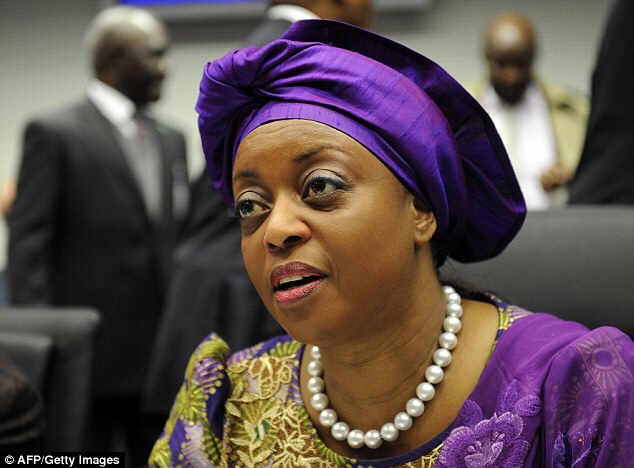
Diezani Alison-Madueke, former Minister of Petroleum Resources (2010–2015) and the first female President of OPEC, is currently standing trial at Southwark Crown Court. The allegations are familiar enough to make Nigerians yawn but novel enough to interest the British:
Six counts of bribery, including conspiracy. Alleged receipt of at least £100,000 in cash and luxury benefits. The quid pro quo: award of multi-million-pound oil and gas contracts.
The prosecution is being driven not by the EFCC, not by any Nigerian agency, but by the UK National Crime Agency (NCA)—a body that has discovered that Nigerian corruption often prefers English real estate, English banks, and English solicitors.
She was arrested in October 2015, formally charged in August 2023, and her full trial only commenced in January 2026. In Nigerian time, this is a brisk proceeding. In British time, it raises eyebrows. In human time, it answers the eternal question: how long can justice jog before it collapses from exhaustion?
Yet the symbolism matters. A former Nigerian oil minister is being tried not in Abuja or Lagos, but in London, because the proceeds of the alleged crime passed through UK jurisdiction. That single fact unlocked British courts.
This is transnational prosecution in its purest form:
Follow the money, and the law will eventually follow too—sometimes with a British passport.
Jurisdiction: The Real Defendant in Transnational Cases
What these cases are really about is jurisdiction—the most underappreciated and most decisive concept in criminal law.
The UK asserts jurisdiction because:
The alleged bribes were received or laundered through the UK. UK financial systems and property markets were allegedly used as repositories of illicit gains.
Nigeria asserts jurisdiction (in theory) because:
The alleged abuse of office occurred while the accused held Nigerian public office. Nigerian statutes criminalise corruption regardless of where the benefit is ultimately enjoyed.
Where Nigeria often hesitates, the UK proceeds. Not out of moral superiority, but out of self-interest: dirty money destabilises financial systems, and London has had enough of being the world’s most polite washing machine.
The Ozekhome Case: When Nigeria Tries to Grow Its Own Long Arm
Against this backdrop sits Federal Republic of Nigeria v. Chief Mike Ozekhome, SAN, a case that tests whether Nigerian criminal law can stretch beyond its borders without tearing.
The charges are precise, technical, and unapologetically extraterritorial:
Count 1: Corrupt receipt of property at 79 Randall Avenue, London NW2 7SX, allegedly as a gift—contrary to Section 13, punishable under Section 24 of the Corrupt Practices and Other Related Offences Act, 2000.
Count 2: Making a false document—specifically a Nigerian passport—in another man’s name, contrary to Sections 363 and 364 of the Penal Code (FCT).
Count 3: Dishonest use of that false passport as genuine, contrary to Section 366 of the same Code.
This prosecution, brought by the ICPC on behalf of the Attorney-General, rises or falls on two unforgiving pillars:
Jurisdiction – Can a Nigerian court validly try offences connected to property in London and documents allegedly used abroad? Proof – Not vibes, not reputation, not social media certainty, but evidence meeting criminal standards.
Unlike the Diezani case, Nigeria is not outsourcing moral courage to the UK. It is attempting—awkwardly but necessarily—to assert that Nigerian law can chase alleged corruption across borders.
That effort alone is historically significant.
The Irony of Transnational Justice
There is a quiet irony running through both cases.
Nigeria relies on British courts to prosecute Nigerian corruption effectively. Nigerian courts are now being asked to behave like British courts, carefully analysing jurisdiction, evidentiary chains, and extraterritorial reach.
For decades, corruption enjoyed diplomatic immunity disguised as “complexity.” Now complexity has turned against it.
Broader Implications
For Nigeria
These cases expose the uncomfortable truth: accountability often arrives with a foreign accent. Until Nigerian institutions gain the credibility, speed, and independence to prosecute their own elites consistently, London, Paris, and New York will continue to do the honours.
For the UK
Britain is no longer pretending to be neutral ground. If illicit wealth lands on British soil, British courts will ask how it got there—and who sent it.
For Global Governance
Positions of international prestige—OPEC, multilateral boards, global finance—are no longer shields. They are now magnets for scrutiny.
Conclusion: The Law Now Travels Better Than the Accused
Transnational prosecutions mark a shift in the global legal order. Power still travels freely, money still crosses borders faster than conscience, but the law—slow, stubborn, and occasionally British—is learning to follow.
Whether in Southwark Crown Court or the High Court of the FCT, the message is the same:
You may escape jurisdiction for a while.
You may escape politics forever.
But eventually, the money will betray you—and the law will find a court willing to listen.
And that, perhaps, is progress.

