

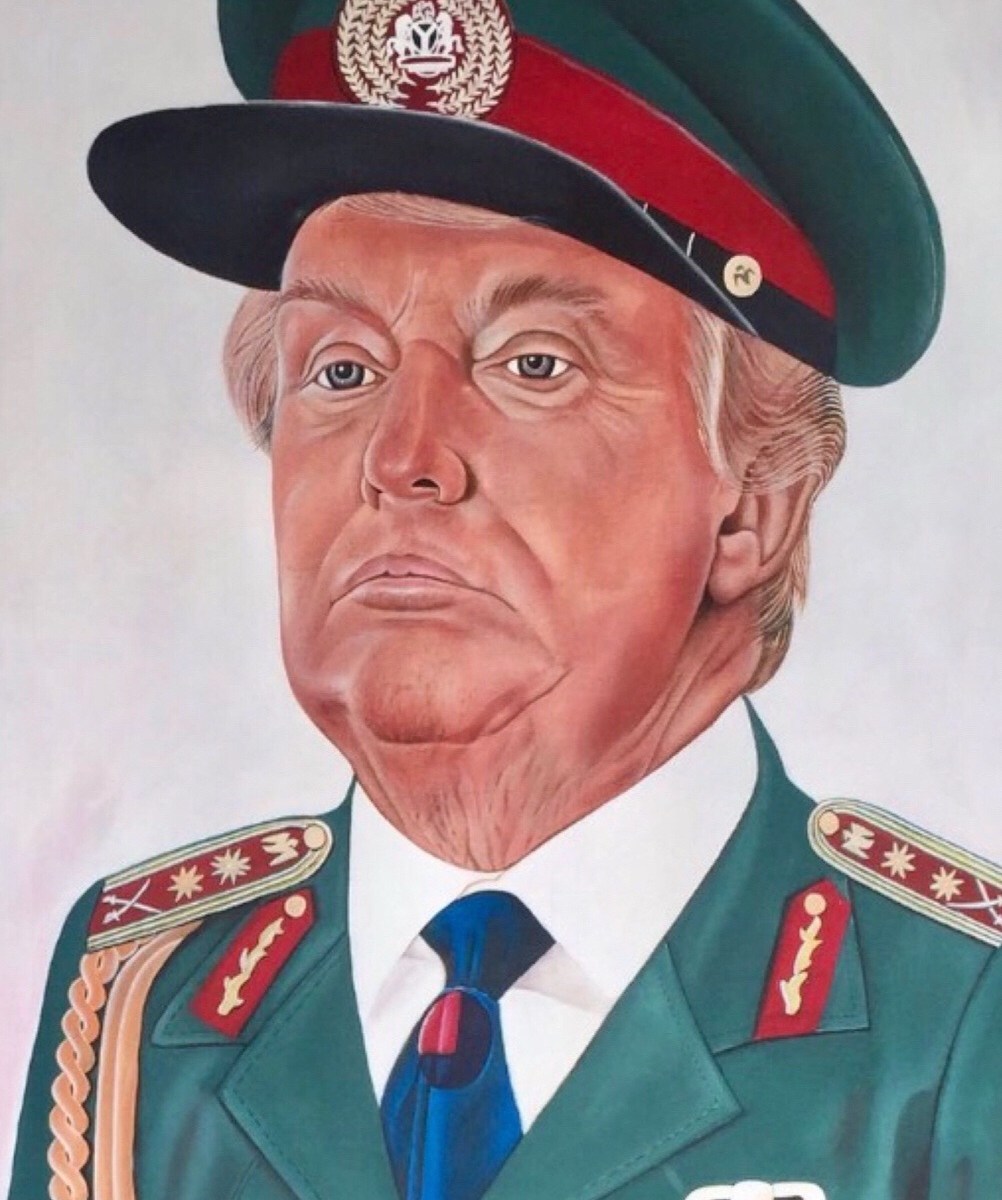
The transcription of Trump’s video clip on Nigeria:
“They know we recently struck Nigeria and largely ended the slaughter of great Christian populations.
They have a great Christian population that they were being butchered, butchered—thousands and thousands of people were being killed. Children, women, old people, just being slaughtered, hatched to death.
They know that if they go further, the attack will be far greater and that they don’t want to really get involved anymore so much, you know. Hit them very hard. We knocked out their leader, we knocked out their second leader and their third leader. Sounds a little bit like Iran, actually.”
If Donald Trump has proven anything over his decades in the public eye, it’s that he refuses to be shackled by the tedious constraints of reality. To him, facts are not concrete truths; they are mere raw materials, waiting to be molded, stretched, and outright manufactured to suit whatever narrative his current audience craves.
His recent address at the Faith & Freedom Coalition conference offered a masterclass in this brand of performative fiction. Standing before a crowd of religious conservatives, Trump boldly declared that a recent U.S. military intervention had “largely ended the slaughter of great Christian populations” in Nigeria. He spoke dramatically of an orchestrated hierarchy of terror being systematically dismantled, claiming, “We knocked out their leader, we knocked out their second leader and their third leader.”
It was a stirring speech. It was triumphant. And it was entirely made up.
The Reality of the “Christmas Present”
The anchor for Trump’s grand boast is the highly publicized missile strike in Sokoto State. On Christmas Day, Tomahawk missiles were launched into northwestern Nigeria at Trump’s direction. Billed to his home audience as a “powerful and deadly strike” to avenge and protect Christians, the reality on the ground told a profoundly different story.
To date, there is absolutely zero evidence or impact assessment supporting Trump’s claims of a sweeping victory. Initial reports from security experts and local journalists indicate that the highly dramatic, resource-heavy strike primarily hit empty farmland. The targeted militant groups had reportedly vacated the area weeks prior. In essence, it was an incredibly expensive fireworks display—a total waste of American military resources that achieved next to nothing on the ground.
Furthermore, his neat, cinematic claim of knocking out a successive chain of command—a first, second, and third leader—is pure theater. While a known ISWAP leader, Abu-Bilal al-Minuki, was indeed killed during a separate operation in the Lake Chad Basin, there was no tidy domino effect of top-tier terrorist leadership falling in the sequence Trump described. He simply spun a web of military success as he stood at the podium, banking on the fact that his audience would never check the map.
A Complex Crisis Reduced to a Wedge Issue
Perhaps the most egregious element of Trump’s rhetoric is his deliberate mischaracterization of Nigeria’s security crisis. By framing a deeply complex socio-economic and security issue strictly as a radical religious war against Christians, Trump is engaging in dangerous narrative warfare.
The Christian Association of Nigeria (CAN) itself sharply rejected Trump’s claims, pointing out that the systemic violence and insecurity in the region have not abated one way or the other. Local experts and the Nigerian government have repeatedly emphasized that the violence perpetrated by bandits, ISWAP, and other criminal networks is indiscriminate. Nigerians of all faiths—both Muslim and Christian—are routinely terrorized, displaced, and killed.
Trump’s military intervention has been, in truth, an absolute non-starter. But solving the crisis was never the point.
The True Objective: The entire exercise is a performative gesture designed for domestic consumption. By reducing a foreign tragedy to a simplistic binary of good versus evil, Trump is using Nigeria as a wedge issue to stoke fear, divide his own country, and rally his political base ahead of the midterms.
The Color of Care
When Donald Trump speaks of protecting the vulnerable, he does so with a remarkably selective empathy. His sudden, impassioned concern for Nigerian lives is belied by a long record of disregard for non-Caucasian populations.
It takes a profound level of cynicism to weaponize the genuine suffering of people of a different hue across the Atlantic just to score cheap political points at a Washington hotel. There is no genuine humanitarian strategy here; there is only an American politician with a forked tongue, using an African nation as a prop for his ongoing political circus.
The security challenges in Nigeria are real, painful, and require serious governance, intelligence, and regional cooperation. They do not require a foreign leader manufacturing fake victories out of empty craters, lying to his audience while the actual crisis continues untouched.

