


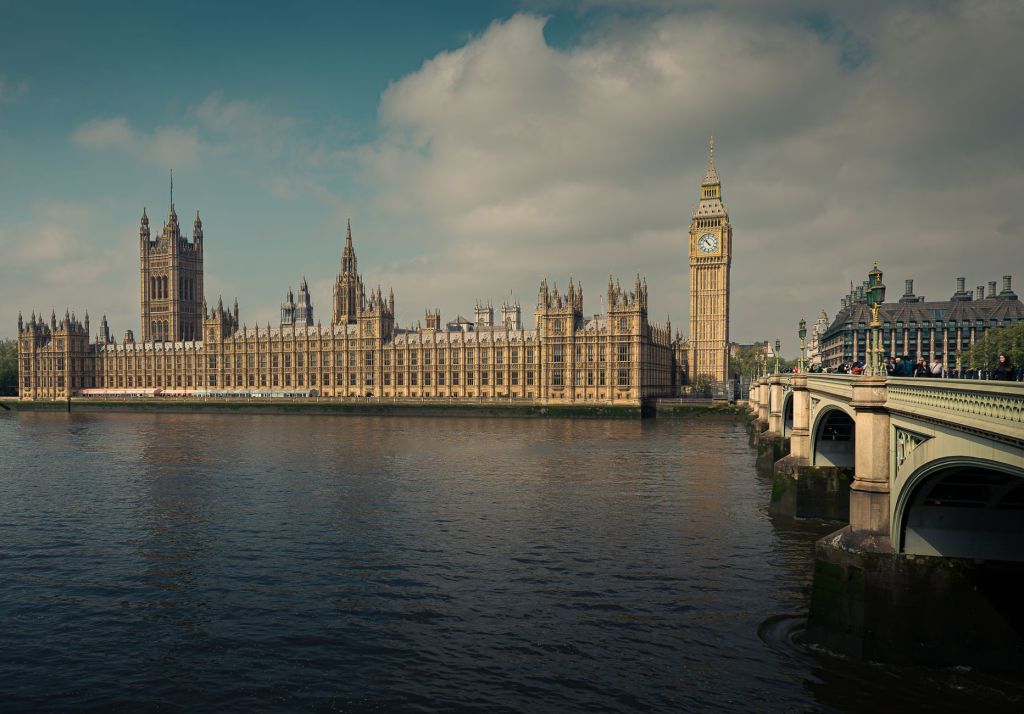
Ah, bless the poor souls who still think the British Prime Minister is chosen by the great British public in some grand, X Factor-style national vote. Every time a PM gets the heave-ho, the same tired chorus pipes up on social media and breakfast TV: “But we didn’t vote for this one!” Darlings, pull up a chair. You didn’t vote for *any* of them directly. Welcome to parliamentary democracy – where the people vote for their local MP, and the MPs then play their own chaotic game of thrones in Westminster.
It’s not a bug. It’s the entire operating system.
### The PM Is Not President – Repeat Until It Sinks In
In our gloriously eccentric British setup, the Prime Minister is *primus inter pares* – first among equals in the Cabinet. Think of it as being captain of a particularly backstabbing football team. You might wear the armband and get the best parking spot, but if the squad stops backing you, you’re off the pitch faster than you can say “leadership contest.”
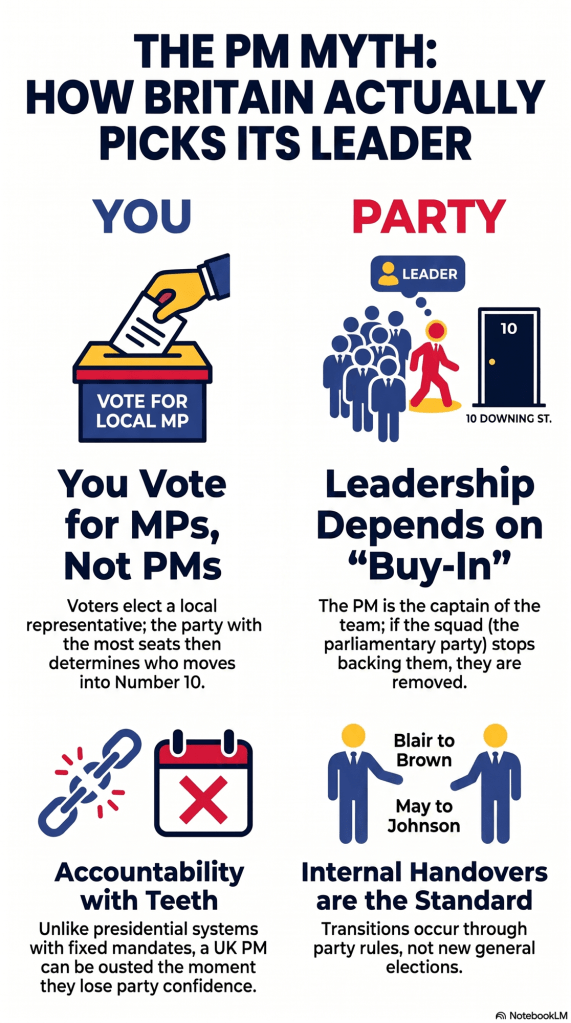
This is why the claim that the PM is “voted in by the people” is gloriously, hilariously disingenuous. You vote for your MP. The party that wins the most seats gets to form the government. Then the MPs (mostly) pick their leader, who toddles off to kiss the King’s hand and move into Number 10. Simple. Elegant. And occasionally completely deranged.
### A Brief History of “Not My PM” Moments
Let’s take a jaunty stroll down memory lane, shall we?
Poor Theresa May – she won a snap election (sort of), tried to deliver Brexit, and ended up looking like a hostage reading a statement written by her own party. When her MPs finally lost patience with her robotic dancing and inability to whip up support, she fell on her sword with all the grace of a Jenga tower in an earthquake. Enter Boris Johnson – mop-haired, endlessly quotable, and suddenly Prime Minister – without a single additional vote from the British public. The people didn’t choose Boris. The Conservative MPs did. And the public? They got another general election later to have their say.
Or how about the Labour classic: Tony Blair to Gordon Brown. Blair, the shiny, Teflon-coated master of the universe, finally stepped down after promising to do so roughly 47 times. In came Gordon Brown – the brooding, intellectually brilliant Scot who had been glowering from the Treasury for years. No public vote. No leadership election open to the masses. Just the Labour Party crowning their new champion while the rest of us watched like spectators at a particularly grim family inheritance dispute.
These handovers prove the point beautifully: the Prime Minister is not the all-powerful captain of the ship steering Britain’s destiny single-handedly. They’re the one trying to keep the crew from mutinying while the ship lurches forward. Without the buy-in of their parliamentary party, they’re toast.
### Enter Keir Starmer: Exhibit A in “Buy-In Matters”
The recent ousting of Keir Starmer is the latest case study in this glorious tradition. It wasn’t a public referendum that did for him. It was the failure to keep his own MPs on side. When the buy-in evaporated, so did the premiership. No single MP – not even the one living at Number 10 – can unilaterally change the direction of a parliamentary term. You need the squad behind you, or it all falls apart faster than a Commons bar tab on a Friday night.
This isn’t weakness. It’s accountability with teeth. Compare it to presidential systems where the Dear Leader can cling to power with a personal mandate even while Congress hates their guts. We prefer our drama served fresh from the tearooms and division lobbies, thank you very much.
### Why Do People Keep Forgetting This?
Because modern politics has been Americanised beyond recognition, that’s why. Leaders pose for glossy magazine covers, campaign like rock stars, and dominate every broadcast. It’s all very presidential. The poor voter can be forgiven for thinking they’re personally hiring a national CEO rather than lending their local MP to the cause.
But let’s be honest – it makes for better telly. “Prime Minister Top Trumps” is far more exciting than explaining confidence motions and parliamentary arithmetic. So the myth persists, and every leadership change triggers fresh howls of “undemocratic!”
### The Beauty of the British Way
At its best, our system forces prime ministers to remain (somewhat) tethered to political reality. Lose the confidence of your party and you’re gone. No hiding behind a four-year personal mandate. It’s messy, it’s theatrical, and occasionally it produces absolute chaos. But it’s *our* chaos.
So next time someone moans that they “didn’t vote for this Prime Minister,” you can smile sweetly and reply: “Correct. You voted for your MP. The MPs voted for the PM. That’s the deal, sunshine.”
Now, if you’ll excuse me, I’m off to watch the next leadership contest unfold like the political equivalent of *Love Island* – all alliances, betrayals, and dramatic exits. Pass the popcorn.
 Centre for Nigeria Progress