

Picture this: It’s January 15, 1966. Nigeria, fresh out of colonial diapers and wobbling through the First Republic like a toddler on cheap palm wine, gets rudely interrupted by a bunch of idealistic (or power-hungry, depending on who you ask) young majors. Led by the charismatic Major Chukwuma Kaduna Nzeogwu, a man so northern-adjacent they nicknamed him after the city, he and his band of brothers turned “Exercise Damisa” into Nigeria’s inaugural military blockbuster.
The January 15 Show: “Operation Clean House” (With Extreme Prejudice)
The plotters, mostly junior officers, including Emmanuel Ifeajuna, Adewale Ademoyega, and others, were allegedly tired of corrupt politicians, rigged elections (hello, 1965 Western Region chaos), and general First Republic tomfoolery. Their manifesto? Purge the rot.
- In Kaduna, Nzeogwu’s team stormed the Premier Sir Ahmadu Bello’s residence. Result: Northern Premier assassinated.
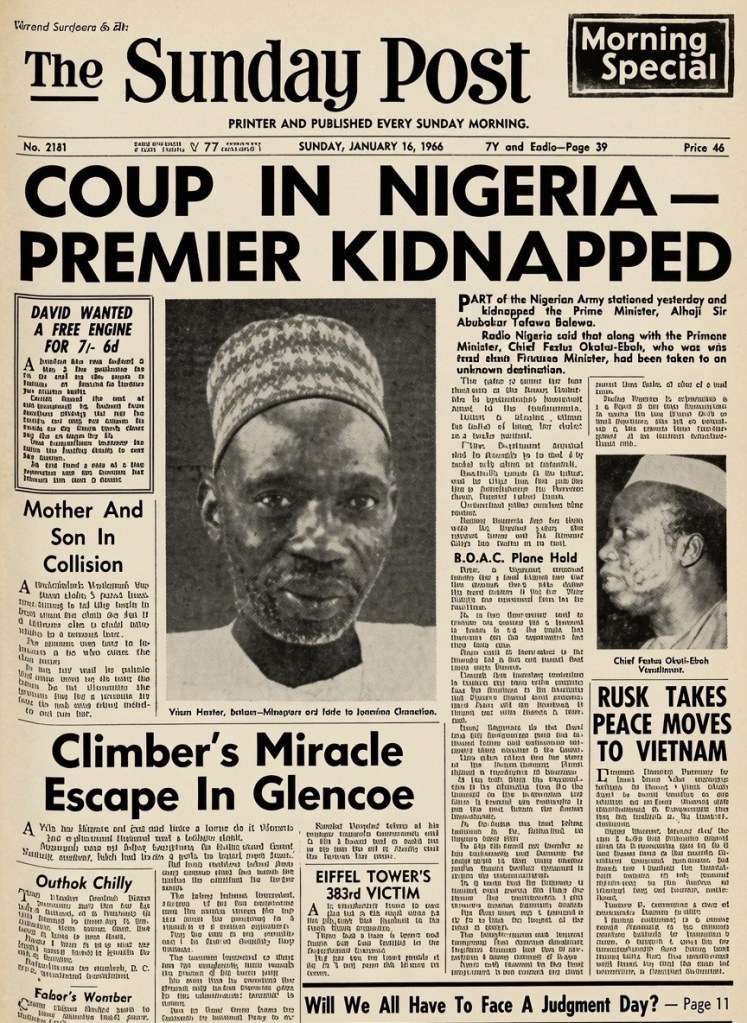
- In Lagos, Prime Minister Sir Abubakar Tafawa Balewa was kidnapped and later killed.
- Other hits: Finance Minister Festus Okotie-Eboh, and several senior officers.
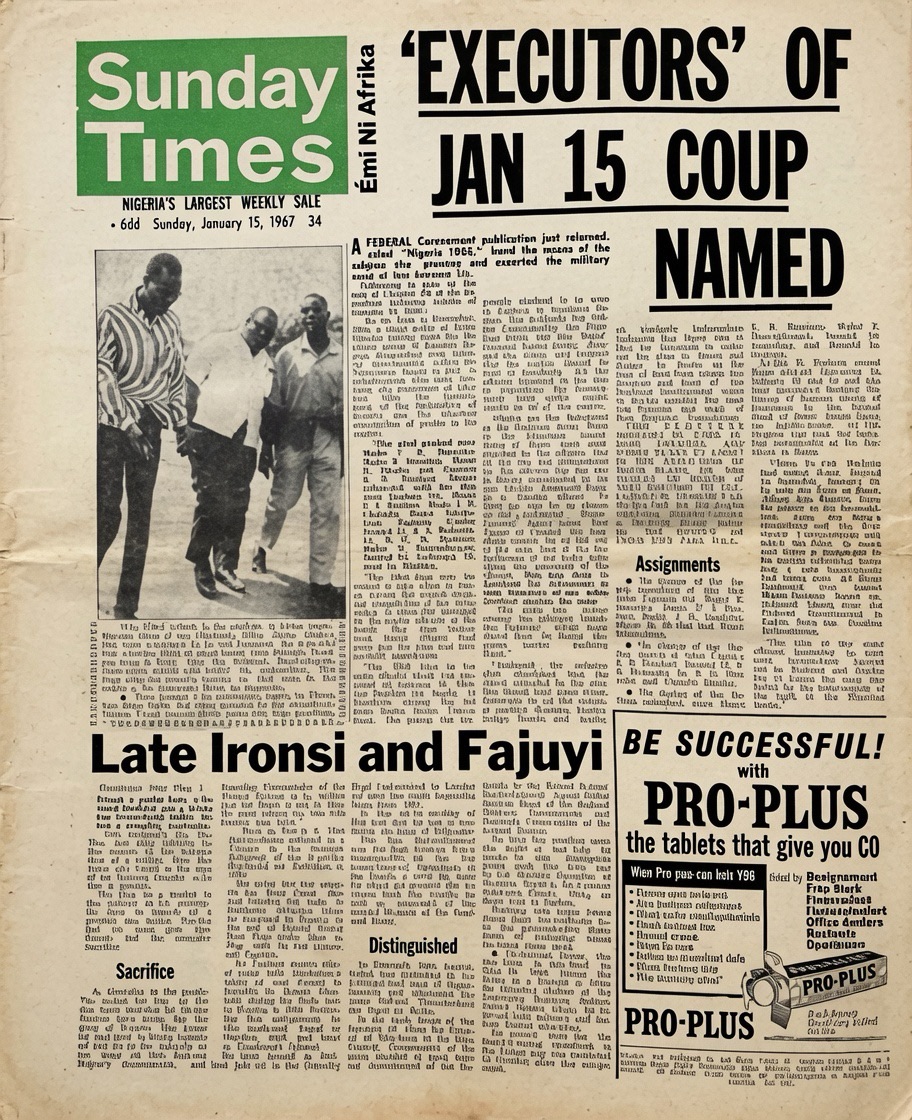
The newspapers captured the panic perfectly: “COUP IN NIGERIA, PREMIER KIDNAPPED” blared the Sunday Post, while the Sunday Times later named the “EXECUTORS” and mourned Ironsi and Fajuyi. Classic tabloid gold, equal parts horror and “what fresh hell is this?”
But here’s the twist: The coup was only half-successful. Nzeogwu controlled the North effectively, but in Lagos, Major General Johnson Aguiyi-Ironsi (an Igbo officer and GOC) stepped in, arrested the plotters’ momentum, and declared himself Head of State. The young revolutionaries ended up in prison instead of the presidential palace. Talk about a promotion you didn’t apply for!
Nzeogwu’s radio broadcast was pure revolutionary poetry: martial law, anti-corruption vows, the works. Yet the ethnic arithmetic, many killed were Northern and Western leaders, few Eastern ones, painted it as an “Igbo coup” in the eyes of critics, even though participants came from various groups. Nigeria’s favorite sport: turning complex politics into tribal conspiracy theories.
The July Rematch: Northern “Correction” Edition
Six months later, the North said “hold my burukutu.” On July 28, 1966, a counter-coup (masterminded by Lt. Col. Murtala Muhammed and northern officers) erupted as revenge.
- Aguiyi-Ironsi and Lt. Col. Adekunle Fajuyi (Yoruba host) were abducted in Ibadan and brutally murdered.
- Widespread killings of Igbo officers and soldiers followed.
- Lt. Col. Yakubu Gowon emerged as the new Head of State.
This “July Rematch” intensified ethnic tensions, sparked anti-Igbo pogroms (tens of thousands killed or displaced), and set the stage for the Biafran secession and the Nigerian Civil War (1967–1970). One coup begat another, which begat war. Nigeria’s origin story: less “founding fathers,” more “founding frictions.”
The Bitter Legacy (Satirically Speaking)
These events didn’t just end the First Republic, they turbocharged Nigeria’s love affair with military rule (we had several more coups, because why stop at two?). The January plotters dreamed of wiping out corruption; instead, they accelerated ethnic fault lines that still echo today in every election cycle, every “restructuring” debate, and every WhatsApp forward blaming one region or another.
Nzeogwu died in the Civil War fighting for Biafra. Ironsi became a martyr to some, a symbol of overreach to others. Balewa remains the gentle giant whose death symbolized the death of civilian hope. And Fajuyi? The loyal host caught in the wrong guest list.
Moral of the story? In Nigeria, when idealists with guns try to “fix” politics, the result is often more guns, more politics, and fewer idealists. We’ve spent decades debating tribal angles while the real issues, bad governance, elite capture, laugh from the shadows.
 Centre for Nigeria Progress