

The International Criminal Court (ICC) and critiques of its alleged “African bias” represent one of the most persistent and multifaceted debates in international justice. Established in 2002 under the Rome Statute to end impunity for genocide, war crimes, crimes against humanity, and aggression, the ICC operates on complementarity—acting only when national courts are unwilling or genuinely unable to prosecute. Critics argue it disproportionately targets African leaders and situations, functioning as a neo-colonial instrument that polices the Global South while granting de facto immunity to powerful states. Defenders counter that this perception stems from jurisdictional realities, Africa’s high concentration of qualifying conflicts since 2002, and African states’ own referrals. As of April 2026, the debate has evolved with recent withdrawals, expanded non-African investigations, and geopolitical pressures, revealing structural tensions rather than outright conspiracy.
This exploration examines the critiques from historical, empirical, political, legal, and ethical angles, incorporating nuances, counterarguments, implications, and edge cases. It builds on broader transnational justice themes, where the ICC exemplifies both the “long arm” of global accountability and its selective, delayed application.
1. Historical and Empirical Patterns: The “Africa Docket” Critique
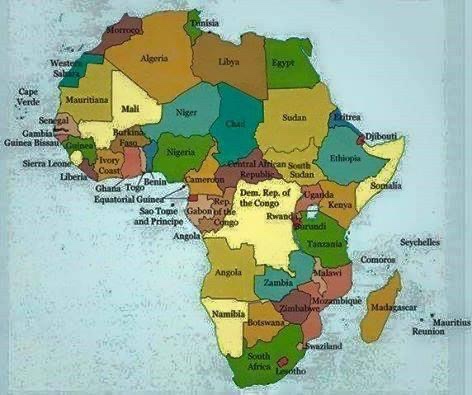
From its inception through the mid-2020s, the ICC’s caseload heavily skewed toward Africa. By early 2026, it had opened 33 situations/cases, with 32 involving African defendants or territories—the sole exception being the Philippines (former President Rodrigo Duterte, with proceedings ongoing as of April 2026). Active investigations historically included Uganda (Lord’s Resistance Army), Democratic Republic of the Congo (DRC), Darfur (Sudan), Kenya (post-election violence), Libya, Mali, Central African Republic (CAR), and Côte d’Ivoire.
Key critiques:
- Selective prosecution and neo-colonialism: African leaders, including Rwandan President Paul Kagame (“created to prosecute Africans and poor countries”) and AU officials, argued the Court ignored comparable atrocities elsewhere (e.g., Iraq, Myanmar, Argentina). It was labeled a “court for the weak” or “instrument of neo-colonialist repression,” reinforcing Western dominance via financial and political influence (many early supporters were European states).
- Racialized framing: Critical scholars highlight how the ICC’s focus “shifts the international judicial gaze towards Black bodies,” using representations of African defendants to legitimize control. This echoes colonial tropes of African “savagery” versus Western restraint.
- Political selectivity: No investigations targeted nationals of major non-parties (US, Russia, China) despite credible allegations (e.g., US in Afghanistan/Iraq; Russia in Chechnya/Syria pre-Ukraine). UN Security Council (UNSC) referrals—controlled by permanent members—amplified this (e.g., Darfur 2005, Libya 2011, but none for Syria).
Nuance and data counterpoints: Many situations were self-referred by African governments (Uganda 2003, DRC 2004, CAR 2004/2014, Mali 2012), invoking complementarity for assistance against non-state actors they couldn’t prosecute domestically. Two were UNSC referrals. Only a handful were proprio motu (prosecutor-initiated, e.g., Kenya 2010). Africa hosted a disproportionate share of post-2002 mass atrocities qualifying under the Statute, per conflict data. The ICC has dropped African charges for insufficient evidence (e.g., Kenya’s William Ruto and Joshua Sang cases) and withdrawn warrants (e.g., due to deaths), showing procedural rigor.
2. Political and Institutional Responses: AU Pushback and Withdrawals
The African Union (AU) formalized critiques early. In 2017, it adopted a non-binding resolution urging mass withdrawal, citing the 2015 South African failure to arrest Sudanese President Omar al-Bashir (despite an ICC warrant) as sovereignty erosion. Burundi became the first (and until 2025, only) African state to withdraw successfully.
2025–2026 escalation: In September 2025, Burkina Faso, Mali, and Niger (Alliance of Sahel States) announced immediate withdrawal, denouncing “selective justice” and planning “indigenous mechanisms.” This followed their ECOWAS exit and reflected junta governments’ anti-Western stance amid jihadist conflicts. Hungary withdrew in 2025 amid broader discontent. These moves risk impunity for victims but signal eroding legitimacy.
Broader AU context: While not all 55 members withdrew (many value the Court for capacity-building), the 2026 AU agenda prioritizes peace, security, and institutional reforms, including alternatives to external justice.
Counter-perspective: Self-referrals demonstrate agency, not victimhood. Withdrawals may weaken victim recourse in active conflict zones (e.g., ongoing Mali cases like Al Hassan convictions). The ICC’s 2026 budget and field offices (e.g., in DRC, Uganda) show investment in African situations.
3. Recent Shifts and the Evolving Narrative (2021–2026)
Critics’ “Africa-only” claim has weakened but not vanished. Post-2021 expansions include:
- Ukraine (2022, state referrals; warrants for Putin et al.).
- Palestine (investigation ongoing since 2021; 2024 warrants for Benjamin Netanyahu, Yoav Gallant, and Hamas leaders like Mohammed Deif).
- Afghanistan (Taliban focus, US deprioritized).
- Philippines (Duterte).
- Bangladesh/Myanmar, Venezuela, and new Belarus/Lithuania (opened March 2026).
These address “bias” accusations, with ICC officials noting jurisdictional limits (non-parties block easy access). Yet perceptions linger: Non-African probes face pushback (e.g., US sanctions under Trump 2025–2026 over Palestine/Afghanistan; Russian warrants against ICC staff).
Nuances: Expansions prove adaptability, but resource constraints (e.g., 2026 budget ~€197M) and non-cooperation (e.g., Italy’s 2026 referral for non-compliance) limit impact. In absentia proceedings (increasing) raise fair-trial concerns.
4. Legal and Ethical Dimensions: Selectivity vs. Legitimacy
Legitimacy erosion: Selective enforcement undermines the Rome Statute’s universality. Victims in non-prioritized regions feel abandoned; African states see hypocrisy when powerful allies evade scrutiny. Ethically, it questions whether the ICC advances “global justice” or entrenches power imbalances.
Defenses rooted in law: The Statute limits jurisdiction to parties, UNSC referrals, or territorial/nationality links. Proprio motu requires Pre-Trial Chamber approval with high evidentiary thresholds. Policy papers (e.g., 2016 case selection) emphasize gravity, not geography.
Edge cases:
- Head-of-state immunity: Al-Bashir warrant tested (and exposed non-cooperation).
- Intra-situation bias: Some allege deference to referring governments (e.g., overlooking state forces in Uganda/DRC).
- Corporate/state enablers: Limited pursuit of Western banks or arms suppliers in African conflicts.
- Hybrid alternatives: Calls for African criminal court or truth commissions as complements (not replacements).
Implications:
- For Africa/Global South: Strengthens sovereignty narratives but risks accountability gaps amid rising conflicts (e.g., Sahel jihadism, Sudan). Could spur domestic reforms or regional mechanisms.
- For the ICC: 2025–2026 crises (prosecutor scandals, sanctions, withdrawals) threaten viability; ASP resolutions focus on rules/procedure.
- Global justice: Reinforces calls for UNSC reform or universal jurisdiction alternatives. Deterrence works where enforced (e.g., some African leaders deterred), but selectivity breeds cynicism.
- Victims: Prolonged delays (echoing transnational “longer arm, longer delay”) compound harm; reparations processes (e.g., Mali’s Al Mahdi) offer partial remedy but depend on cooperation.
In sum, ICC African bias critiques highlight genuine structural flaws—jurisdictional asymmetries, political influence, and historical focus—that fuel perceptions of unfairness, especially amid 2025 Sahel withdrawals. Yet they coexist with evidence of African agency, genuine atrocities driving cases, and deliberate diversification. The Court is neither purely biased nor flawless; it reflects a flawed international order where power shapes enforcement. Reforms (e.g., better outreach, funding, or hybrid models) could mitigate this, but addressing root causes—state capacity and geopolitical will—remains essential for credible transnational justice. The tension persists: an imperfect tool that has delivered some accountability while exposing the limits of borderless law in a sovereign world.

