

Introduction & The Hidden Port Charges
- Look at the last thing you bought: the rice, the paracetamol, the charger in your pocket. Before it reached your hand, at least six different people were paid. Not one of their names was on your receipt. You paid every single one of them, and you never knew who they were.
- In February 2025, one more name joined that list. Customs announced a new charge: 4% of the value of everything entering this country. Traders shouted; it was suspended in August. It came back in September. It was suspended again. Then mostly, it reappeared quietly inside a government revenue plan worth 1.26 trillion naira.
- Something that gets killed twice does not usually come back to life unless somebody powerful needs it alive. So we went looking for the room where that decision actually lives. It is not in Abuja. It is behind a fence in Lagos, and almost no Nigerian is allowed inside.
- Power is never given. It is taken, hidden, and controlled. This is Historic Capital. It is the 3rd of August 2026, and I am on the road.
- Today, we follow one container from the water to your table, and we name every hand that touches it. Thank you for being here. This file stays open because of you.
Who Controls the Gates?
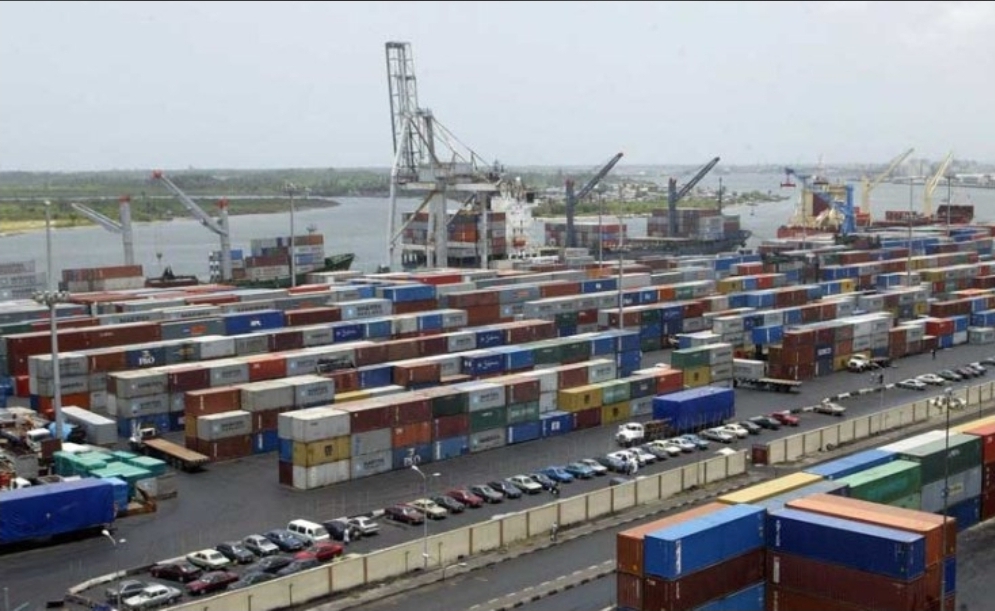
- Nearly everything Nigeria does not make must come in by sea: the wheat in your bread, the fish, the milk, the tires. More than seven out of every 10 medicines sold in this country were manufactured somewhere else. All of it enters through a small number of gates on one coastline.
- Here is the part nobody says out loud: Those gates are not run by Nigeria. They are leased. And the papers that lease them are not only written in Abuja; some of them lead to Copenhagen, to Geneva, to Beijing, to Singapore.
The Breakdown of Port Fees & Demurrage
- A ship reaches Lagos. Inside it, one 40-foot container of your goods. The ship cannot simply park. It pays to enter the channel, it pays for a pilot to guide it in, it pays for the water it sits on. Before one carton touches Nigerian soil, the meter is already running and it is running in dollars.
- Then the box comes down and the real bill starts: terminal handling, documentation, storage, examination, delivery.
- Years ago, the Nigerian Shippers Council tried to clean this up. They wanted to squeeze all the charges into five simple ones. Before I tell you how many they found, guess the number in your head right now: 34. 34 separate categories of charge sitting on one box.
- Then customs takes its turn: import duty on the value, Value Added Tax (VAT) on top of that, a 7% surcharge that helps fund the Ports Authority itself, a 1% inspection fee, and then from 2025, the fight over the extra 4%.
- A car dealer in Lagos explained it in plain language: On a vehicle worth 12 million naira, the old 1% fee came to 125,000. The new 4% made it 500,000. Same car, same port, same country; only the paper changed.
- And if the container sits too long, demurrage begins. In Nigeria, a 40-foot box can run around 68,500 naira every single day. In Lomé, Togo, storage is roughly $20 to $30 a day. Same ocean, same week, very different bill. Every one of those charges ends up inside the price you pay in the market.
The 2005/2006 Port Concessions: Government as Landlord
- So I asked a simple question: Who is standing at that gate? The answer is written in a set of documents most Nigerians have never seen.
- In 2005 and 2006, the Federal Government carved six port complexes Lagos, Tin Can Island Port, Warri, and Calabar into 26 terminals. Each terminal was then leased to a private company. The Nigerian Ports Authority (NPA) signed as the landlord; the Bureau of Public Enterprises signed as the confirming party. The leases ran from 10 to 25 years.
- That is the moment the state stopped touching your cargo. So when people say government is stealing at the ports, hold on government stopped handling the boxes 20 years ago. Government became a landlord.
- Apapa Container Terminal went to AP Moller (APM Terminals) in March 2006 for 25 years. Other Apapa terminals went to Apapa Bulk Terminal, ENL Consortium, and Greenview. At Tin Can Island: Josephdam Ports, Cargo Tincan Island Container Terminal, and Five Star Logistics (roll-on/roll-off terminal).
Historical Context: Colonial Legacy & Port Congestion
- Why were the biggest gates all sitting in one city? For that, we have to go back much further than 2006.
- In 1913, the colonial administration decided to build deep-water berths at Apapa not because Apapa was the best harbor in Nigeria, but because Apapa was chosen as the terminus of the Western Railway. The railway was built to move palm oil, cocoa, groundnut, cotton, and tin out of the country.
- The same year, Port Harcourt was opened for coal at Enugu. Understand what that means: Nigeria’s main gates were never designed to bring goods in; they were designed to take raw materials out. When independence came, the flags changed, the direction of the ships changed, but the gate did not.
- Then came 1975. The government ordered cement on a scale nobody had planned for, far beyond what every Nigerian port could discharge in a year. Hundreds of ships queued off Lagos for months; cargo rotted at sea; demurrage was paid every day to foreign ship owners for sitting idle.
- The official solution to Lagos congestion was to build another port in Lagos: Tin Can Island (commissioned in October 1977). New Warri and New Calabar came two years later and then quietly went to sleep. 50 years later, we are still having the same argument.
Monopoly of Lagos & Neglect of Eastern Ports
- Nigeria has a coastline running from Lagos all the way to Cross River, with six major port complexes spread across four states. On paper, that is a national network.
- Out of everything Nigeria bought and sold with the world in the first 3 months of 2025, what share passed through Apapa alone? Take your guess: 71.6% one port, nearly 26 trillion naira of trade in 3 months. On exports, it was even sharper: 86% left the country through that single gate. Tin Can Island handled under 10%.
- Meanwhile, Calabar Nigeria’s oldest deep-water gateway in 2024, the port manager confirmed that not one container vessel had docked there in 25 years.
- Was this geography, economics, policy, or power? There is a serious case for geography and economics: Lagos has deeper water, factories, banks, warehouses, and buyers. Shipping lines send big ships where the cargo is. Warri and Calabar sit behind shallow channels that need constant dredging.
- But policy left fingerprints too. The railway decision in 1913, the 1975 expansion, and the Lekki Deep Sea Port were all centered in Lagos. In late 2025, when $1 billion was approved to modernize ports, the first funds went to Apapa and Tin Can Island.
- Government’s own advisers state that eastern ports stayed underused because of policy neglect, weak road and rail links, and inconsistent investment.
The “Lagos Tax” & Gridlock Corruption
- Concentration is not free. On the Apapa corridor, truckers describe more than 17 checkpoints; on the Tin Can road, another 16 or 17.
- An electronic booking system (Étò) brought in in 2021 to end chaos is heavily monetized. Clearing agents put on record that scheduled slots are resold for ~21,000 naira per truck per trip amounting to over 120 billion naira in 5 years.
- Moving a container from Lagos to the north or east can cost close to a million naira. Traders in Onitsha, Nnewi, Aba, or Kano all pay a hidden “Lagos tax” in distance, diesel, bribes, spoiled goods, and weeks of waiting.
Corporate Foreign Ownership of Terminals
- Who are the actual owners behind these companies?
- Tin Can Island Container Terminal: Run by two major shareholders French logistics group Bolloré and Strong Best Investment (a joint venture of China Merchants Port and China-Africa Development Fund under China’s State Assets Commission).
- At the end of 2022, Bolloré sold its African ports/logistics business for ~$6 billion to MSC (Mediterranean Shipping Company), the largest shipping line on Earth. The company that owns the ships now owns the terminal the ships berth at, setting freight rates at sea and gate fees on land.
- Apapa: APM Terminals belongs to A.P. Moller-Maersk.
- Lekki Deep Sea Port: Operated by Lekki Port LFTZ Enterprise Limited (45-year concession).
- China Harbour Engineering Company: 52%
- Tolaram Group (Singapore): 22.5%
- Lagos State Government: 20%
- Federal Government of Nigeria (via NPA): 5%
- The private shares are held offshore via Lekki Port Investment Holdings Inc. Funded via $629 million loan from China Development Bank and $221 million equity from China Harbour.
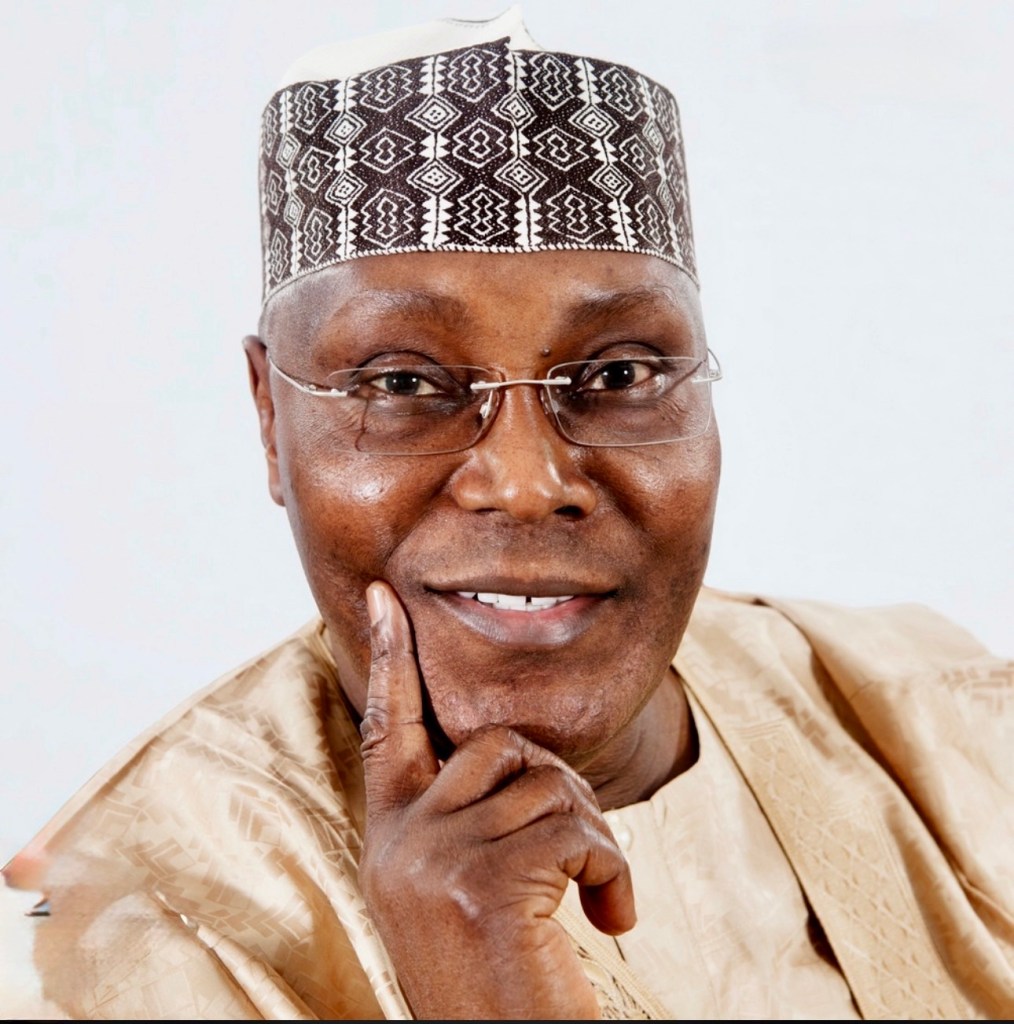
- Onne Port (Rivers State): Long dominated by Intels, co-founded by Gabriel Volpi and Atiku Abubakar (Vice President of Nigeria, 1999–2007). During those years, the VP chaired the National Council on Privatization, overseeing the BPE which confirmed port leases. Contracts were terminated/adjusted around 2017–2021 due to Treasury Single Account (TSA) compliance issues.
Expired Leases & Government Revenue Breakdown
- The original terminal leases ran for 10 years (from 2006). In 2016, they received a 5-year extension running to 2021. Since 2021, extensions were granted in 6-month increments without proper renewals closing.
- In March 2024, the House of Representatives summoned top agencies regarding expired concessions operating without formal license updates. By April 2026, NPA was still explaining the delay.
- Despite expired paperwork, terminal handling, demurrage, and collections never paused.
- Customs revenue generated:
- 2023: 3.21 trillion naira
- 2024: 6.11 trillion naira
- 2025: 7.28 trillion naira
- 2026 Target: 11.27 trillion naira
- In 2025 alone, ~34.5 trillion naira worth of goods came in under concessions and exemptions (over half petroleum, 40% military imports), while standard traders pay full duties, VAT, demurrage, and fee
Dollar-Denominated Charges & Conclusion
Almost all port charges are priced in US Dollars inside Nigeria. When the Naira falls, port charges automatically rise in Naira terms.
Summary of who controls the gate: A landlord state holding only 5% of its newest port, terminal companies operating on expired leases, global shipping conglomerates owning terminals, foreign state contractors controlling primary deep-water berths, and 100-year-old colonial rail decisions.
The port is a toll booth on the only road into the country, and the system was built so there would only be one.
Outro call for viewer comments, experiences, and teaser for the next investigation into fuel tank ownership.

