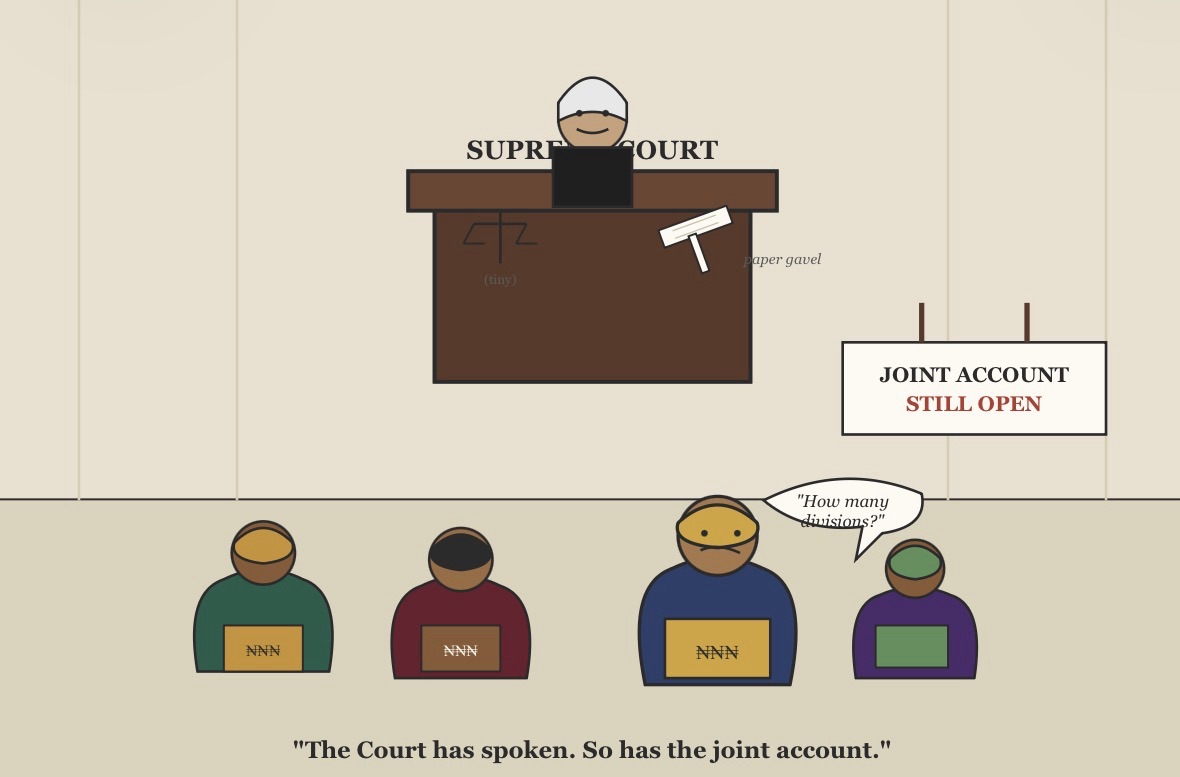
Lifusprudence: An introduction to a judicial hitman By Chidi Anselm Odinkalu

Lifusprudence: An Introduction to a Judicial Hitmanโ€ by Chidi Anselm Odinkalu introduces โ€œLifusprudenceโ€ as the controversial judicial brand of Justice Peter Lifu of Nigeriaโ€™s Federal High Court. It contrasts Lifuโ€™s predictable, politically aligned rulings โ€” often accused of disregarding constitutional guardrails, ignoring higher court orders, and inventing convenient interpretations (e.g., the recent political parties de-registration case) โ€” with the legacy of Nigeriaโ€™s illustrious judges. The piece portrays Lifu as a dependable โ€œjudicial hitmanโ€ for ruling party interests, framing his style as a dangerous form of clientelism masquerading as law, especially ahead of elections.

Comparing Wike To Other National Politicians

"Nyesom Wike, the current Minister of the Federal Capital Territory (FCT) and former Governor of Rivers State, stands out in Nigerian politics as a bold, combative, and highly strategic operator. His recent dominance in PDP internal court battlesโ€”securing roughly 14 out of 15 favorable rulings in analyzed casesโ€”has drawn attention to what the article satirically terms the 'Abuja advantage' and 'judicial hospitality': leveraging control over prime land, infrastructure projects, and judicial welfare schemes in the capital to create an environment where power, proximity, and perception intersect."

Remi Fani-Kayode: The Forgotten Strategist of Nigeriaโ€™s First Republic

In the theatre of Nigerian political history, certain names dominate the marquee lights. Azikiwe got the airport. Awolowo got the statues. Ahmadu Bello got the reverence of an entire region. Tafawa Balewa got the tragedy of martyrdom. History, as usual, rewarded the dramatic and the deceased with suitable generosity. But lurking in the corridors of power, armed with elite connections, Savile Row suits, and the constitutional instincts of a man who had clearly read more than one law book, was Remilekun Fani-Kayode one of the First Republic's most sophisticated political operators, and one of its most thoroughly forgotten. Today, the Fani-Kayode name conjures images of fiery television appearances, combustible social media dispatches, and the particular rhetorical energy his son Femi brings to every available platform. But long before hashtags became a substitute for statesmanship, the elder Fani-Kayode was doing something considerably more difficult: trying to hold Nigeria together through elite negotiation in a federation that was, structurally speaking, a hostile inheritance dispute among suspicious cousins. He failed, as did everyone else. But the question he was asking how do you keep Nigeria together without anyone feeling cheated remains the one question no Nigerian government has successfully answered since independence.

Punching Down is Not a Policy by Lawson Akhigbe

PM Kier Starmer As of June 29, 2026, the 1824 Vagrancy Act has officially been repealed by the Labour government led by Kier Starmer. For over two centuries, this archaic law did something truly remarkable in its cruelty: it made the catastrophic misfortune of having nowhere to live a literal crime.   Under the Act, sleeping …

The Republic of Impunity: How Nigeria Rewards Rule-Breakers and Punishes Accountability By Lawson Akhigbe

Nigeria's culture of impunity, where laws are treated as optional and accountability is viewed as unnecessary, is a significant obstacle to its development. Despite a conviction by the Supreme Court in 1997 for a serious criminal offence, Bello Magaji was never imprisoned. He was instead pardoned by President Goodluck Jonathan and later appointed as Dean of the Faculty of Law at the American University of Nigeria. This case highlights the arbitrary nature of the legal system in Nigeria, where convictions are often disregarded and individuals with criminal records can rise to high positions.