

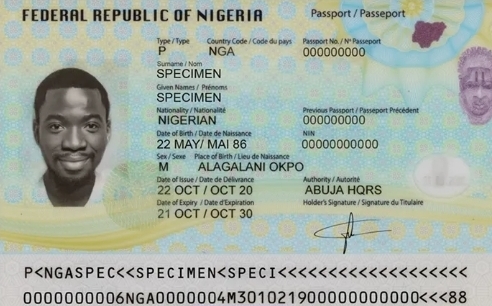
Across the civilized world, introducing oneself is a predictable, orderly affair. There is an unspoken, universally accepted architectural blueprint for human identification: First Name, Middle Name, Last Name.
If you are introduced informally at a backyard barbecue, you are John. If you are summoned before a Senate committee, a magistrate, or your bank manager, you are Mr. Smith. It is simple, boring, and universally understood.
Then, there is Nigeria.
In Nigeria, naming conventions do not follow a blueprint; they follow a jazz solo. They are improvisational, deeply chaotic, and liable to mutate depending on the time of day, the mood of the civil servant behind the desk, or which side of the bed the bank teller woke up on.
The Curious Case of “Mr. Andrew”
Consider a perfectly ordinary Nigerian gentleman whose birth certificate reads Andrew Adedeji.
Under every standard rule of human society, his informal name is Andrew, and his formal title is Mr. Adedeji. But ask him his name in a formal boardroom in Lagos or Abuja, and he will look you dead in the eye and say:
“I am Mr. Andrew.”
To a foreigner, this sounds like a polite butler in a Victorian novel or a friendly kindergarten teacher. To Nigerians, it is just Tuesday.
By the time you look at his business card, he is Adedeji Andrew. On his driver’s licence, he is Andrew, A. Adedeji. And on his bank portal, he is somehow Adedeji A. Andrew. Is Adedeji his father’s name? Is Andrew his grandfather’s name? Is he hiding from Interpol? Nobody knows least of all the database trying to process his tax clearance.
Institutional Anarchy: The Paperwork Lottery
You would think our formal institutions the custodians of bureaucracy, files, and rubber stamps would enforce some sanity. Instead, they actively cultivate the confusion.
- Ministry A demands:
[Surname] [First Name] [Middle Name] - Bank B insists on:
[First Name] [Middle Name] [Surname] - Embassies & Consulates plead for:
[Last Name], [First Name](which a Nigerian applicant will promptly invert anyway just to keep the visa officer alert).
Our media houses are equally enthusiastic conspirators. A front-page headline will introduce a prominent figure as “Chief Tunde Bakare.” Three paragraphs down, the journalist will casually refer to him simply as “Bakare.” By paragraph six, he is “Mr. Tunde,” and by the final quote, he has morphed into “The Honourable Tunde-Bakare.”
Foreign compliance officers reading these reports must assume our entire public sector is staffed by shapeshifters.
The PFIPC Masterclass: Permutations of Power
Nowhere does this naming roulette reach higher comedic and bureaucratic heights than in our political and governance dramas.
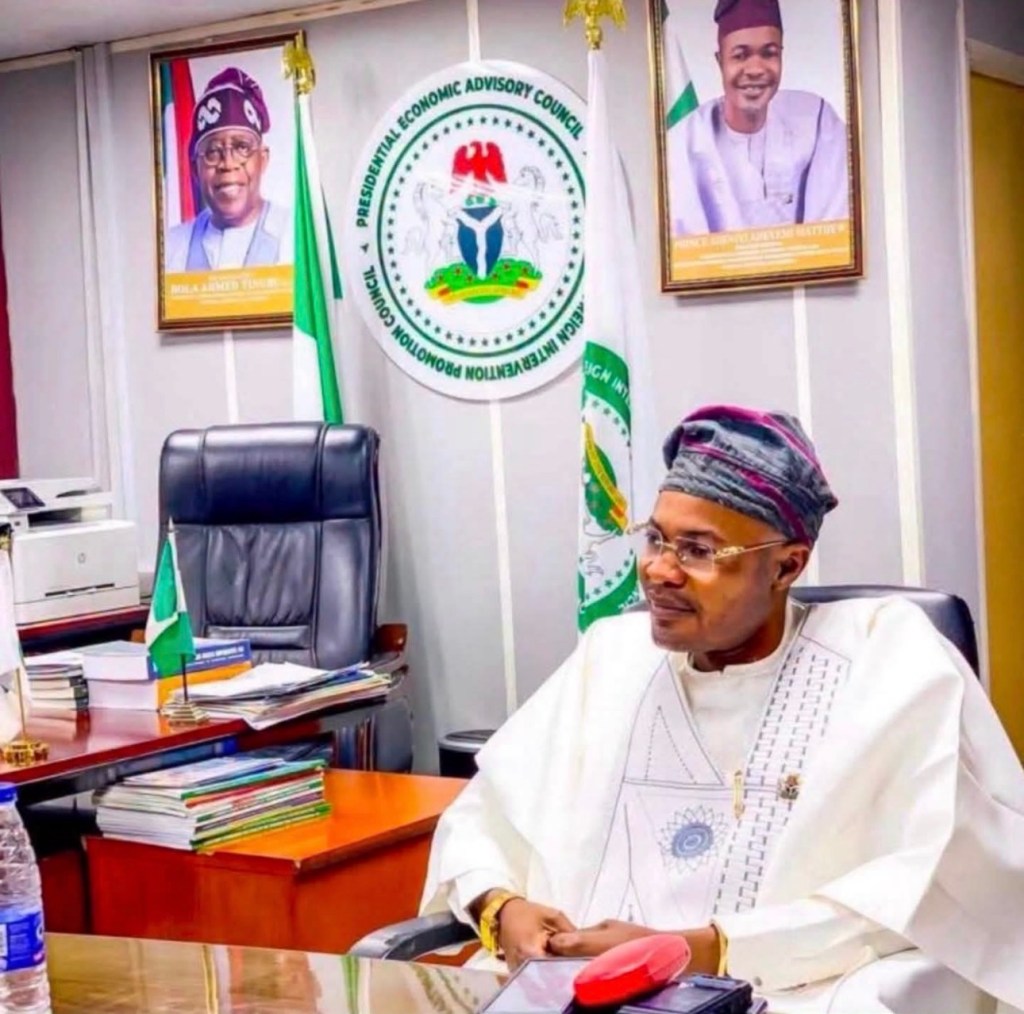
Take the sensational saga of the Presidential Foreign Intervention Promotion Council (PFIPC) an alleged ghost agency that managed to operate offices in the Federal Secretariat and find its way into official budget lines while the Presidency insisted it was completely fictitious.
At the center of this storm was its proclaimed Director-General, Prince Adeniyi Adeyemi Matthew.
Depending on which news portal, official rebuttal, or court docket you consult, his identity becomes a mathematical puzzle:
- Is he Prince Adeniyi Adeyemi?
- Is he Mr. Adeyemi Adeniyi Matthew?
- Is he Matthew Adeniyi Adeyemi?
- And to make the familial lineage even more delightfully confusing, his arrested father enters the record simply as Mr. Adeyemi.
By the time investigators, journalists, and public commentators finish shuffling Adeniyi, Adeyemi, and Matthew, it is virtually impossible for an outside observer to discern which is the given name, which is the middle name, and which is the patronymic surname. It is identity by anagram a bureaucratic shell game where even the state apparatus gets dizzy trying to figure out who is who.
The High Cost of the Shuffle
While we laugh at our collective refusal to be pinned down by Western naming rigidity, this structural carelessness carries serious real-world consequences.
When a Nigerian tries to open an international bank account, pass a global KYC (Know Your Customer) screening, or verify academic credentials abroad, the system flags them immediately. The automated global database sees three different name arrangements across three official documents and arrives at one swift conclusion: Fraud.
The tragic truth? In most cases, it is not fraud at all. It is simply institutional nonchalance. It is the legacy of a system where nobody ever bothered to establish a singular standard for which name goes where.
Our unconventional attitude toward identification breeds an unintended reputation for unreliability. In a world increasingly governed by strict algorithms, cross-border digital checks, and AI data parsing, treating your surname as an optional stylistic choice is no longer just a quirky cultural habit—it is a major administrative hazard.
Until we agree on whether a man is Mr. Andrew, Mr. Adedeji, or Prince Adeyemi Adeniyi Matthew, Nigeria will remain the only place where filling out a standard four-line form requires the deductive brilliance of Sherlock Holmes.
5 Social Media Teasers (Under 160 Characters)
- Why do we call him “Mr. Andrew” when his surname is Adedeji? The hilarious and costly chaos of Nigerian naming conventions. Read more:
- From “Mr. Andrew” to the PFIPC saga: How Nigeria’s scrambled naming format turns ordinary identification into an anagram puzzle:
- Is he Adeniyi Adeyemi Matthew or Matthew Adeyemi? How our naming chaos triggers accidental fraud alerts globally. New blog post:
- First, middle, last? Not in Nigeria. Here, names are a jazz solo that confuses foreign banks and local databases alike. Read now:
- The Great Nigerian Name Shuffle: Why nobody including our own government registries knows who anyone actually is. Read the full piece:

