

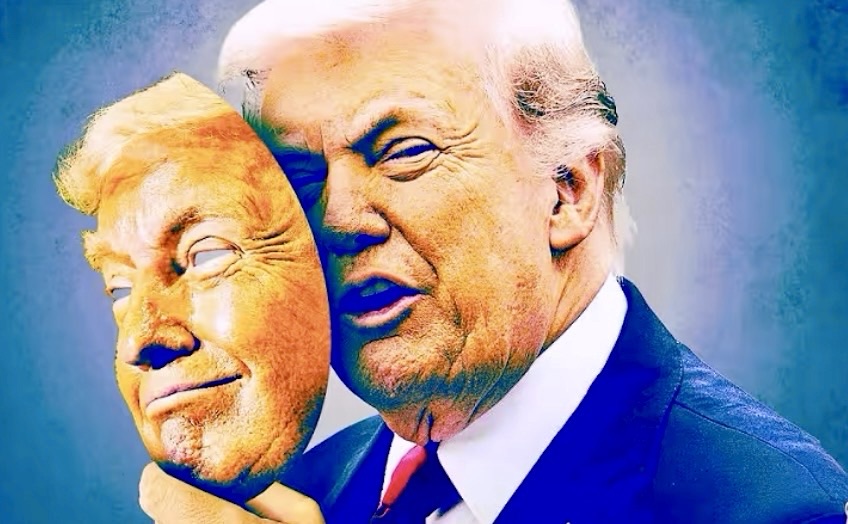
Donald Trump’s conspiracy rhetoric is not a series of isolated theories. It is a production line. Raw material goes in at one end (rumours, disagreements, coincidences, bureaucratic friction, the ordinary mess of democratic politics) and emerges at the other as evidence of a vast, coordinated plot against him personally. Evidence is optional. Suspicion is the finished product.
The process is elegant and reliable. Convert a rumour into a scandal by sheer assertion. Repeat the assertion until repetition itself begins to feel like proof. Give the suspicion a name (“deep state,” “rigged system,” “witch hunt,” “weaponized justice”) so the abstract becomes concrete and therefore more frightening. Attack anyone who asks for evidence as either complicit or hopelessly naïve. The question “What are they hiding?” does not require an answer. The question is the weapon.
This is the paranoid style, updated for the attention economy. Richard Hofstadter once described it as “heated exaggeration, suspiciousness, and conspiratorial fantasy.” Trump industrialised it. Earlier practitioners needed pamphlets and late-night radio. He had Twitter, then Truth Social, then an entire political movement trained to treat every institutional process as prima facie evidence of sabotage. The Russia investigation was not an investigation; it was a hoax. The 2020 election was not a loss; it was a theft. Impeachments, indictments, even the weather during a hurricane all became nodes in a single grand narrative in which Trump is both the indispensable hero and the perpetual victim.
Two techniques do most of the heavy lifting. One is paralipsis, the elegant “I’m not saying… but.” It plants the most lurid suggestion while preserving deniability. The other is the firehose: a relentless volume of claims that overwhelms the capacity of fact-checkers and leaves supporters with the comforting conviction that where there is this much smoke, there must be a conspiracy. Institutions (the press, the intelligence community, the Justice Department, the electoral system) are systematically framed as hostile actors rather than neutral mechanisms. Once that frame is accepted, any outcome that inconveniences Trump becomes further confirmation of the plot.
It worked extraordinarily well for years. It mobilised a base, delegitimised opponents, and turned complexity into a morality play with one clear protagonist. The cost was the progressive corrosion of shared reality. When every reverse is evidence of a conspiracy, ordinary democratic friction becomes existential warfare. When every critic is either corrupt or controlled, accountability becomes persecution.
And then, rather deliciously, the machine began to point the other way.
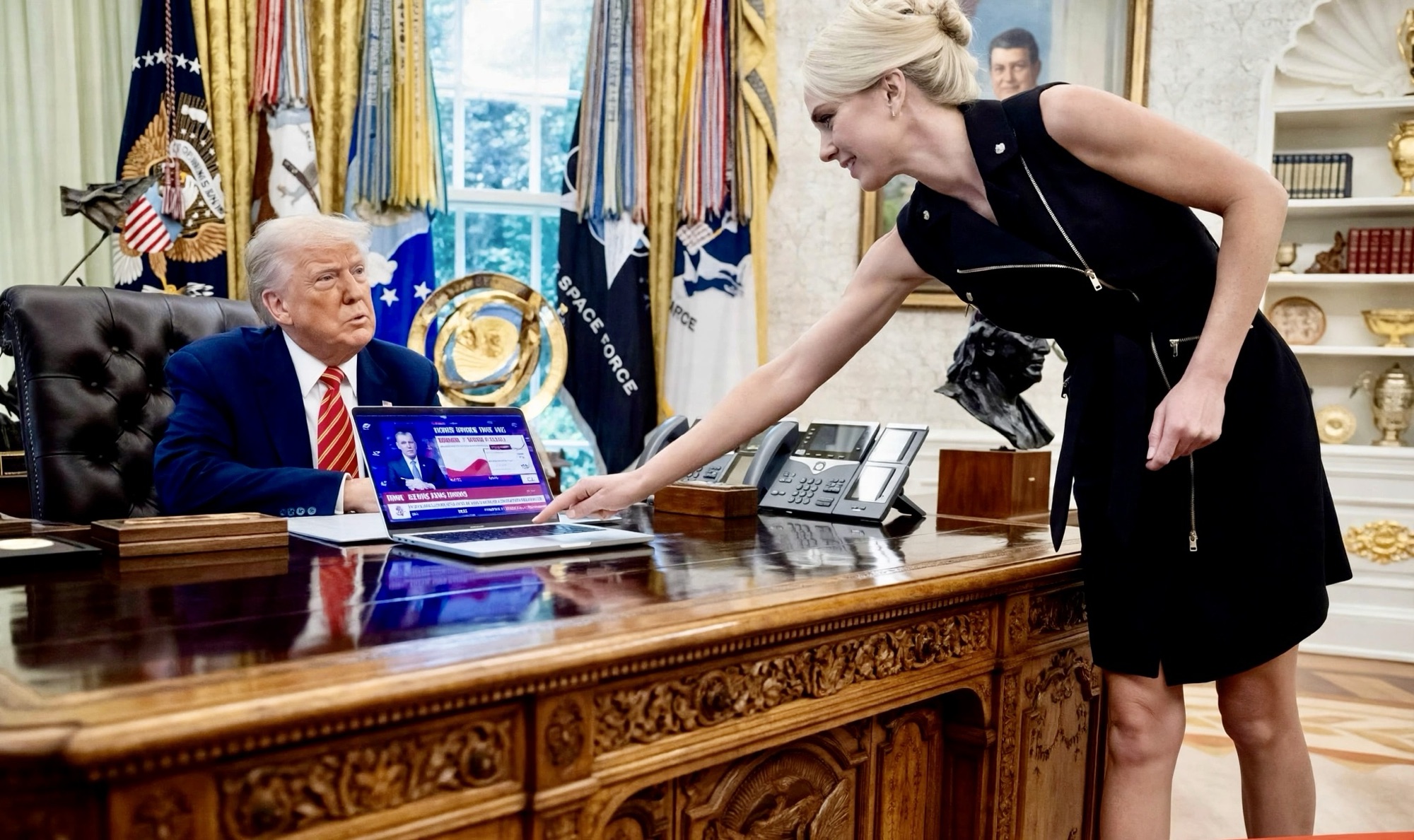
The same toolkit that once asked what Barack Obama was hiding, what Hillary Clinton was hiding, what the deep state was hiding, is now being applied to the man who perfected it. A secret plane switch after a NATO summit in Ankara. Cabinet secretaries left behind on the decoy aircraft. The press corps left behind. A small circle of the most trusted aides, including the young woman who prints the President’s Truth Social posts and has become a constant, almost intimate presence, whisked onto the real flight. Suddenly the questions sound familiar: Who has access? Why this person and not those officials? What exactly is going on here?
The irony is almost architectural in its perfection. The politician who spent a decade teaching followers that nothing is ever quite what it appears has discovered that the lesson applies to him too. Suspicion, it turns out, has no party registration and no loyalty oath. It travels. It adapts. And occasionally it lands, with a certain theatrical flair, inside the White House.
This does not mean every new question about influence or access is automatically a conspiracy theory. Proximity to power is a legitimate subject of scrutiny. Influence is never private when it sits behind the Resolute Desk. But the rhetorical style Trump popularised makes it nearly impossible to keep the scrutiny clean. The same habits of mind that once turned molehills into mountains now look at a passenger list and begin constructing cathedrals of speculation.
The conspiracy machine does not distinguish between useful targets and inconvenient ones. It simply continues operating. For years Trump held the controls. Now he is discovering what it feels like to sit in the passenger seat while the questions, once so useful against others, begin circling him. The hunter has become the hunted, and the microphone has changed hands.
One suspects he does not enjoy the new arrangement nearly as much as the old one.

