

On 28 March 1966, while the rest of Nigeria was still adjusting to the strange new reality of soldiers in charge, Chief Obafemi Awolowo sat in Calabar Prison and wrote what must rank as one of the most elegant job applications in Nigerian history. It was addressed to Major-General Johnson Aguiyi-Ironsi, the man who had just inherited a broken country, and it asked, with exquisite politeness, for a free pardon.
The letter is a masterclass in political theatre. Formal, measured, and laced with the quiet arrogance of a man who believed the new regime needed him more than he needed the regime. Awolowo did not beg. He explained. He reminded. He gently lectured. And somehow he managed to make a petition for mercy sound like a performance appraisal of the entire First Republic.
He structured his case around seven carefully chosen grounds. First, he had refused earlier deals that would have freed him in exchange for abandoning national unity for a purely Yoruba political arrangement. Second, he had twice turned down high office because the posts were designed only to silence him. Third, he had kept faith with democracy and constructive opposition even when it was inconvenient. Fourth, his continued imprisonment was keeping the country on edge. Fifth, Nigeria was wasting a rare talent every single day he remained locked up. Sixth, it was tragic that two of the architects of independence were still unfree in a free country. Seventh, new regimes traditionally emptied the political prisons of the old order.
Reading the letter today, one is struck by how little of it feels like pleading. It reads more like a senior partner correcting the junior staff. The prose is dense, cadenced, and slightly old-fashioned, the product of the Inns of Court and a lifetime of public argument. He even acknowledges the self-praise, notes that such petitions are by nature full of it, and carries on regardless. The effect is oddly disarming.
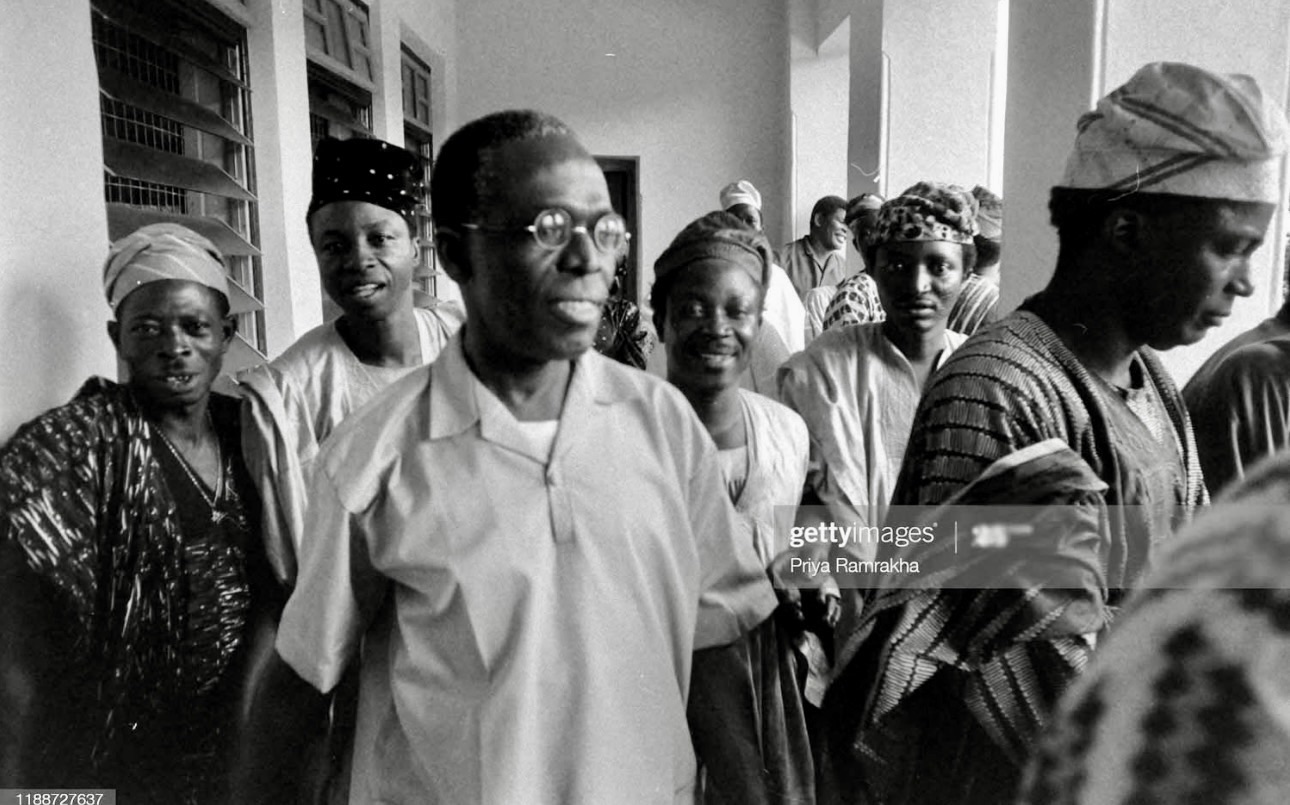
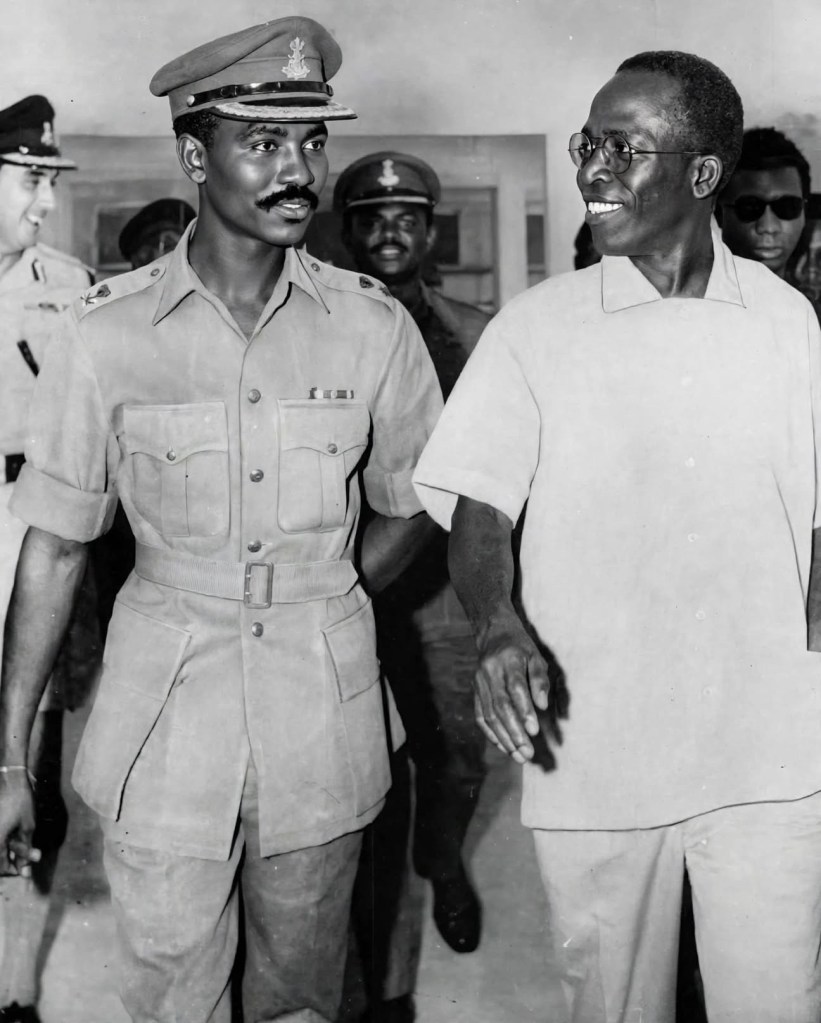
Ironsi’s government, true to form, dithered. Approval may have been signalled in late July, but the counter-coup of 29 July removed both Ironsi and the messenger before anything could be done. It fell to the young Yakubu Gowon to sign the Instrument of Pardon in early August 1966. Awolowo walked free from Calabar Prison on or about 2 or 3 August, still wearing the prison uniform in some of the photographs that survive.
What followed was the real payoff. Within months Gowon brought him into the Federal Executive Council as Commissioner for Finance and Vice-Chairman, the highest civilian post in a military government. The appointment was both practical and symbolic. The federal side needed a steady economic hand and a political figure of national stature as the country slid towards civil war.
Awolowo took to the job with the same methodical intensity he had once applied to free education and industrialisation in the Western Region. As Federal Commissioner for Finance from 1967 to 1971 he became the civilian architect of the war economy. He tightened foreign exchange controls, raised taxes, and ensured that the growing oil revenues were directed towards the war effort without plunging the country into unsustainable debt. He helped design the early frameworks for revenue allocation that later evolved into the system still used by the Federation Account Allocation Committee. In 1973 when the time came to replace the old Nigerian pound, it was a plan conceived under his watch that the new currency was named the Naira, a deliberate assertion of national identity.
His approach was unsentimental. He supported the economic blockade of the East as a legitimate instrument of war, arguing that starvation was a more efficient weapon than bullets if it shortened the conflict. Eastern critics have never forgiven him for that cold calculation. Supporters point out that the federal side emerged from thirty months of fighting without the kind of financial collapse that has ruined other post-conflict states. While soldiers fought on the fronts, Awolowo kept the books balanced in Lagos.
After the war ended in January 1970 he stayed on long enough to help stabilise the transition. The four-year development plan was launched, the capital estimates prepared, and a workable approach to the foreign exchange problem sketched out. Then, in 1971, he resigned. His letter to Gowon was characteristically precise. He reminded the Head of State that he had never wanted to serve in an unelected government beyond the period of emergency. With the war over and the immediate economic dangers managed, he felt free to step down. He left office on 1 July 1971, carrying with him the unusual distinction of having entered government from prison and exited it with his principles largely intact.
The 1966 letter therefore sits at the centre of a larger story. It is the document that turned a convicted political prisoner into the wartime finance minister. It is also a reminder of how Nigerian history sometimes rewards the man who refuses to sell his principles for an early release. Awolowo paid for that refusal with years in Calabar. He collected the dividend in the form of a second act that few of his contemporaries managed: four years at the heart of power during the country’s most dangerous period, followed by a clean exit and a return to opposition politics that would later produce the Unity Party of Nigeria.
In the end the letter did what it was designed to do. It freed the writer, rehabilitated the politician, and gave a fractured country one of the few steady hands available when the centre was threatening to fall apart. Whether Ironsi would have signed it in time is now an academic question. Gowon did. And Nigeria, for better or worse, got the benefit of the bargain.

