

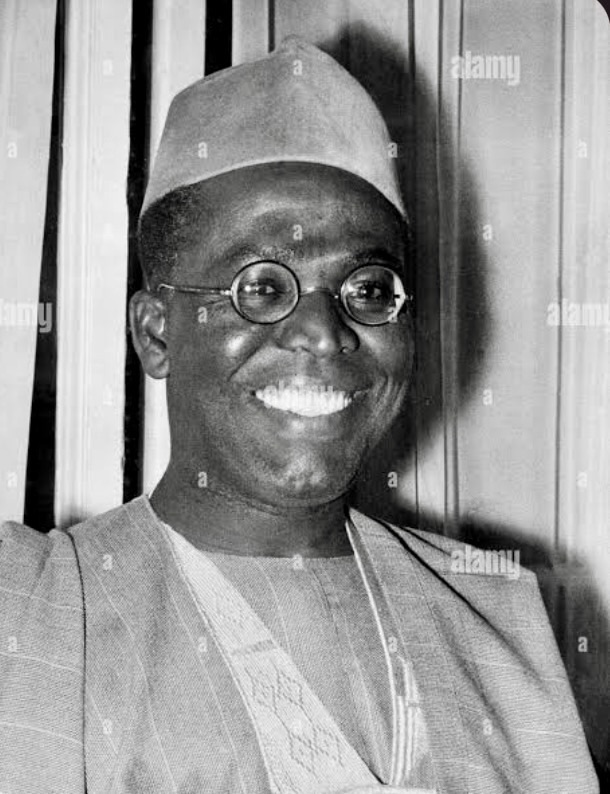
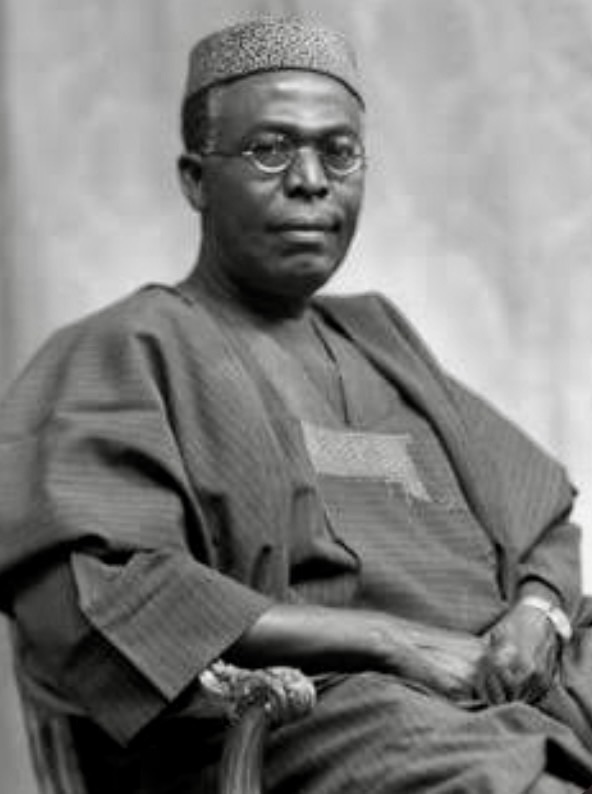
It has become almost obligatory, whenever Chief Obafemi Awolowo’s name is mentioned in polite company, to sigh and declare that he was the best president Nigeria never got. The phrase has the comforting quality of a national lullaby. It allows us to admire the man without the inconvenience of testing the claim against the actual mess of Nigerian power. Let us, for once, set the lullaby aside and play the dangerous game of fantasy politics.
Suppose the stars had aligned differently. Suppose the 1959 federal elections had produced a different arithmetic, or the Action Group had not been broken on the wheel of the Western crisis, or the military had stayed in the barracks, or the 1979 and 1983 elections had gone the other way. Suppose Awolowo had become the substantive leader of Nigeria and had tried to scale the Western Region experiment to the entire country. Would Nigeria today be radically different?
The Western Region under Awolowo remains the most coherent argument for the affirmative. Between 1954 and 1959 the region ran the most ambitious social programme in tropical Africa: free primary education that sent hundreds of thousands of children to school, free healthcare, farm settlements, industrial estates, a flourishing cocoa economy, and a civil service that actually functioned. Literacy rates soared. The region’s budget was balanced. Corruption, while not absent, was kept within civilised limits by the standards of the time. The wartime finance portfolio later showed the same instincts: tight control of foreign exchange, refusal to drown the country in debt, and a cold-eyed willingness to use economic pressure as a weapon. Scale that across Nigeria and the fantasy becomes intoxicating.
A nationwide free education policy from the early 1960s might have produced a far more skilled population by the 1980s. An early focus on industrialisation and agricultural modernisation might have softened the oil curse that turned the country into a petro-state with a hollow productive base. A leader who treated public finance as a moral discipline rather than a personal ATM might have built stronger institutions before the oil boom flooded the system with easy money and easier theft. Federalism under Awolowo would likely have been more balanced, with stronger regions and a centre that did less of the heavy lifting and therefore less of the heavy stealing.
Yet the fantasy runs into the same granite realities that have defeated every Nigerian reformer. The Western Region was relatively homogeneous, relatively prosperous, and relatively small. Nigeria is none of those things. Extending free education to the North in the 1960s would have required a political confrontation that the Northern political class was neither willing nor able to accept at the time. The same applies to land reform, industrial policy, and the deliberate weakening of patronage networks. Awolowo’s democratic socialism and his insistence on planning would have collided with the interests of the military, the emergent oil elite, the traditional rulers, and the ethnic entrepreneurs who have always found more profit in division than in development.
There is also the matter of temperament. Awolowo was a man of rigid principle and even more rigid self-belief. That quality produced the Western Region’s achievements. It also produced enemies who regarded him as a Yoruba hegemon in progressive clothing. A national Awolowo government would have faced accusations of ethnic dominance from day one, just as every subsequent government has. Whether his administrative competence would have overcome that suspicion is an open question. Competence is not always enough in a country where legitimacy is endlessly contested.
The oil boom would still have arrived. The temptation to abandon hard production for easy rents would still have been enormous. The military would still have been waiting in the wings. Even the most disciplined leader cannot repeal the laws of political economy or the stubborn facts of Nigerian diversity. Awolowo might have left behind better schools, a stronger industrial base, and a less corrupted public service. He almost certainly would not have left behind a Singapore on the Niger. The gap between the Western Region and the Nigerian federation is not merely one of scale. It is one of complexity, distrust, and historical timing.
So would the country today be radically different? Probably better in measurable ways: higher literacy, stronger human capital, a less complete capture of the state by rent-seekers. But radically different in the sense of having escaped the fundamental dilemmas of Nigerian nationhood? That is a heavier claim. The best president Nigeria never got remains a powerful myth precisely because it allows us to imagine a cleaner path that the actual path never offered. Myths are useful. They are also, by definition, untested.
Awolowo’s real legacy is not the presidency he never held. It is the uncomfortable standard he set. Every subsequent government has been measured against the Western Region and found wanting. That, more than any fantasy of national leadership, is why the phrase refuses to die.

