

There Is No Art
Shakespeare has King Duncan declare in Macbeth that there is no art to find the mind’s construction in the face. He says it of the traitor he has just had executed. Then Macbeth walks in, glowing with loyalty, and Duncan promotes him on the spot. The play does not end well for the man who trusted a face.
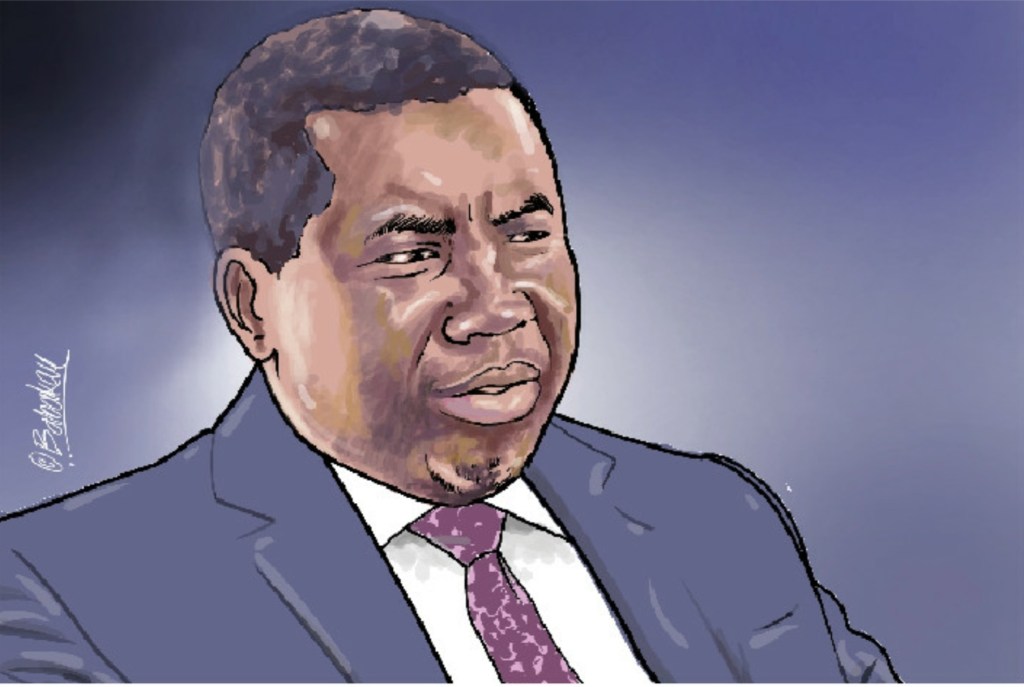
Nigeria’s electoral commission has now walked in wearing a very fine face. It is called artificial intelligence, and it is arriving in time for the 2027 general elections. INEC chairman Joash Amupitan has announced a dedicated AI Division within the commission’s ICT department. Automated auditing tools have reportedly been built into the results verification process to flag mathematical discrepancies and statistical outliers as data arrives from the field. Duncan would have nodded gravely and handed over the keys.
The Library and the Landfill
Here is the uncomfortable truth about AI, however much the brochures sparkle. It is a library with a very fast librarian. It reasons from what it has been given, and it cannot conjure a fact about the world that nobody wrote down. Feed it good records and it performs wonders. Feed it rubbish and it performs rubbish, at scale and with impeccable confidence.
Now consider where this librarian has been posted. Nigeria is a country where information goes to die, preferably quietly and without a death certificate. The last national census was held in 2006, which means the country is planning the largest democratic exercise on the continent against a headcount old enough to vote itself. INEC says more than 103 million registered voters will cast ballots across 176,846 polling units. A great many records in this country are unreliable, unavailable, or available only to the person who benefits from their unreliability. This is not an accident of poverty. Opacity is a business model, and an analogue state is simply a state that cannot be audited.
Hand a librarian a library built on fog and you get a very articulate fog.
What the Commission Actually Says
In fairness to INEC, and fairness is cheap, so I am happy to dispense it, the stated uses are narrower than the slogan. The commission describes an intelligent results process in which polling unit result forms are digitised, figures are extracted from scanned Form EC8A, and the numbers are compared. There is also talk of logistics, route planning and biometric database management, and of deepfake monitoring. Mr Amupitan insists that AI will not determine the outcome and that the power to elect rests with voters. He has also stressed that AI will remain a support tool and not replace human decision-making.
All of that is sensible, and none of it is the problem. The problem is what such a tool can see. A machine that checks whether the arithmetic on a result sheet adds up will catch the clumsy forger who cannot count. It will wave through the competent one. A falsified sheet whose totals reconcile is, to an arithmetic auditor, simply an honest sheet with excellent manners. The tool inspects the document. It cannot inspect the polling unit, the thug at the gate, or the agent who wrote the numbers in a quiet room before a single voter arrived.
Then there is the sequencing, which would embarrass a first-year pupil barrister. The tools are being deployed while the AI Governance Framework is still undergoing internal approval. A critic put it neatly: you do not build the roof before drafting the plans. Strictly, one is not forbidden from doing so. One simply cannot be surprised when it rains.
And Nigerians have a memory that is longer than any dataset. In 2023 the Result Viewing Portal was sold as the cure for tampering. Mr Amupitan himself has since conceded that the 2023 election showed how technology can become a source of public doubt when it underperforms. The portal was meant to let citizens see polling unit results before anyone could alter them. Citizens saw a loading wheel instead.
The Logo Problem
This is where one’s suspicion earns its keep. A cynic would say AI is being slapped on the outcome as a logo and not delivered as a product, a sticker on a lorry that still has no brakes. The commission has made its reputation on promising technology, and the technology has made its reputation on promising to arrive. A press conference about AI is cheaper than a functioning upload portal, and it photographs better.
The reactions have been predictably colourful. The NDC has accused INEC of planning to use AI to rig the election, without providing evidence, which is a fine way to treat an allegation and a poor way to win an argument. Others are more precise. Yoruba Ronu warned of manipulation, hacking and data poisoning, and asked who holds final authority when an AI system flags an anomaly: INEC, the courts, parties or observers. That last question deserves a straight answer before January and not a conference after it. If a machine flags a result as suspicious, and the flag cannot be inspected, challenged or explained, then we have not modernised the election. We have merely hired a very expensive oracle.
If INEC wants this to be a product and not a logo, the checklist is short and unglamorous. Publish the methodology. Finish the governance framework before the tools touch a single result. Let independent auditors examine the system. Make sure that polling unit results reach the public portal on election day, in full, without the loading wheel. Yiaga Africa’s executive director has said much the same, urging that organisations deploying AI-powered electoral tools must be open about their methodologies and allow independent audits.
Duncan trusted a face and lost a kingdom. Nigerians have trusted a few faces too, and we have the receipts, assuming we can find them. The advice from the old playwright is to demand the mind behind the face. In 2027 that means the code, the data, the audit trail and the human being who signs at the bottom.
Until then, the algorithm may be many things, but it is not a witness.

