

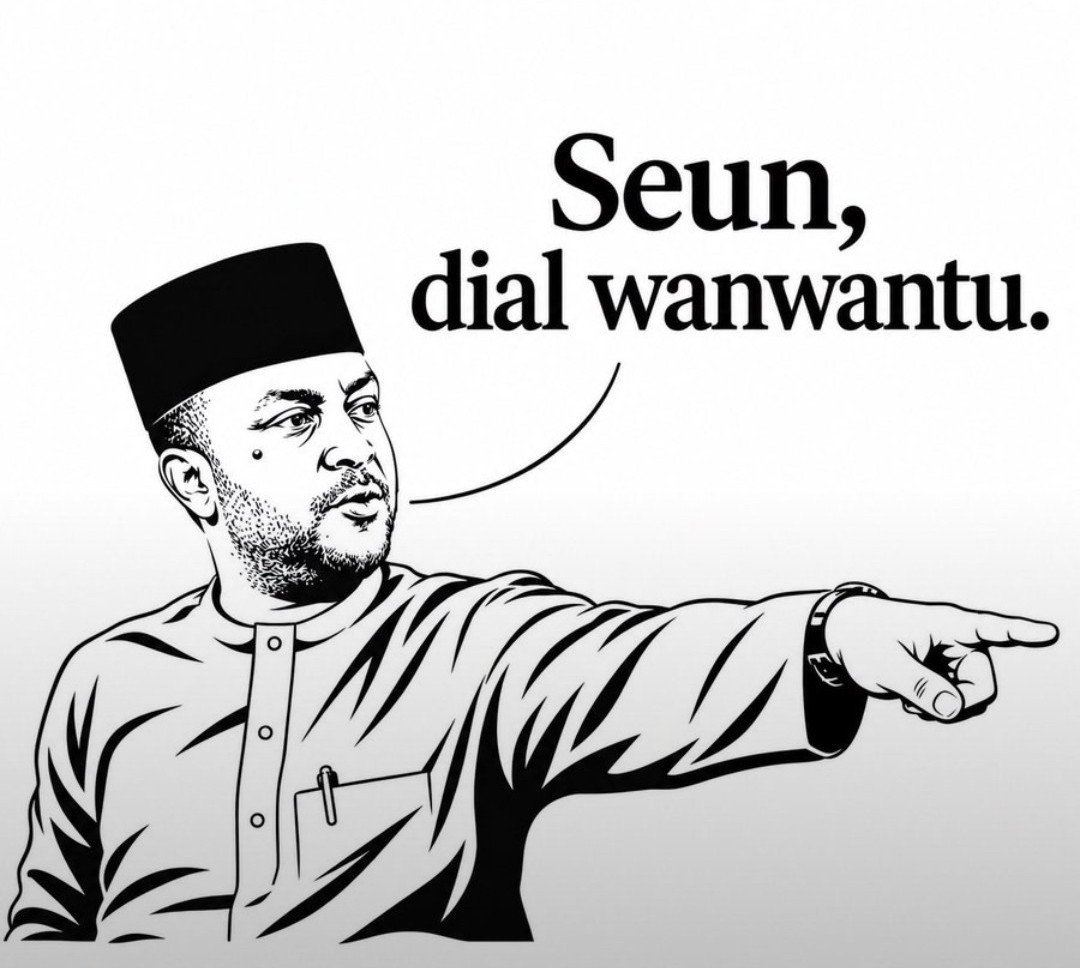

Alwan Hassan sat there in his light blue agbada, radiating the serene confidence of a man who has never once had to call for help in the middle of the night. He pointed, he gestured, he preached. With the zeal of a late-night televangelist selling miracle water, he ordered Seun Okinbaloye to take his phone and dial 112 right there on live television.
“Nobody really knows about it,” he declared, as if revealing a state secret. He compared it to America’s 911. He claimed it works even without network or internet. “Thanks to APC government,” he kept repeating, like a man reciting a catechism. If you’re in Abuja the Abuja centre answers; if you’re in Kano, Kano picks up. Ambulance or police, depending on the emergency. The president has done well with it. The system has been working for years. It was launched under Buhari, no less.
Seun dialled.
Silence.
Not a ring. Not a tone. Not even the polite Nigerian “the number you have dialled is not available.” Just the digital equivalent of a blank stare.
Hassan’s confidence began its slow, elegant collapse. Maybe it’s the network in the studio, he offered. Maybe it works when *he* tries it. Seun, with the calm of a man who has spent years watching politicians dig their own graves with a gold-plated shovel, pointed out that other numbers were connecting just fine from the same phone, in the same studio. Viewers at home were already texting in to confirm the same dead air. The emergency number that supposedly works without network was, on this particular evening, working without network *and* without mercy.
The moment became pure Nigerian political theatre: a government man hyping a life-saving service on national television, only for the service to refuse to answer the call. Hassan kept insisting it was real. The host eventually asked, with the kind of polite cruelty only television can deliver, why the system was making him look like a liar on air.
For ordinary Nigerians, this is the kind of clip that lodges in the memory like a thorn. Emergency services are not a campaign slogan. When the car flips on the expressway at 2 a.m., when armed men are at the gate, when someone is bleeding out or choking, you do not need a press statement. You need a number that rings. Seeing a party chieftain sell it with such swagger, only for it to fail in real time, does something corrosive to public trust. It tells people that the people in charge are either not serious, or they simply do not live in the same country as the rest of us.
This is, of course, the same Alwan Hassan who not long ago cheerfully informed the nation that some ministers pay billions to become ministers. When a man with that particular brand of candour returns to television to sell an emergency line that refuses to pick up, the embarrassment compounds. It is no longer just a failed demonstration. It is a character study.
Outside the country the clip travels faster than any government narrative. Foreign viewers do not pause to research the history of the 112 system or the technical challenges of emergency networks in a place with intermittent power and patchy coverage. They see a Nigerian official in traditional attire confidently declaring that the number works even without network, followed by the number’s refusal to cooperate on live television. The old caricature refreshes itself without any effort from us. At a time when the administration is asking for more time, more patience, more understanding, moments like this make the request sound less like a plea and more like a punchline.
You cannot market achievements when the simplest public test collapses in front of the cameras. You cannot keep asking citizens to believe in systems that cannot survive a five-minute live demonstration. And you cannot keep sending party men onto television to perform confidence while the actual infrastructure performs its own quiet sabotage.
APC keeps finding new ways to make the ordinary business of governance look like performance art. This time the art was unintentional, the performance was public, and the audience, both local and foreign, left with the same tired conclusion: when it matters most, the number still does not ring.

