

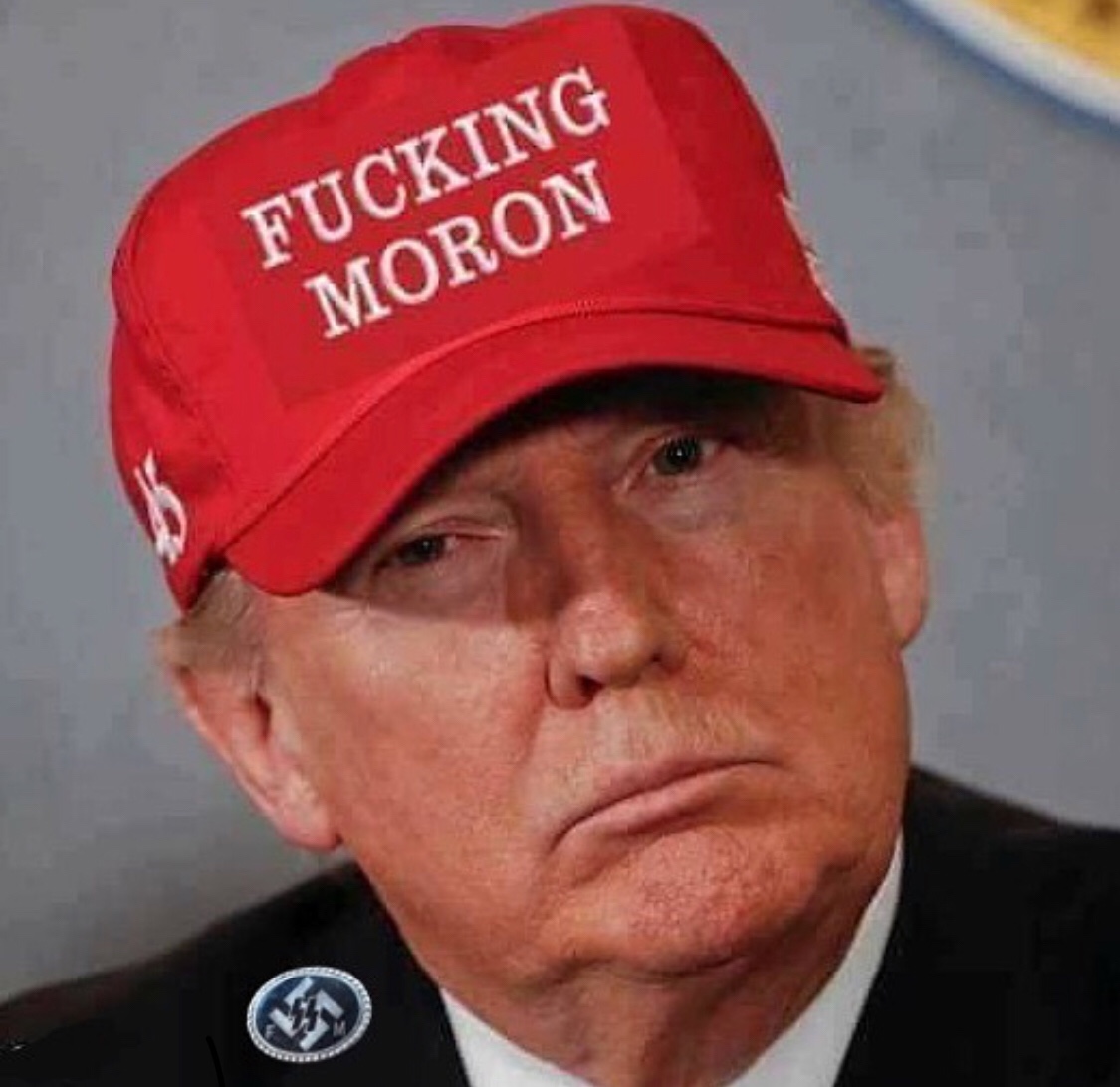
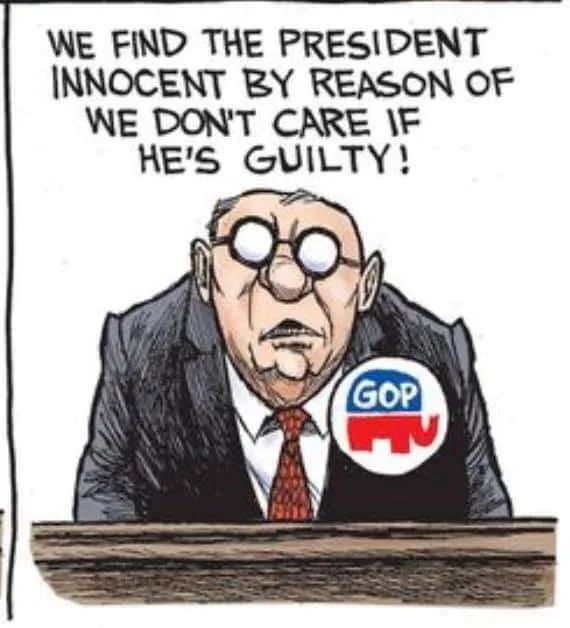
There is an old saying, so old it has outlived the dogs it was originally about, that you cannot teach an old dog new tricks. The charitable reading of this proverb is that experience builds expertise. The less charitable, and far more accurate, reading is this: some animals find a thing that works and simply refuse to stop doing it, long past the point when any reasonable observer would have called for an intervention.
Donald J. Trump is that dog. The trick is almost elegant in its simplicity, and it has not changed since the 1980s. You need a trigger, any trigger, true or false, large or small, urgent or invented, and then you let the machine do the rest. Trump calls the shot. The Republican Party loads the gun. America absorbs the bullet.
The Original Blueprint: “Just Say It Was Corrupt”
In the chaotic rearguard action that followed the 2020 presidential election, an election that was scrutinised, litigated, audited, hand-counted, machine-recounted, and examined by courts appointed by both parties, before arriving at the conclusion that Joe Biden had won, Donald Trump issued what may be the most honest instruction of his entire political career.
To senior officials at the Department of Justice, the man who had sworn an oath to faithfully execute the laws of the United States said, with the unbothered directness of a man ordering lunch: “Just say the election was corrupt and leave the rest to me and the Republican congressmen.”
Read that sentence again. Savour its architecture.
He did not ask anyone to find corruption. He did not claim to have evidence of corruption. He asked only for the predicate, the raw material, the seed crystal, around which the rest of the apparatus could grow. The DOJ would supply the official-sounding assertion. Trump and the congressional Republicans would supply everything else: the amplification, the mythology, the fundraising emails, the January 6th rally, the Capitol, the gallows.
This was not improvisation. This was a governing philosophy, stated plainly, in front of witnesses.
How the Formula Works (A Brief Tutorial)
The Trump-GOP operational model has three steps, and they never vary:
Step One: Introduce the trigger. It does not have to be true. It does not have to be plausible. It merely has to be usable, a claim sufficiently alarming, sufficiently vague, and sufficiently resistant to quick falsification that it can survive the news cycle long enough to do its work. Think of it as a kite. You need enough wind. You do not need the kite to actually fly anywhere in particular.
Step Two: Release the kite. This is Trump’s signature contribution. He floats it, at a rally, in a late-night social media post, in a half-sentence dropped to a pool reporter, and then he steps back. The trigger is now airborne and no longer his sole property.
Step Three: Let the GOP fly it. Here is where Lindsey Graham materialises from whatever dinner party he was attending to go on television. Here is where Mike Johnson holds a press conference in front of a flag. Here is where the Freedom Caucus schedules an emergency hearing. The kite, now formally released into the Republican ecosystem, rises on thermals of institutional credulity and partisan incentive, until it becomes policy, law, or at minimum, a permanent feature of the MAGA cosmology.
Iran and the Nuclear Kite
Consider the Iranian nuclear weapons scenario, which periodically re-enters the American political atmosphere with the regularity of a comet and roughly equal damage potential.
The formula applies perfectly. Just say Iran is about to deploy nuclear weapons — not “is developing,” not “has enriched uranium to certain levels,” not any of the technically accurate and genuinely concerning statements that a responsible government might make, but is about to deploy. The most alarming possible version, stripped of caveats, dressed in urgency.
The trigger is released. Graham, who has been advocating military strikes on Iran with the enthusiasm of a man who will not personally be in any of the aircraft, is cued. Johnson, whose relationship with empirical foreign policy assessment is, to put it gently, a work in progress, provides the congressional scaffolding. The intelligence community, if it demurs, is accused of being deep state. Allied governments, if they seek clarification, are accused of being naive.
The outcome need not be war, though it might be. The outcome need only be the consolidation of a particular domestic political reality: that Donald Trump alone stands between the American people and annihilation, and that any constraint on his authority is therefore a gift to Tehran. The false premise is not incidental to the argument. The false premise is the argument.
The Ballroom Gambit (Or: Never Let a Gunman Go to Waste)
But it is in the domestic sphere that the Trump method achieves its most baroque expression.
When a gunman opened fire at the White House Correspondents’ Dinner, that annual Washington ritual in which journalists and the people they cover gather to pretend they find each other charming, the country was, understandably, alarmed. A presidential-adjacent event. A security failure. A genuine moment of national vulnerability.
A responsible administration might have reviewed security protocols. Assessed intelligence failures. Addressed the long-standing concerns about public events attended by senior officials.
The Trump administration looked at this event and saw something else entirely: a receipt.
Suddenly, with the elegant inevitability of a conjurer producing a coin from behind your ear, the solution to assassination risk was not better intelligence, not improved perimeter security, not a review of the Secret Service’s risk assessment methodology. The solution was that the American taxpayer would fund the renovation and ongoing operational costs of Donald Trump’s private ballroom.
Cue the Republican media apparatus, right on schedule. The influencers who had spent the Obama years composing operatic laments about deficit spending discovered that marble flooring at Mar-a-Lago was, in fact, a national security expenditure. The congressmen who had refused to fund school lunches found the philosophical flexibility to approve a ballroom. The logic was airtight, if you didn’t think about it: the president needs a secure venue, the ballroom is secure, therefore the taxpayer funds the ballroom. That this ballroom is owned by the president, and that its increased prestige and government-certified footfall would substantially enhance its commercial value to the same president, was, presumably, a coincidence.
The trigger was the gunman. The kite was “presidential security.” The GOP flew it. The beneficiary was, as ever, singular.
The Invariant at the Bottom of It All
What unites the stolen election gambit, the Iranian nuclear scare, and the ballroom invoice is not merely cynicism, cynicism is far too modest a word for what this represents. What unites them is something more structurally interesting: the complete decoupling of the trigger from reality, combined with the complete coupling of the outcome to a single individual’s enrichment.
Every predicate is false. Every consequence is adverse, to the American republic, to its institutions, to its alliances, to the taxpayers who fund its government and its president’s property portfolio simultaneously. Every outcome, without material exception, benefits one man and one foreign government, and it is the same man and the same government every time.
The man, you know. The government, you also know, though its president’s name, we are told, is difficult to spell correctly at speed.
You cannot teach an old dog new tricks. But then, why would you? The trick works. The kite flies. The ballroom gleams.
The American people pay.

