This is not merely a personality clash. It is a blot on the democratic experiment. It reveals how thin the democratic impulse runs in the organs of government and the people who staff them. Effectively, the FCT is under non-democratic governance inside a country that still insists on calling itself a democracy. The Minister acts. The Senator is sidelined. The President remains serenely above the fray. The National Assembly discovers urgent business elsewhere. The circle is complete.
The Moths to the Flame: Why Do Populist Movements Always Attract Such “Enterprising” Characters? By Lawson Akhigbe
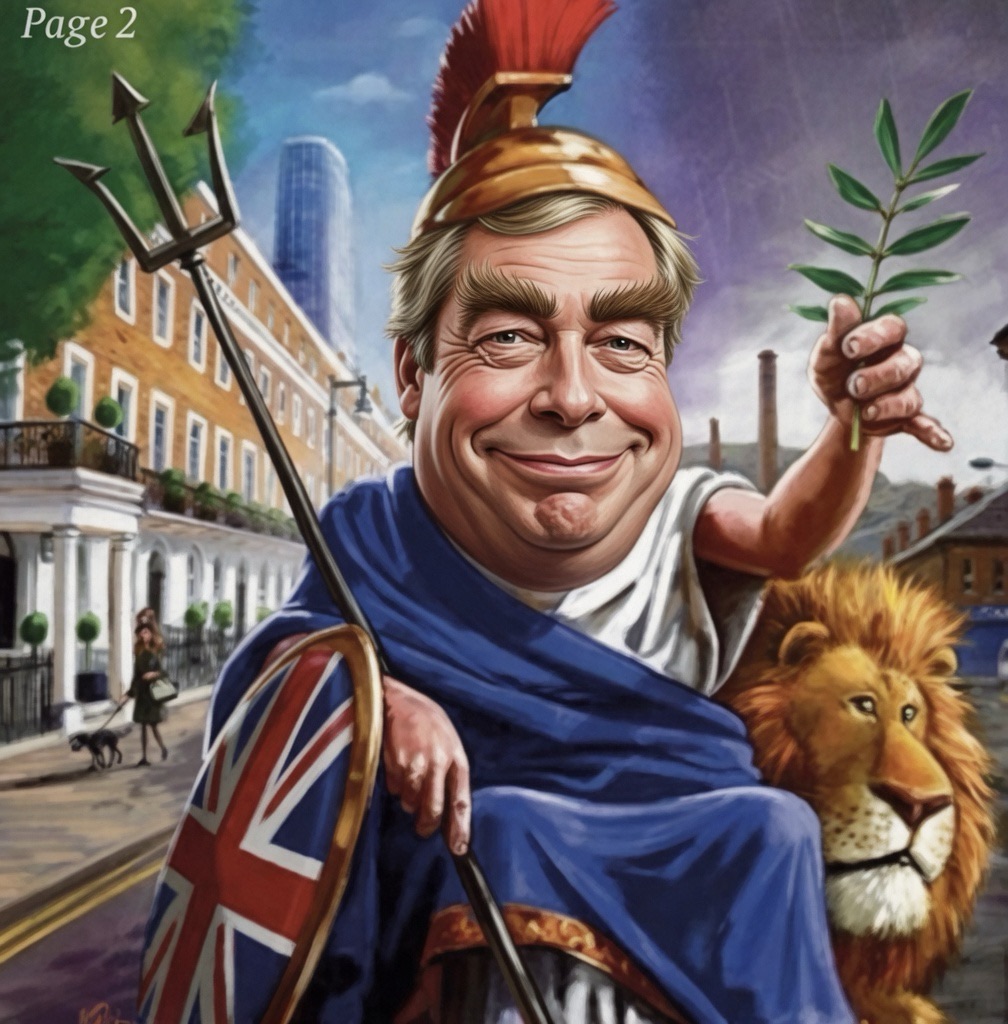
There is an eternal, almost Newtonian law of modern politics: wherever a politician loudly proclaims they are "standing up for the forgotten working man," you will inevitably find a discreet corner table in a private Mayfair club where someone is eagerly trying to launder foreign money.
No Victor, No Vanquished? Gowon’s Memoir Reopens Biafra’s Bloody Ledger by MARCEL MBAMALU
His new memoir, “My Life of Duty and Allegiance”, points a finger from the grave of history at Chukwuemeka Ojukwu — accusing the dead Biafran leader of lying about Aburi, arming the East for war, and dragging Nigeria into bloodshed. Ojukwu, buried since 2011, cannot answer.
Reform UK’s Brexit immigration impact
Reform UK’s perspective on Brexit and immigration is central to its identity: Brexit was meant to deliver control over borders and lower overall migration, but post-2016 (especially post-2021) governments primarily Conservative, failed to use that control effectively, leading to a non-EU migration surge that the party labels the “Boriswave.” Reform argues this undermined the Brexit promise, strained public services, housing, wages, and cultural cohesion, and necessitates far tougher policies.
Reform UK and others – Immigration Policy Compared
Reform UK’s immigration policies stand out as the most restrictive among major UK parties, emphasizing a sharp reduction in both legal and illegal migration, prioritisation of British citizens, and radical enforcement measures. They position immigration as a core driver of housing shortages, NHS strain, wage suppression, cultural change, and public service overload.