ANDY BURNHAM MUST GIVE BRITAIN AN IDEOLOGY, NOT ANOTHER MANAGEMENT CONSULTANT’S POWERPOINT by Lawson Akhigbe

There was something important about Andy Burnham's intervention at Prime Minister's Questions. Not simply because of what he said, but because of what it appeared to recognise: Britain has not merely been badly governed. Britain has been travelling in the wrong ideological direction for decades.

Back to Basics, Rebranded: Burnham’s High Streets and the Politics of Looking Busy by Lawson Akhigbe

John Major's government never intended "Back to Basics" to become a punchline. Launched in 1993 as a pitch for moral and civic renewal, family values, personal responsibility, respect for the old certainties, it was retail politics in the purest sense: cheap to announce, easy to photograph, and entirely disconnected from the actual machinery of governing a mid-sized post-imperial economy adjusting to the ERM's wreckage. Section 28 sat quietly in the background as inherited scaffolding for this mood music, and the Education Act 1993's sex-education clauses supplied a fresh, deniable coat of paint. None of it required legislative heavy lifting. All of it signalled seriousness to an audience that wanted reassurance more than reform. The scheme collapsed, memorably, when half the cabinet turned out to be failing the basics they were instructed to return to.

Did You Tell Them to Rescue the Kidnapped? Nigeria’s Politicians, Generals and the Confusion Between Policy and Operations by Lawson Akhigbe

There are some moments in political history that survive long after the politicians involved have left office. Not because of a great speech. Not because of a great policy. But because somebody asked a very simple question and refused to let it escape through the nearest political fire exit.

Edo’s Chop-Chop Chief: Dan Orbih and the Politics of Convenient Grief by Lawson Akhigbe

Chief Daniel Osi Orbih is dead, and Edo State’s political class has responded the way it always does when one of its own departs: with a grief so generous it retroactively forgives everything the man ever did. Orbih passed away on Monday, 31 August 2026, at the age of 64, and within hours the condolences arrived in a queue, each one more magnanimous than the last, as though the deceased had spent his career building roads rather than blocking them.

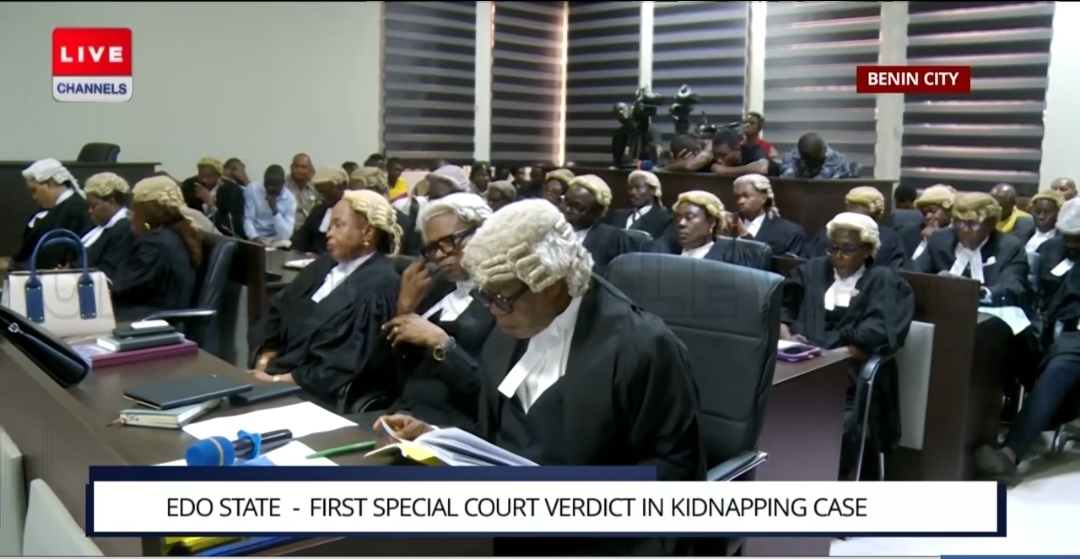
Nigerian Lawyers in Political Careers: A Historical, Structural, and Contemporary Analysis

The intersection of law and politics in Nigeria is profound and longstanding. Lawyers have disproportionately shaped the country’s political landscape, from pre-independence nationalism to post-1999 democratic governance. Legal training emphasizing advocacy, constitutional interpretation, negotiation, evidence-based reasoning, and oratory equips practitioners exceptionally well for political roles. This pattern reflects both the profession’s prestige and Nigeria’s constitutional emphasis on legal expertise in governance.