When a political movement cannot quite explain where Britain should go, it apparently finds comfort in explaining where Britain used to be.
The Union Jack Won’t Fix Britain: Farage, Braverman and the Politics of National Nostalgia by Lawson Akhigbe


Reporting News and opinions
When a political movement cannot quite explain where Britain should go, it apparently finds comfort in explaining where Britain used to be.

Behold the main character of British politics in 2026: a white, elderly gentleman, clearly leaning on a sturdy wooden cane for support, accredited badge swinging proudly from his neck at the Reform UK conference. Mouth open in mid-roar, eyes locked in righteous fury, he has somehow decided that the greatest threat to civilisation in that moment is a young woman holding a handbag. The crowd of fellow pensioners and patriots looks on with varying degrees of encouragement. Somewhere in the background, the usual sea of white hair and earnest lanyards nods along

It has no postcode. It does not appear on Google Maps. There are no street signs pointing towards it. Yet, whenever one of its inhabitants is caught saying something outrageous or doing something politically or legally questionable, suddenly we are told that the offending words or conduct belonged there.
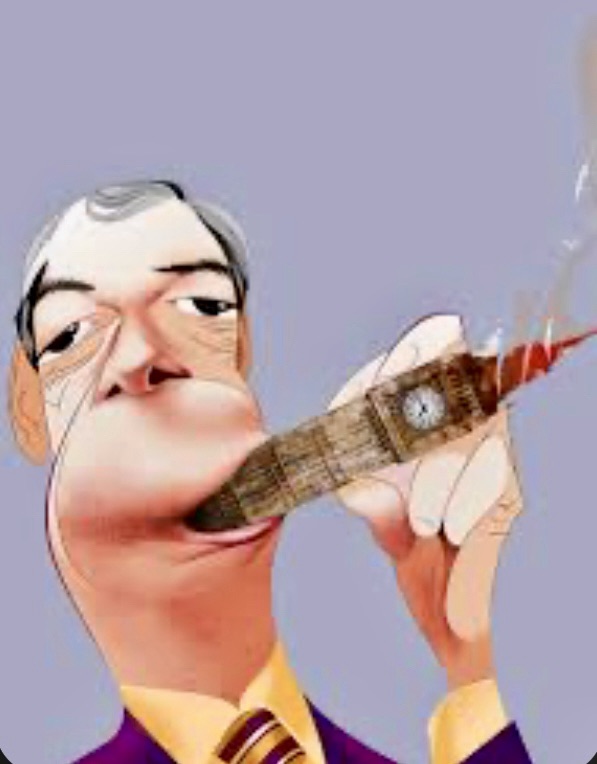
There is an eternal, almost Newtonian law of modern politics: wherever a politician loudly proclaims they are "standing up for the forgotten working man," you will inevitably find a discreet corner table in a private Mayfair club where someone is eagerly trying to launder foreign money.

There was something important about Andy Burnham's intervention at Prime Minister's Questions. Not simply because of what he said, but because of what it appeared to recognise: Britain has not merely been badly governed. Britain has been travelling in the wrong ideological direction for decades.

