


There is a comforting lie societies tell themselves during war: that conflict is about ideals—territory, sovereignty, justice, survival. It sounds noble. It reads well in communiqués. It justifies sacrifice.
But beneath the speeches and slogans lies a far less flattering reality: war is also an economy.
And if you want to understand how that economy actually works—not in theory but in practice—Half of a Yellow Sun offers a brutally honest case study.
Kainene and the Marketplace of War
Through Kainene, the sharp-edged twin who refuses sentimentality, Chimamanda Ngozi Adichie dismantles the mythology of wartime purity.
While Biafra starves, Kainene trades.
Not symbolically. Not reluctantly. Systematically.
She moves goods—food, kerosene, cigarettes—across enemy lines, dealing with Nigerian soldiers, intermediaries, and whoever else can keep supply chains alive. Her calculus is simple: ideology does not feed people; access does.
This is not betrayal. It is the logic of a conflict economy.
Trade Does Not Stop at the Frontline
One of the most uncomfortable truths Kainene reveals is that war does not eliminate commerce—it distorts it.
Frontlines are porous when profit is involved.
Enemies become customers.
Soldiers become brokers.
Blockades become price signals.
In Biafra, official policy spoke of resistance and self-sufficiency. In practice, survival depended on precisely the opposite: engagement with the enemy.
The lesson is stark—conflict does not suspend markets; it creates new ones.
Scarcity is Opportunity—for Some
War manufactures scarcity. Scarcity manufactures profit.
While the masses queue for relief or starve outright, a parallel economy thrives—black markets, smuggling networks, hoarding systems. Kainene operates within this space with ruthless efficiency. She understands that in war, access is power, and power is monetised.
This is the uncomfortable duality of conflict:
- Collective suffering
- Private accumulation
The same conditions that produce famine also produce fortunes.
The Gender Paradox of War Economies
Kainene’s role is also subversive.
In a society where women are expected to be passive casualties of war, she becomes an economic actor—decisive, strategic, and unapologetically pragmatic. Her authority does not come from ideology or morality but from control over resources.
War, paradoxically, can dismantle certain social constraints even as it deepens others. In the vacuum of institutional collapse, those willing to operate outside convention—like Kainene—gain leverage.
Idealism vs. Transactional Reality
Kainene’s worldview collides with the intellectual nationalism of Odenigbo and the moral unease of Olanna. Where they see cause, she sees cost. Where they see betrayal, she sees logistics.
She represents a truth many prefer to ignore: wars are not sustained by speeches but by supply chains.
Guns, food, fuel—these do not move on ideology. They move on incentives.
And Yet, No One Escapes
Despite her competence, Kainene does not triumph over the system she navigates. Her disappearance near the war’s end is not just a narrative tragedy—it is an economic one.
Because the ultimate feature of a conflict economy is instability.
No matter how skilled the operator:
- supply lines collapse
- alliances shift
- violence overrides contracts
In the end, the market consumes its participants.
From Biafra to Today’s Insurgencies
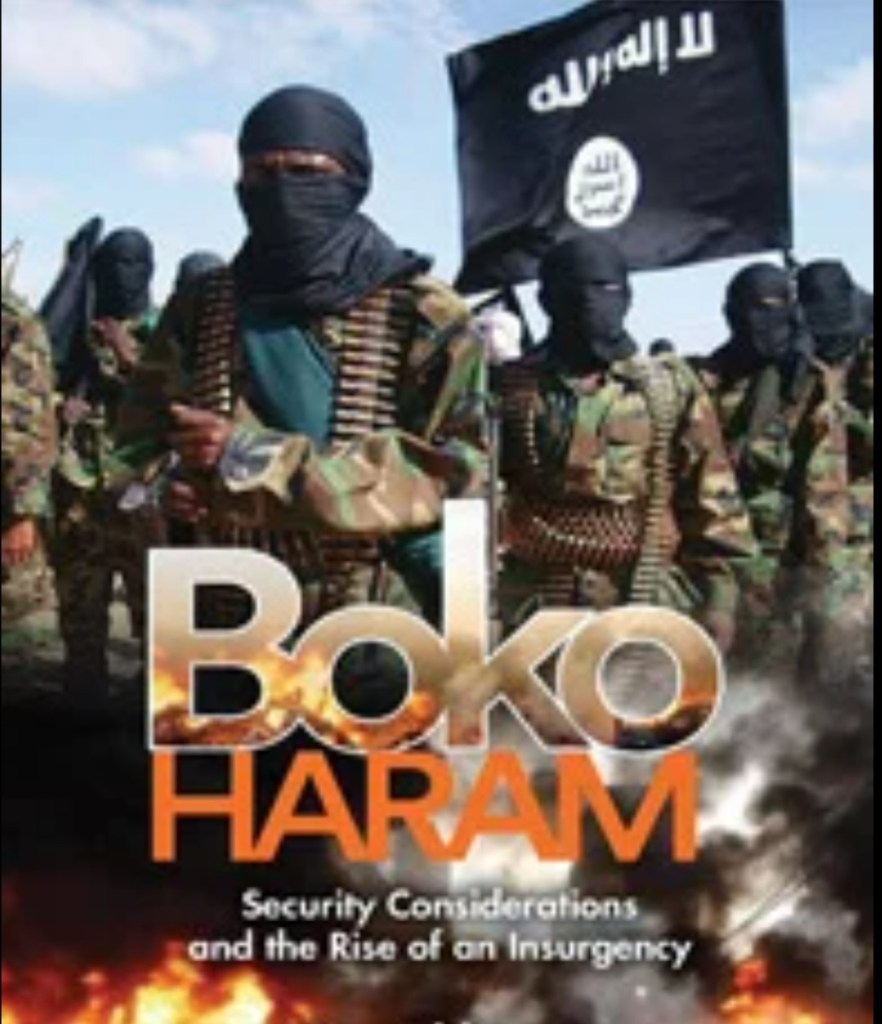
Fast forward to contemporary Nigeria, and the same structural patterns are visible in insurgencies involving groups like Boko Haram and various armed gangs.
The language has changed—terrorism, counterinsurgency, national security—but the economic architecture remains eerily familiar:
- Cross-line trade persists: fuel, food, and weapons flow through informal networks that often involve both state and non-state actors.
- Profiteering thrives: contractors, intermediaries, and local strongmen extract value from instability.
- Communities adapt: civilians engage in survival trade, sometimes with the very actors threatening them.
- Ideology coexists with commerce: even the most radical groups require funding, logistics, and supply chains.
Conflict is not just fought—it is financed, sustained, and, in some quarters, quietly benefited from.
The Inconvenient Conclusion
What Kainene exposes—and what modern insurgencies confirm—is that war economies are not aberrations. They are systems.
They reward pragmatism over loyalty.
They blur the line between enemy and partner.
They turn survival into transaction.
And most troubling of all: they create stakeholders in the continuation of conflict.
So when wars drag on, when insurgencies refuse to die, when “solutions” remain perpetually out of reach, it is worth asking a simple question:
Who is still doing good business?
Because until that question is answered honestly, the war—whatever its stated purpose—will continue to pay.

