


In the grand, theatrical tradition of Nigerian public administration, there is a sacred, unwritten rule: If the law makes your job too difficult, simply pretend you are the law.
The Independent National Electoral Commission (INEC) recently looked at the freshly minted Electoral Act 2026, passed by the National Assembly to set clear, predictable timelines for our democracy and decided it was more of a “polite suggestion” than a legal binding framework.
At the center of this latest judicial soap opera is a beautifully simple math problem that has somehow managed to flummox the entire electoral umpire. The primary law states that the outer boundary for finalizing election processes is 120 days before the polls. INEC’s brilliant administrative workaround? Ordering political parties to pack up their registers and submit their databases a whopping six months prior to that.
Because in Nigeria, time is relative, and administrative convenience is absolute.
Enter the Justices: A Tale of Two Boundaries
When the Youth Party politely pointed out that INEC was attempting to fast-forward the space-time continuum, the matter landed in the Federal High Court of Abuja, giving us a masterclass in judicial philosophy.[
THE CONSTITUTION & ELECTORAL ACT ] | v (The Ultimate Boundary) [ JUSTICE UMAR'S COURT ] "You cannot shrink the law for administrative convenience." | v (The Safe Regulatory Zone) [ JUSTICE OMOTOSHO'S COURT ] "If the rules are valid, you must play by them strictly."
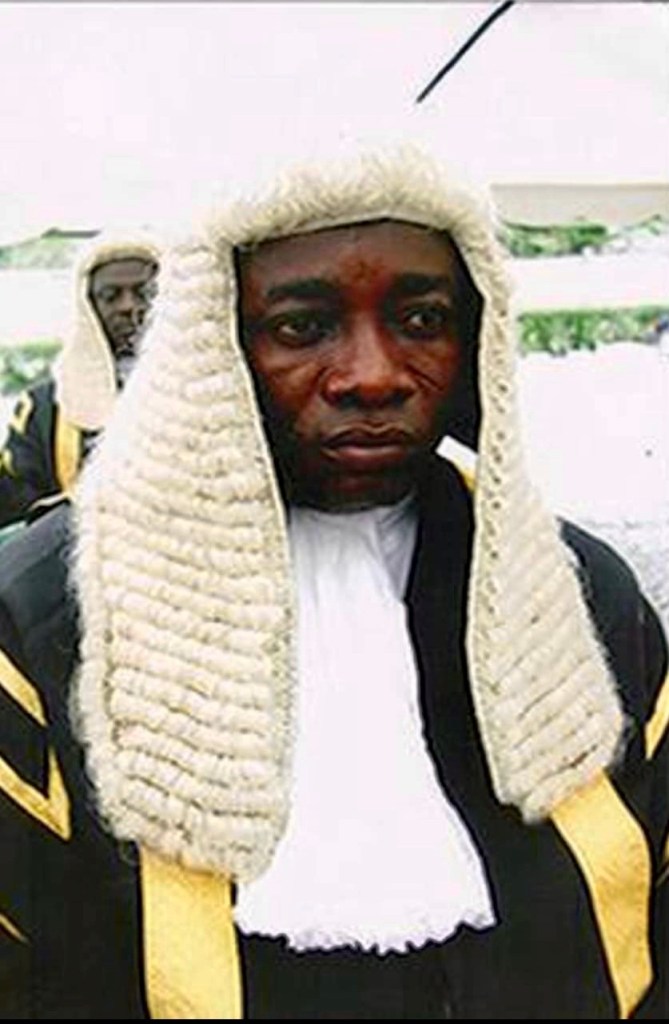
In May, Justice Mohammed Umar delivered a refreshing dose of constitutional purism. He effectively reminded INEC that an administrative body cannot manufacture a jurisdiction the legislature explicitly chose to withhold. You cannot use a subsidiary guideline to illegally truncate a primary Act of Parliament. If the law gives parties a specific window to prepare, the umpire cannot arbitrarily move the goalposts to the parking lot just because it makes ballot-printing scheduling easier.
Naturally, legal commentators immediately tried to pit this against the jurisprudence of Justice James Omotosho, who is famously unyielding when it comes to enforcing party discipline and regulatory compliance. But let’s be fair: Justice Omotosho has never suggested that INEC has the right to play God with the Constitution. His philosophy simply insists that within the lawful boundary, rules are absolute.
Justice Umar defined the edge of the playing field; Justice Omotosho just ensures the players don’t dive into the stands. They aren’t in conflict. They are both trying to keep a chaotic game reasonably sane.
The Audacity of the Appeal: “Show Me the Damage!”
Unwilling to accept that its internal calendar isn’t superior to the laws of the Federal Republic, INEC has sprinted to the Court of Appeal. Its legal defense is a magnificent display of classic bureaucratic gaslighting.
INEC’s primary argument is that the Youth Party’s lawsuit is “academic and hypothetical” because, get this, no actual damage had occurred yet.
Apparently, under INEC’s legal doctrine, a political party must wait until it is actively locked out of the election, disqualified, and thoroughly ruined before it earns the right to ask if a rule is actually legal. To complain beforehand is just being dramatic.
This is the quintessential institutional attitude: insisting on one’s own incorrectness purely to protect bureaucratic comfort. The threat of an illegal, compressed timeline disrupting internal party primaries is a live wire. Waiting for the executioner’s axe to fall before questioning the legality of the blade is not sound strategy; it is a political suicide pact.
Where Will the Appeal Land?
So, what will the Court of Appeal do with this beautifully absurd situation?
On the pure merits of constitutional law, the appellate court cannot overturn the hierarchy of laws without triggering a systemic crisis. If they rule that INEC can unilaterally shrink a 120-day statutory timeline by six months, they are essentially giving a regulatory commission the power to rewrite laws at whim.
However, this is Nigeria, where judges must constantly balance strict jurisprudence against the ever-present threat of “electoral chaos.” The most likely outcome is a classic, teeth-grating appellate compromise:
- The Scolding: The Court of Appeal will likely affirm Justice Umar’s substance, gently reminding INEC that the Constitution is, in fact, higher on the food chain than an INEC internal memo.
- The Lifeline: To prevent a total operational free-for-all, the court will likely refuse to leave a vacuum. Instead of throwing out the timetable entirely, they will probably order a court-mandated recalibration, forcing INEC back to the drawing board to design a schedule that respects the primary Act while still giving the printers enough time to do their jobs.
Ultimately, the umpire will be reminded of a fundamental truth: you are hired to manage the match, not to redefine the length of an hour.

