

A nation that spent a decade asking what Goodluck Jonathan did is now spending the next, asking him to come back and do it again. The man himself has said nothing. He rarely did.
There is a peculiar affliction in Nigerian political life whereby a man may spend five years doing virtually nothing in office, spend another decade being derided for it, and then find himself, at the end of the second decade, described, without apparent irony, as the answer to the nation’s prayers. Goodluck Ebele Azikiwe Jonathan, former president of the Federal Republic of Nigeria, fish farmer, owner of a celebrated hat collection, and the only Nigerian head of state ever to achieve genuine national popularity by leaving, is once again a wanted man.
The question, who is looking for him, and why, is worth examining with the same seriousness that his original presidency was not.
An Accident That Became a Presidency
Let us begin, as all honest accounts must, at the beginning. Jonathan did not so much rise to the presidency as fall into it. He was selected as Umaru Yar’Adua’s running mate in 2007 on the logic, broadly understood in Abuja’s corridors that a man from the creeks of Bayelsa posed no competitive threat to anything or anyone. He was, in the language of political choreography, a safe pair of hands: hands so safe that nobody expected them to hold anything important.
When Yar’Adua fell gravely ill and subsequently died in 2010, Jonathan acceded to the presidency not through the exercise of any particular political genius but through the straightforward mechanics of constitutional succession. The office came to him the way a stray inheritance sometimes does unexpectedly, from a relative nobody thought would go so soon, and before proper arrangements had been made.
He then ran in his own right in 2011 and won. By that point, the accident had become, if not a mandate, at least a habit.
The Tenure: A Masterclass in Benign Neglect
History will record, indeed, it already does, with remarkable consistency, that the Jonathan years were characterised less by what was done than by what was conspicuously not done. Boko Haram, which had been a manageable insurgency when he inherited office, metastasised across the North-East into one of the continent’s most lethal militant movements. The government’s response oscillated between paralysis and press release.
The fuel subsidy regime, a monument to creative public accounting that transferred billions of naira from the federal purse to a constellation of phantom importers, was allowed to run for years before an attempted removal in 2012 triggered nationwide protests. The removal itself was then partially reversed, which is perhaps the most Jonathan-esque resolution to a crisis one could imagine: to do half of something and then stop.
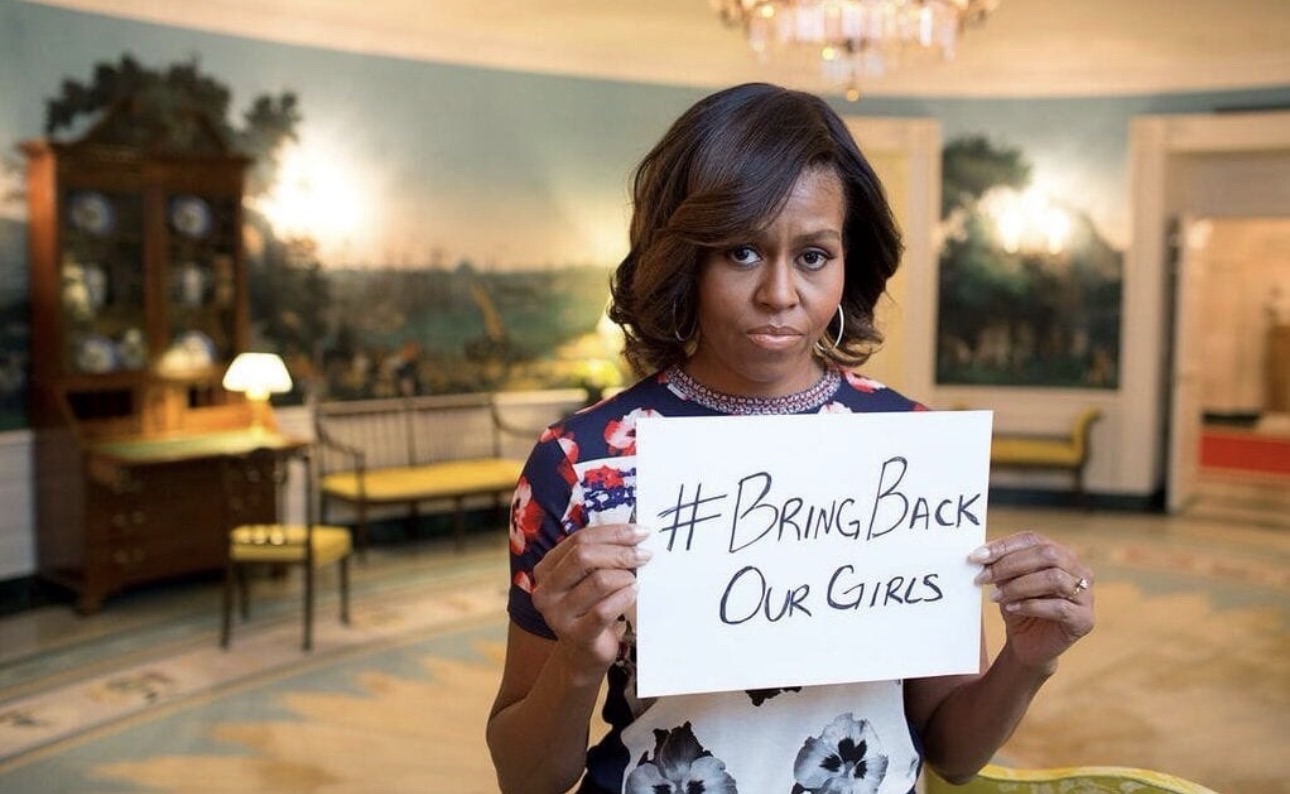
In April 2014, two hundred and seventy-six schoolgirls were abducted from Chibok in Borno State by Boko Haram. The world mobilised hashtags. Celebrities held signs. Michelle Obama held a sign. The Nigerian president, it emerged, had not visited the girls’ community and did not do so for some time thereafter. His wife, Patience Jonathan, found energy enough not to go to Chibok, but to travel to Abuja to detain, briefly, a protest organiser at the State House. Nigeria, watching all of this, was beyond embarrassment. It had reached the cooler shores of numbness.
The same individuals who once reduced Jonathan to nothing are now discovering, with tremendous urgency, that he is precisely what Nigeria needs. This is either a revelation or a confession. Possibly both.
The Dasuki arms procurement scandal in which billions of dollars earmarked for military equipment to fight Boko Haram were instead shared among politicians, party functionaries, and individuals of creative self-description did not occur under a government indifferent to the rot. It occurred under a government that was, at best, unable to distinguish between governance and the redistribution of resources to the already comfortable.
Jonathan once told Nigerians he had walked barefoot to school as a child, a detail offered as credential rather than caution. The nation’s roads, however, remained his most enduring autobiography.
These are not the observations of partisan malice. They are the findings of Jonathan’s own tenure, confirmed by his own government’s statistics, its own court proceedings, and the election results of March 2015 in which Nigerians, in an act of mass political therapy, voted him out.
The One Thing He Did Brilliantly
And then he conceded.
It is impossible to overstate how unusual this was. African leaders, confronted with electoral defeat, have historically preferred a range of alternatives: the courts, the streets, the barracks, or simply the pretence that the results said something different from what they plainly said. Jonathan, who had governed without particular distinction, managed his exit with remarkable grace. He telephoned Muhammadu Buhari before the final results were declared. He released a statement. He went home.
The continent gasped. Democracy scholars wrote papers. The African Union issued commendations. Jonathan had done the most ordinarily democratic thing imaginable, accepted the outcome of an election he lost, and was treated as though he had discovered fire.
This single act has since become the foundation of an entire post-presidential mythology. It is what is meant when people speak of his “legacy.” They do not mean the Chibok girls, still largely unaccounted for after years of captivity. They do not mean the Dasuki billions. They mean the telephone call to Buhari. Nigeria had set the bar at a height achievable by most functioning democracies, and Jonathan had cleared it. This is what passes for statesmanship.
The Wandering Mediator
In the years since leaving office, Jonathan has reinvented himself as a peripatetic continental peacemaker, a man who could not quite pacify Borno State now applying his talents to the various crises of West Africa. ECOWAS appointed him mediator to Mali in 2020. His mediation foundered. The junta eventually ejected ECOWAS entirely and invited Russian mercenaries. In Guinea-Bissau, his involvement in electoral matters produced results of similar consolation. He has been appointed to various advisory boards of international organisations, each carrying the pleasant weight of titles without the inconvenience of measurable outcomes.
He has also been appointed to a healthcare advisory board in Italy, which is the kind of appointment that raises no objections because it requires no explanations. A former president on a global health council is simply furniture: distinguished, decorative, and unlikely to cause difficulties.
Who, Precisely, Is Looking?
We arrive now at the current matter. As Nigeria moves, in its lurching fashion, toward the 2027 general elections, the search for Jonathan has acquired a peculiar fervour. Let us inventory the searchers.
The Peoples Democratic Party, or at least the faction of it led by Kabiru Tanimu Turaki, itself a commentary on a party that now exists in competing configurations like a franchise dispute has confirmed Jonathan as a registered member and cleared him for its presidential primary by waiver. He had not submitted nomination forms. He did not attend the screening. The PDP cleared him anyway, which is a metaphor for something, though one hesitates to specify what.
There is a Goodluckan Movement, comprising Nigerians in the diaspora, claiming the right to obtain nomination forms on his behalf. There is a Coalition for Jonathan, which has mobilised thousands of youths in rallies outside his office. There is a Goodies Movement, an online support group, whose name one trusts was arrived at without full consideration of its implications. There are northern coalitions: the Arewa for Good Governance, the Northern Youth Alliance for Good Governance, the Almajiri Network, and remarkably a group that once purchased a ₦100 million APC nomination form on his behalf in 2022, only for him to disown it entirely. That group, apparently undeterred, remains enthusiastic.
The PDP’s own Deputy National Publicity Secretary, not usually a figure given to caution, has urged Jonathan to remember who these people are. “It’s crucial for him to remember how he was derided, criticised and reduced to nothing by these same people,” he said. “Now that they are suddenly calling him the messiah, he must not be swayed by their sudden affection.” This is advice from within the party inviting him to run directed at the man they are inviting to run about the people doing the inviting. Nigerian politics, in a sentence.
The Legal Question Nobody Fully Wants Answered
There is, lurking beneath the movement posters and the northern coalitions, the small matter of whether Jonathan is constitutionally eligible to run at all. The argument, advanced in a Federal High Court action he has moved to contest, is that Jonathan has already served two terms: first, the remainder of Yar’Adua’s term from 2010 to 2011, and then his own full term from 2011 to 2015. The constitution permits only two terms. The counter-argument is that the first was a succession, not an election, and therefore does not count.
Jonathan has approached the court to challenge the lawyer who brought this case. He would not do so, one surmises, if he were not entertaining serious thoughts about 2027. A man who has definitively decided not to run does not litigate his eligibility to do so.
The courts have now decided that he has life left in the presidency by judging he still has a term left in him if he so wishes.
Nigeria has spent a decade asking what Jonathan did. It is now spending the next asking him to come back and do it again. The office found him once by accident. He now appears to be seeking it by intention which raises the question of whether the second time would be any different, or merely longer.
§ What This Actually Tells Us
The enthusiasm for Jonathan’s return is not really enthusiasm for Jonathan. It is a verdict on the alternatives. The Tinubu administration, two years into its tenure, has produced economic conditions sufficiently dire that a man whose government midwifed the petrol subsidy scandal is now being recalled as a figure of fiscal virtue. The APC, which was constituted in 2015 specifically around the project of removing Jonathan, has governed in a manner that has prompted one of its own senators to note without apparent self-awareness that the country has worsened since the APC removed the PDP. This is less a political endorsement of Jonathan than a collective national sigh of exhaustion.
There is also the familiar northern arithmetic. Jonathan is a southern Christian. In a country where the presidency has come to be traded across the religious and geographic fault line with the precision of a rotation scheme, a southern president in 2027 would follow Tinubu. And complete the Southern slot. Which means the arithmetic, as usual, produces multiple answers depending on who is doing the calculation and what they stand to gain from the result.
The PDP’s invitation to Jonathan to “complete his term” deserves particular note. He lost. He conceded. There is no uncompleted term. What the party means, presumably, is that it would like him to try again, which is a different thing, dressed in the language of restoration. Nigerian politics has always preferred the language of restoration to the language of ambition. Restoration implies that something was wrongly taken. Ambition merely admits that someone wants something. The former sounds more dignified, even when it is less honest.
The Man Himself
Through all of this, Jonathan has said relatively little, which is, it must be acknowledged, consistent form. He has met with PDP leadership. He has spoken warmly of the party. He has gone to court. He has not declared. He has not declined. He has done what he has always done: occupied a position without fully inhabiting it, present enough to be considered, absent enough to bear no responsibility for the expectations being constructed around him.
It is, in its way, a remarkable political talent. To be wanted by everyone while committing to nothing. To be a vessel for other people’s hopes without providing the content of your own. The accidental president may, after all, have had a plan all along. Or perhaps not. Perhaps it is simply luck. Perhaps the name was always the manifesto.
Nigeria is a country that has, over the course of its post-military democratic life, demonstrated a notable appetite for recycling political figures who did not distinguish themselves the first time. This is not unique to Nigeria. Democracies everywhere have their second acts, their comebacks, their studied rehabilitations. What is distinctive here is the speed of the cycle and the thinness of the justification. Jonathan left office ten years ago. The case for his return is, at its core, a case against everyone else. That is not a manifesto. It is a lament dressed in campaign colours.
Who is looking for Goodluck Jonathan? The PDP, the northern coalitions, the diaspora movements, the court filings, and somewhere in all of this a country that has mistaken familiarity for safety, and which has confused the act of leaving gracefully with the capacity to govern well.
He came to power by accident the first time. The second would be by popular demand. One is not entirely sure that is an improvement.

