

There was a time when democracies feared kings. Nations fought wars, drafted constitutions, and erected elaborate systems of checks and balances to prevent the rise of one man above the law. America, born from rebellion against monarchy, built an entire civic religion around the idea that no citizen, not even a president, should become sovereign.
Then came Donald Trump, and America discovered something deeply unsettling: institutions are only as strong as the people willing to defend them.
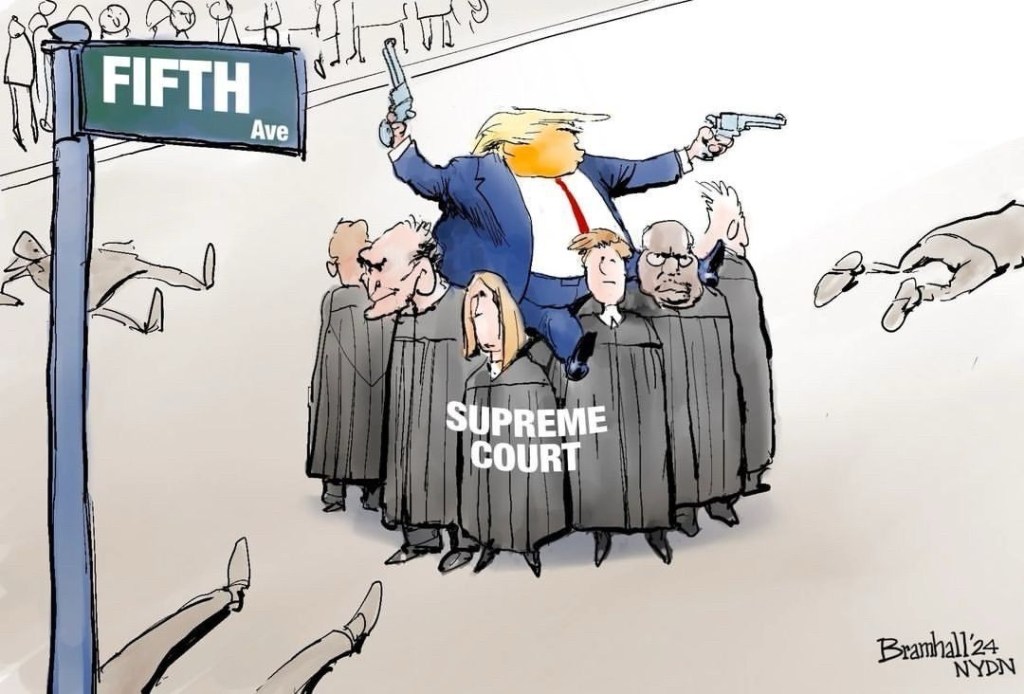
Trump once boasted that he could stand on Fifth Avenue, shoot someone, and not lose supporters. At the time, commentators laughed nervously, assuming it was another grotesque exaggeration from a reality television impresario intoxicated by his own reflection. But with hindsight, it now sounds less like hyperbole and more like a constitutional stress test.
And America failed it repeatedly.
A man who encouraged a mob to descend upon the Capitol in an effort to halt the certification of an election did not disappear into political exile. He did not become untouchable. He did not become radioactive to his party. Instead, the political machinery adjusted itself around him like furniture being rearranged for an emperor’s arrival.
The insurrectionists smashed windows, assaulted police officers, hunted lawmakers through congressional halls, and erected gallows outside the Capitol building. Yet the architect of the fever walked away into campaign rallies, golf resorts, and television town halls. In many nations, an attempted interruption of constitutional order would end political careers permanently. In modern America, it became campaign merchandise.
The scandals accumulated like debris after a hurricane.
Trump was found liable for sexual abuse and defamation. He presided over a fraudulent charity so egregious that authorities shut it down. Trump University collapsed under the weight of accusations that students had essentially paid tuition fees to attend a motivational séance conducted by capitalism’s answer to a casino magician. Yet none of it proved disqualifying.
The old assumption of democratic politics, that shame eventually imposes limits, simply evaporated.
The remarkable thing is not merely Trump’s survival. Politicians survive scandals all the time. The remarkable thing is how every institution that was supposed to restrain him instead adapted to accommodate him.
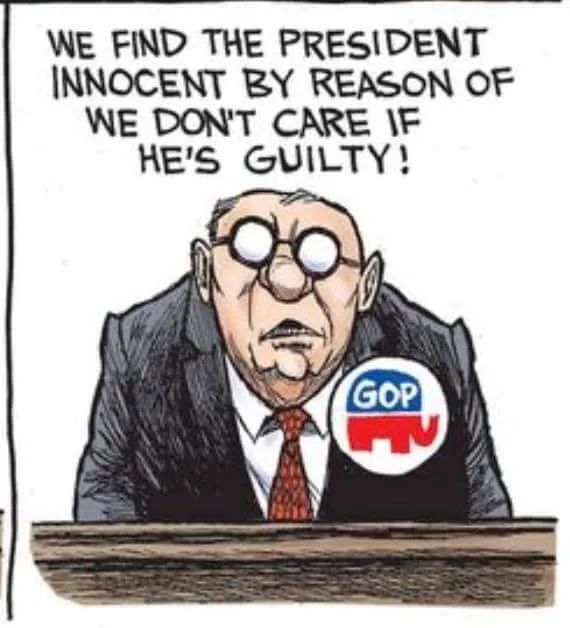
Congress transformed itself into an audience. Republican legislators who once denounced him returned like repentant courtiers seeking restoration to royal favour. Constitutional oversight became performance art: loud hearings, grave speeches, stern television interviews, followed by paralysis.
Even the judiciary, once imagined as the granite fortress against executive excess, began to bend. The Supreme Court’s doctrine of expansive presidential immunity effectively elevated the presidency into something disturbingly close to elective monarchy. The American Revolution was fought partly to reject the idea that rulers should possess immunity beyond ordinary citizens. Two and a half centuries later, the court appears to have rediscovered the concept wearing a red tie and holding campaign rallies.
Meanwhile, sections of the press abandoned the role of adversarial scrutiny and instead drifted toward a bizarre normalisation ritual. Standards applied to every other politician became strangely negotiable when Trump entered the frame. Headlines softened. Language blurred. Falsehoods became “controversial claims.” Open threats became “provocative rhetoric.” The media, terrified of appearing partisan, often confused neutrality with passivity.
The result is a political ecosystem where abnormality is endlessly laundered into routine.
And perhaps that is Trump’s greatest achievement: not merely surviving scandal, but redefining the threshold of scandal itself.
America once exported lectures about democratic norms to the rest of the world with missionary zeal. State Department officials routinely warned developing nations about strongmen, corruption, attacks on the press, and contempt for constitutional order. Yet today the United States increasingly resembles the kind of republic its own diplomats used to monitor nervously from embassy compounds.
The irony is almost operatic.
Supporters argue that Trump merely exposed hypocrisy already present in the system. Critics argue he accelerated institutional decay. Both may be true simultaneously. What cannot seriously be denied anymore is that the safeguards Americans assumed were automatic turned out to depend heavily on voluntary restraint, political courage, and civic shame, three commodities now in dangerously short supply.
The Founding Fathers designed a system to withstand tyranny. What they did not anticipate was a political culture willing to negotiate with it for ratings, tax cuts, judicial appointments, or partisan advantage.
The danger for democracies is rarely the arrival of one flamboyant demagogue. History produces those regularly. The real danger begins when institutions quietly decide accommodation is easier than resistance.
That is how republics stop being republics.
Not with a coup at dawn.
But with applause on Fifth Avenue.

