

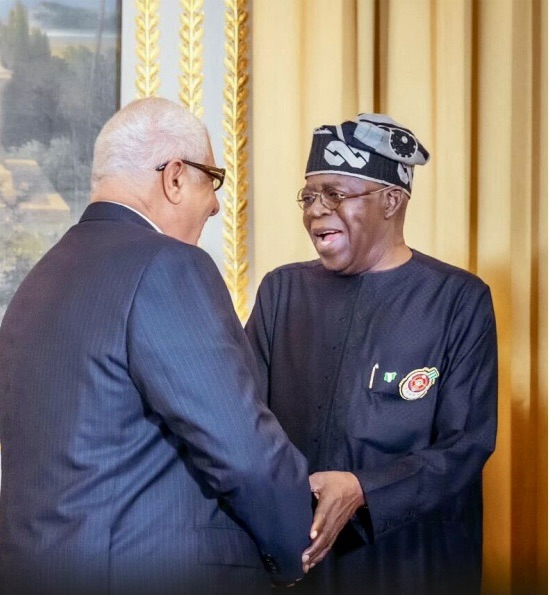
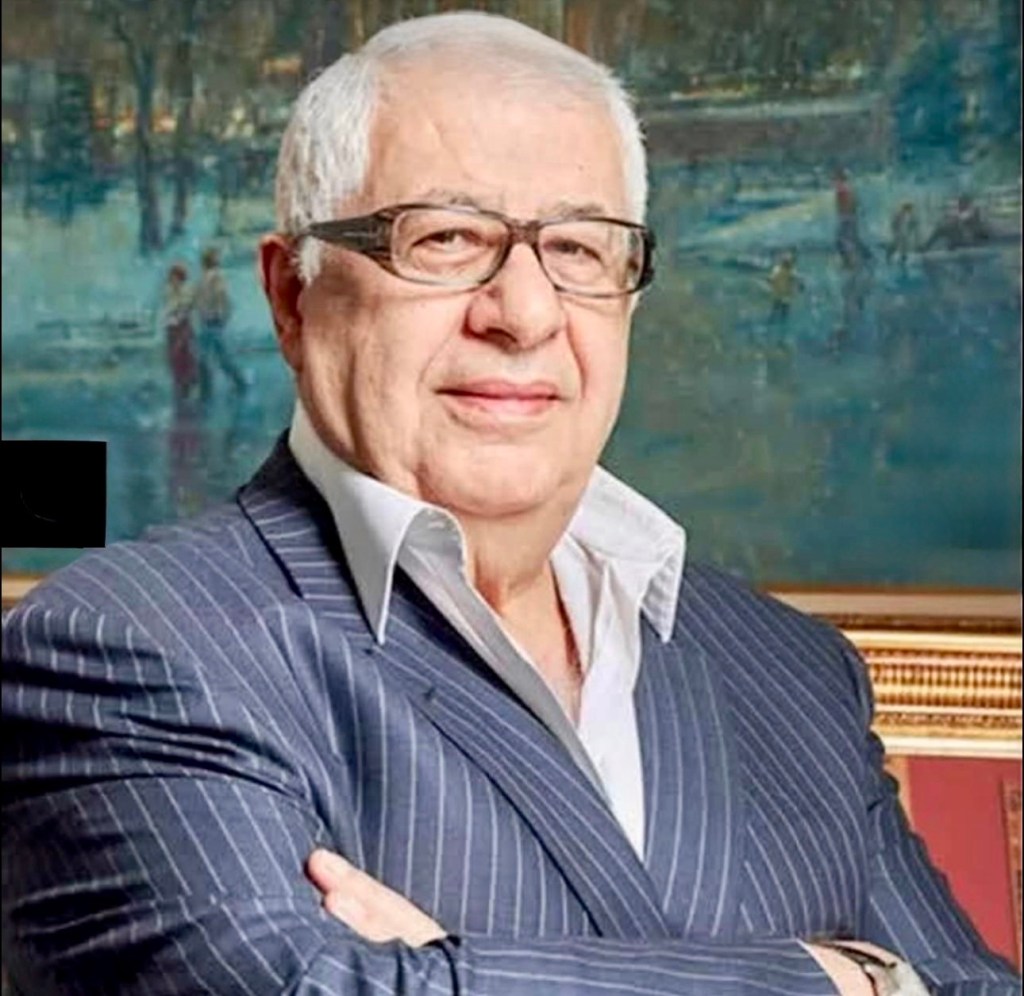
Gilbert Ramez Chagoury (born January 8, 1946, in Lagos, Nigeria, to Lebanese immigrant parents) is a Nigerian-Lebanese billionaire, diplomat, and philanthropist whose business network exemplifies the fusion of diaspora entrepreneurship, political access, infrastructure delivery, and transnational diplomacy in emerging markets. Co-founding the Chagoury Group in 1971 with his younger brother Ronald, he built a West Africa-headquartered conglomerate that has grown into a diversified industrial empire valued in the billions (family net worth estimates hover around $4.2–4.8 billion). While operations remain overwhelmingly concentrated in Nigeria and select West African countries, the network extends through international financing partnerships, diplomatic roles, philanthropy, and strategic geopolitical alignments—particularly evident in recent Nigerian port and highway projects tied to UK Export Finance loans.1526
This exploration examines the network from multiple angles: corporate structure and sectors; flagship projects; geographic footprint; diplomatic-political intersections; philanthropy as soft power; controversies and governance nuances; and broader implications for economic sovereignty, development models, and influence in Africa.
1. The Chagoury Group: Corporate Structure and Diversification Strategy
The Chagoury Group operates as a privately held multinational conglomerate headquartered in Lagos, with a portfolio spanning construction, real estate, hospitality, manufacturing, healthcare, telecommunications, and international financing. It evolved from early ventures in sales (shoes, cars) and construction (C&C Construction in the late 1970s, the forerunner to Hitech and ITB Construction divisions). Today, it employs thousands and functions through specialized divisions:
- Construction Division (ITB Construction, Hitech Construction, C&C): Focuses on civil engineering, infrastructure, and large-scale projects. ITB Nigeria Ltd. is prominently linked to Chagoury and serves as a key contractor in high-profile deals.
- Real Estate and Property Development: Includes landmark urban reclamation and luxury enclaves.
- Hospitality and Catering: Hotels, convention centers, and services.
- Industrial/Manufacturing: Food processing, materials, and consumer goods.
- Healthcare, Telecom/IT, Insurance, and Financing: Supporting vertical integration and ancillary services.
Official group statements emphasize a mission of “developing Africa’s future” through local content and private-sector leadership, often filling infrastructure gaps in under-resourced environments. Diversification reduces sector-specific risks while enabling synergies—e.g., construction feeds real estate, manufacturing supports hospitality supply chains.111238
2. Key Sectors and Flagship Projects: Concrete Examples of Scale
Chagoury’s network delivers tangible, high-impact assets, often in partnership with global players:
- Infrastructure and Ports (Current Nexus): ITB (Chagoury-linked) is contractor for the $1 billion Snake Island Port Terminal (45-year MSC concession, with Belgium’s DEME Group) and the UK-backed refurbishment of Apapa and Tin Can Island ports (₦1.1 trillion under £746 million UKEF loans, incorporating British Steel contracts). Also awarded the $11 billion Lagos–Calabar Coastal Highway (no public bidding). These blend private greenfield development with sovereign-backed brownfield upgrades, addressing Nigeria’s port congestion while embedding long-term operational influence.0
- Real Estate Mega-Projects: Eko Atlantic City—a $6 billion reclaimed land “new city” on Victoria Island, Lagos—includes luxury residential, commercial, and business districts. Banana Island enclave represents high-end urban development.
- Hospitality: Eko Hotels & Suites (one of West Africa’s largest, with Atlantic views), Hotel Presidential (Port Harcourt), convention centers, and Courdeau Catering.
- Manufacturing and Agribusiness: Multiple flour mills (e.g., Ideal Flour Mills in Kaduna; Grands Moulins Du Benin); Ragolis Waters (bottling/purification); Glassforce (glass manufacturing); furniture production; and related food security initiatives.
- Other: Hyperia Internet (telecom/IT), Ideal Eagle Hospital (healthcare, often serving expatriates including Shell workers), and financing arms.
These projects illustrate a strategy of vertical integration and public-private alignment: infrastructure creates demand for group-adjacent services (e.g., hotels near ports/highways), while manufacturing reduces import dependency.1619
3. Geographic Footprint: West Africa-Centric with Global Levers
The network is not a sprawling multinational in the traditional sense but a regionally anchored empire with international extensions:
- Nigeria (Core): Vast majority of assets, jobs, and revenue. Lagos-centric (Eko Atlantic, ports, hotels) but extends north (Kaduna mills) and south (Port Harcourt). Recent highway and port wins amplify national footprint.
- Benin and West Africa: Grands Moulins Du Benin (industrial); economic advisory roles to Benin presidents historically facilitated cross-border expansion.
- Lebanon: Philanthropic and cultural ties (e.g., $13.5 million donation for Chagoury Health Sciences Center at Lebanese American University in Beirut, covering medicine, nursing, pharmacy). Some infrastructure/education support, leveraging family origins and education (Chagoury studied in Lebanon).
- UK and Europe: Indirect via UKEF financing, British content clauses in port deals, and reported dual UK citizenship elements. High-level access (e.g., Windsor Castle banquet with King Charles III in March 2026 as part of Nigerian delegation).
- Caribbean and Global Diplomacy: Saint Lucia’s ambassador to the Vatican/Holy See (since ~2005); UNESCO delegate; UN Geneva roles. These honorary positions provide diplomatic passports, access to international forums, and soft-power channels without direct operational bases.
- Limited U.S./Other Presence: Historical Clinton Foundation donations and philanthropy (e.g., St. Jude Children’s Research Hospital); past legal settlements in the U.S. No major operating subsidiaries noted outside Africa/Lebanon.
This footprint reflects historical Lebanese trading networks in West Africa, adapted to modern infrastructure diplomacy. Edge case: Operations remain Africa-focused to capitalize on growth markets, but diplomatic roles act as “force multipliers” for deal flow and reputation management.3132
4. Diplomatic and Political Intersections: Networked Influence
Chagoury’s business success intertwines with elite access. Early ties to Sani Abacha (adviser in the 1990s) drew scrutiny and led to temporary exile (e.g., 2004 flight from Nigeria). Reinvention under later administrations culminated in close alignment with President Bola Tinubu: no-bid awards, Seyi Tinubu’s reported board seat in a linked company, and offshore co-ownership ties with Ronald Chagoury Jr. Diplomatic posts (Saint Lucia to Vatican/UNESCO; Benin adviser) enable navigation of global capitals, blending commerce with statecraft. Nuances include potential conflicts of interest versus pragmatic delivery in Nigeria’s challenging procurement environment.3321
5. Philanthropy and Soft Power: Reputation as Strategic Asset
Philanthropy—health/education donations in Nigeria, Lebanon, and beyond—counters historical controversies, building legitimacy. Examples include LAU centers, children’s healthcare awards, and post-Abacha respectability efforts. It positions the network as a development partner, not just a contractor, fostering goodwill with governments and international bodies.13
6. Challenges, Controversies, and Governance Nuances
- Procurement and Transparency: Repeated no-bid awards (highway, ports) raise value-for-money and competition concerns; allegations of bypassed frameworks in the Snake Island–UK loan nexus.
- Historical Scrutiny: Abacha-era associations; 2021 U.S. settlement ($1.8M) over election finance allegations (no liability admitted).
- Concentration Risks: Dominance in key sectors (ports, coastal development) blurs public-private lines, prompting sovereignty debates.
- Family Dynamics: Brother Ronald and next-generation (e.g., Ronald Jr.) extend the network but invite offshore-related optics.
- Defenses and Context: Supporters highlight job creation, infrastructure delivery where state capacity lags, and local content in foreign-financed deals. Edge case: In fragile governance settings, such networks can accelerate progress—or entrench elite capture.
Critics view the model as crony capitalism; proponents as effective private-sector agency.184
7. Broader Implications and Related Considerations
Chagoury’s network illustrates how diaspora capital, political relationships, and diplomatic positioning can drive large-scale development in Africa—modernizing ports/highways, creating urban assets, and securing food/health supply chains. However, it raises questions about economic sovereignty when foreign loans, global operators (MSC, British Steel), and narrow contractor pools converge. In a multipolar world, such nexuses highlight infrastructure as geopolitics: UK industrial revival meets Nigerian capacity needs via trusted intermediaries.
Future considerations include regulatory pushback on concentration, diversification beyond Nigeria, or succession planning. For Nigeria, the model delivers results but underscores needs for transparent procurement to balance speed with accountability. Globally, it exemplifies hybrid public-private influence in emerging economies—efficient yet requiring vigilant oversight.
In summary, Gilbert Chagoury’s network is a sophisticated, Africa-rooted ecosystem where construction prowess meets diplomatic access and philanthropic legitimacy. It has reshaped Lagos and West African skylines while navigating (and sometimes embodying) the blurred boundaries of power, commerce, and development. Its evolution continues to reflect—and shape—the interplay of private ambition and national priorities.

