

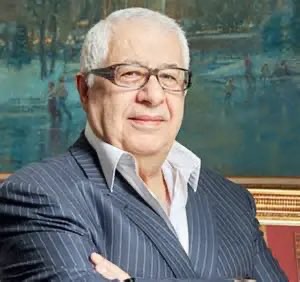
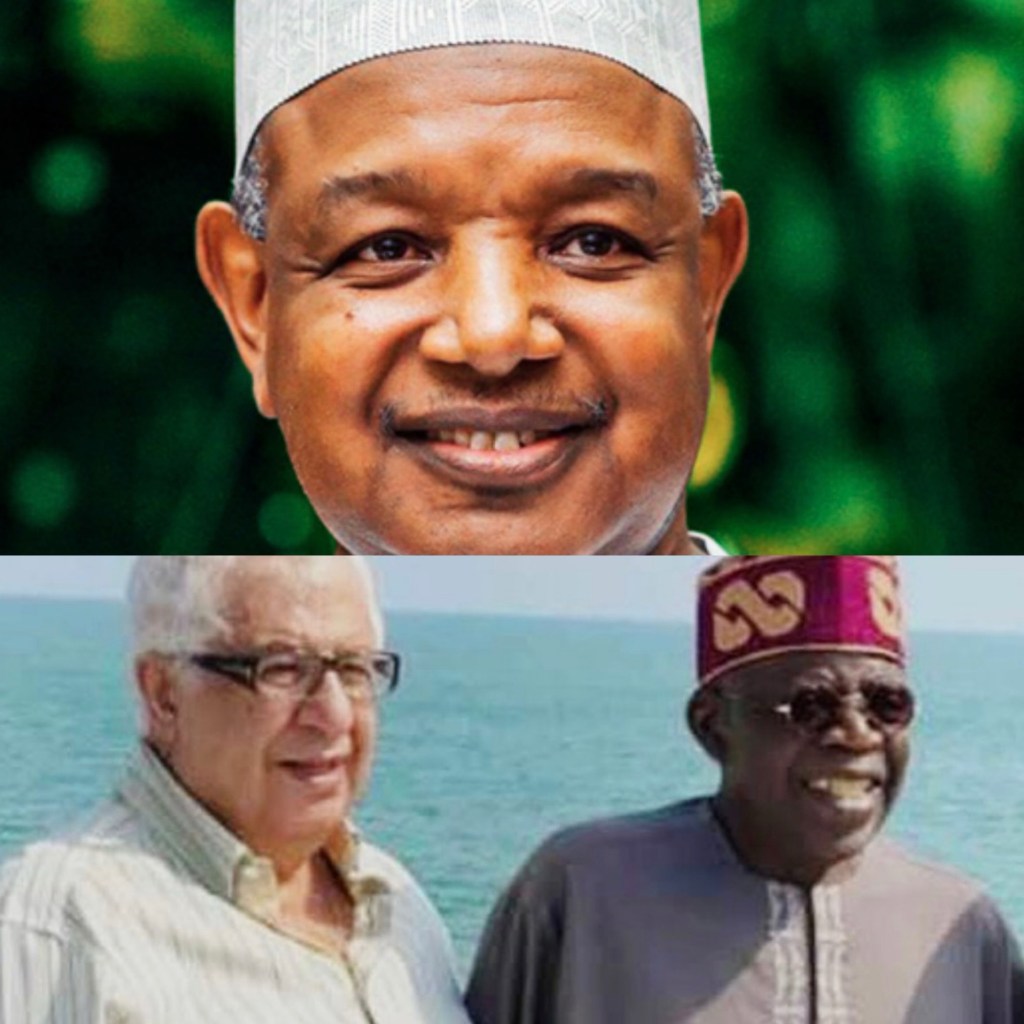
The alliance between Bola Ahmed Tinubu and Gilbert Ramez Chagoury is not a conventional business relationship. It represents something far more structured and consequential: a deeply embedded nexus where private capital and state authority intersect. What has emerged over time is not merely patronage in the traditional political sense, but a durable framework through which public assets, infrastructure, and regulatory power are closely aligned with a narrow network of interests.
Many aspects of this system appear improbable at first glance. However, its contours are traceable through public records, including international court proceedings, asset recovery cases, and corporate filings. These sources collectively outline a long-running pattern: the movement of state-linked resources through interconnected financial, political, and commercial channels.
A notable contemporary example came on March 13, 2026, when a 45-year concession for the Snake Island Port Terminal was finalized in favour of the Chagoury Group. Framed as a development initiative, the agreement effectively transferred long-term operational control of a strategic maritime asset into private hands. The arrangement reflects a broader model in which the state provides sovereign authority while private actors secure enduring commercial returns.
This is less an abrupt transformation than an evolution. Networks that were active during Nigeria’s military era—particularly under General Sani Abacha—have, over time, adapted to democratic structures. Where once capital flowed through opaque offshore channels, today similar dynamics are often embedded within formal infrastructure projects, urban development schemes, and concession agreements. From the development of Eko Atlantic to port concessions, the pattern suggests continuity in both actors and outcomes, even as methods have modernized.
Origins and Foundations
Gilbert Chagoury, born in Lagos in 1946 to Lebanese immigrant parents, emerged from a commercial diaspora community that played a significant role in West African trade. After his education in Lebanon, he returned to Nigeria and, in 1971, co-founded the Chagoury Group with his brother. Initially focused on construction and manufacturing, the company expanded into multiple sectors, including real estate and telecommunications.
A key inflection point came through proximity to political power. By the early 1990s, the group had developed relationships within Nigeria’s military leadership, placing it at the centre of economic activity during a period marked by limited transparency and centralized authority.
The Abacha-Era Financial Architecture
Subsequent investigations in jurisdictions such as Switzerland, the United States, and the Channel Islands revealed that financial flows during the Abacha years were not random acts of corruption but part of a structured system. This system functioned as an informal parallel treasury, enabling large-scale transfers of funds from state institutions into offshore accounts.
Investigators identified a recurring pattern:
withdrawals from state منابع under official pretexts, intermediary handling through domestic financial institutions, transfers via offshore entities, and eventual placement in foreign accounts, often protected by banking secrecy laws.
Entities linked to the Chagoury network appeared within this structure, particularly in the use of intermediary companies that facilitated international transfers.
Switzerland and the Asset Recovery Era
Switzerland’s banking system—at the time shielded by strict secrecy laws—played a central role in holding these funds. The scale of the Abacha-related deposits eventually triggered international scrutiny, contributing to reforms in Swiss banking oversight.
Globally, more than $3.6 billion in assets linked to the Abacha regime have been recovered and returned to Nigeria. This process involved multiple jurisdictions:
Switzerland returned over $1.3 billion, Jersey repatriated hundreds of millions, the United States pursued forfeitures under its Kleptocracy Asset Recovery Initiative, while other European jurisdictions continue to handle related cases.
These recoveries provide a documented financial trail linking past state resource extraction to international financial systems.
Continuity into the Democratic Era
The persistence of these networks is often illustrated through political and institutional continuity. Individuals associated with earlier financial investigations have, in some cases, re-emerged within Nigeria’s democratic governance framework.
This continuity supports a broader thesis: rather than disappearing, earlier systems adapted. The mechanisms shifted from overt extraction to structured allocation—via contracts, concessions, and policy decisions—within formal state processes.
The Lagos Model
During Bola Tinubu’s tenure as Governor of Lagos State (from 1999), a new framework for state revenue and infrastructure development took shape. This model emphasized:
increased internally generated revenue, public-private partnerships, and large-scale urban development projects.
Critics argue that this system also centralized financial flows and created enduring relationships between the state and specific private entities. Mechanisms such as outsourced revenue collection, toll-based infrastructure, and land allocation policies became defining features.
Over time, this “Lagos Model” evolved into a broader template—one in which governance, capital investment, and long-term concessions became tightly interlinked.
Eko Atlantic and Strategic Development
The Eko Atlantic project stands as a flagship example of this approach. Built on reclaimed land off the Lagos coast, it represents a convergence of regulatory authority, private capital, and urban planning. While presented as both a real estate and coastal protection initiative, it has also raised questions about environmental impact, land ownership, and long-term financial structure.
The project illustrates how large-scale infrastructure can simultaneously serve public, commercial, and strategic interests—often with overlapping boundaries.
From State to Nation: Expansion of the Model
As political influence expanded from Lagos to the federal level, similar frameworks began appearing in national infrastructure decisions. The Snake Island concession is one such instance, reflecting the application of long-term partnership models to critical national assets.
These agreements typically involve:
extended concession periods, limited competitive transparency, and significant control granted to private operators.
Intergenerational and Institutional Dynamics
The durability of such systems often depends on continuity—both institutional and generational. Business partnerships, political networks, and corporate structures frequently extend across decades, reinforcing stability within the network itself.
Simultaneously, public narratives, corporate endorsements, and elite alliances contribute to shaping perception and legitimacy, ensuring that these arrangements remain embedded within the broader political economy.
Conclusion: Continuity, Adaptation, and State Power
The trajectory from the Abacha era to the present illustrates not a rupture, but an adaptation. What began as opaque financial extraction has, over time, evolved into structured economic arrangements embedded within governance.
Today, the lines between public authority and private enterprise are increasingly complex. Infrastructure projects, concessions, and development initiatives often operate at this intersection, raising enduring questions about transparency, accountability, and the long-term stewardship of national assets.
The central issue is not merely historical, but structural: how systems of power, once established, evolve and persist—shaping the economic and political landscape long after their origins have passed.

