


Nyesom Wike’s interactions with Nigeria’s judiciary represent a complex interplay of infrastructural support, political strategy, personal networks, and perceptions of influence. His record features unusually high court success rates, generous “welfare” gestures toward judges, and notable family advancements in the legal hierarchy. These elements fuel debates about merit, patronage, judicial independence, and elite capture in Nigeria’s legal system.
The Scorecard: Over 90% Success Rate in Key Cases
Independent analyses, particularly a detailed 2024–2025 review by Citizens’ Gavel/Open Justice, examined 15 high-stakes court cases involving or directly affecting Wike (spanning his governorship, political battles in Rivers State, and related matters from ~1999 onward).
Key findings:
- Wike secured victories in 14 out of 15 cases — a 93.3% success rate.
- The single noted loss was an interlocutory appeal, not a final judgment on core issues.
- Cases covered election petitions (e.g., his 2015 governorship validation at the Supreme Court), Rivers political crises (including disputes with successor Siminalayi Fubara and Assembly matters), and other litigations.
Nuances and multiple angles:
- Supporters’ perspective: Wike hires top Senior Advocates of Nigeria (SANs), builds strong legal teams, and benefits from well-prepared cases grounded in facts and procedural advantages. His political acumen translates to effective litigation strategy. Victories reflect competence rather than impropriety.
- Critics’ perspective: The consistency is statistically anomalous in Nigeria’s often unpredictable judiciary, especially amid political cases. Timing of his judicial “support” projects coinciding with major litigations raises correlation questions. Perceptions of favoritism erode public trust.
- Contextual realities: Nigerian politics is highly litigious; many governors and politicians face similar battles. Wike’s resources as Rivers Governor and FCT Minister enable superior legal firepower. However, systemic weaknesses (delays, procedural technicalities, and occasional political influence) amplify outcomes for well-resourced actors.
Edge cases: Not all rulings were unanimous or uncontroversial. Some lower-court decisions faced appeals, and public discourse (e.g., from figures like Femi Falana or Omoyele Sowore) highlights isolated counter-examples where judges resisted alleged overtures.
Judicial “Welfare” and Patronage: Houses, Cars, and Infrastructure
Wike’s approach includes substantial investments in judicial infrastructure and amenities:
- As Rivers Governor: Built ~20 judges’ quarters (2020), a new Federal High Court complex, and distributed dozens of SUVs to magistrates and judges.
- As FCT Minister: Pushed land allocations, promised or delivered housing for judges (e.g., plans for 40 houses for Court of Appeal, Federal High Court, and FCT High Court justices), and other support.
Defenses: These address chronic underfunding and poor conditions in the judiciary, a legitimate executive-legislative-judiciary collaboration for institutional strengthening. Wike frames them as treating the three arms of government equitably.
Criticisms: Critics view them as strategic patronage or indirect influence (“Golden Boy of the Judiciary”). In a resource-scarce environment, such gestures can create dependency or perceived obligations, even without explicit quid pro quo. Timing with sensitive cases amplifies suspicions.
Broader implications: This reflects Nigeria’s patronage culture, where personal/big-man interventions fill institutional gaps. It risks undermining separation of powers while delivering visible improvements.
Justice Eberechi Suzzette Nyesom-Wike’s Elevation to the Court of Appeal
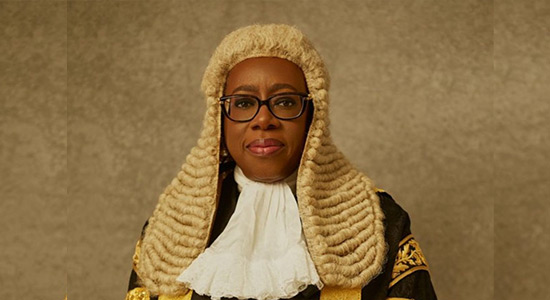
Justice Eberechi Wike (Wike’s wife) was elevated from the Rivers State High Court (where she served as a judge, including leading the Family Court Division) to the Court of Appeal in 2024. She was among 22 justices recommended by the National Judicial Council (NJC) and sworn in by the Chief Justice of Nigeria.0
Her background:
- Called to the Bar in 1998 after studying Law at Rivers State University.
- Practiced briefly as a litigation counsel at Efe Chambers (1998–2001).
- Served as Magistrate Grade I and rose through judicial ranks for over a decade before High Court appointment in 2012.
- Involved in women’s legal associations, mediation, and arbitration.
Nuances: Her judicial career predates Wike’s peak prominence, showing a track record. However, spousal elevation of a high-profile politician inevitably invites scrutiny regarding perceived conflicts, nepotism, or influence. Supporters emphasize merit and seniority; detractors question optics in a system already battling integrity perceptions. No widespread evidence of procedural irregularity emerged, but the political context (Wike-Tinubu alliance, judicial appointments under CJN Olukayode Ariwoola) fueled commentary.
Body of Benchers: Wike’s (Not Primarily His Wife’s) Elevation
The query appears to reference Nyesom Wike himself here. He was appointed a Life Bencher around 2019, an honorific status in Nigeria’s highest legal regulatory body (responsible for calls to the Bar, legal ethics, and discipline).
Key facts on the Body of Benchers:
- Comprises Chief Justice, Supreme Court/Appeal Court justices, Attorneys-General, senior judges, NBA representatives, and eminent practitioners (often with 15+ years post-call).
- Life Bencher status is conferred for distinguished service/contributions; it is not strictly tied to courtroom practice.
Controversy around Wike:
- Critics (including Femi Falana) note he had limited active courtroom practice before full-time politics, calling him an outlier among Life Benchers.
- Defenders highlight his contributions to judicial infrastructure, legal education support, and overall service as qualifying “eminence” rather than litigation record. He participates in ceremonies (e.g., his son’s call to the Bar).
Wife’s involvement: Justice Eberechi Wike, as a senior judge, qualifies naturally for related judicial roles, but public discourse centers more on Wike’s own status.
Implications: This highlights flexibility in “eminence” criteria, blending merit, politics, and contributions. It raises questions about whether such honors reinforce elite networks over strict professional metrics.
Overall Assessment: Strengths, Risks, and Broader Considerations
Wike’s judicial scorecard reflects a potent mix of legal strategy, resource leverage, networks, and Nigeria’s structural realities (under-resourced judiciary, political litigation). His >90% success rate is impressive but invites legitimate scrutiny on independence. Family and personal elevations exemplify how political success translates to institutional influence.
Positive angles: Accelerated infrastructure benefits the judiciary; decisive leadership gets results in a slow system. Critical angles: Risks perceptions of captured justice, reduced public confidence, and normalized patronage. Edge cases: Isolated resistant judgments show not monolithic control. Long-term legacy depends on whether projects endure and if reforms (e.g., better judicial funding, transparent appointments) reduce reliance on individual patrons. Reform considerations: Stronger disclosure rules for gifts/infrastructure, independent funding, and merit-based appointments could mitigate conflicts without discouraging legitimate support.
This dynamic is emblematic of Nigeria’s political economy: effective operators thrive by navigating (and shaping) weak institutions, but at the cost of deeper systemic trust.

