

There is an unspoken ledger in the United States. It doesn’t appear in budgets, GDP figures, or campaign speeches, but it quietly governs outcomes all the same. Call it the value gap, the stubborn, deeply embedded assumption that some lives, specifically white lives, carry a higher premium than others. Not the ranting of fringe extremists, but a structural bias baked into institutions, habits, and reflexes. It is less a bug in the system and more the operating system itself.
The Myth of Progress: One Step Forward, Two Steps Reviewed by a Committee
America tells a comforting story about itself: that it is perpetually marching toward “a more perfect union.” It’s a lovely phrase, aspirational, poetic, and, unfortunately, selective. Because history suggests a different rhythm. Every meaningful leap toward racial justice tends to trigger a counter-movement determined to dilute, delay, or dismantle it.
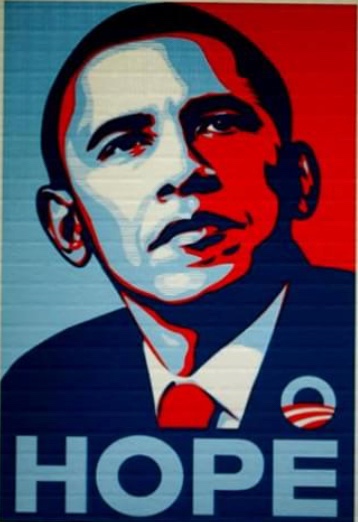
Take the reforms of the 1960s, often romanticised under the banner of the Great Society. Landmark, yes. Transformational, partially. Permanent? Not quite. Or consider the election of Barack Obama, heralded by many as proof that America had turned a corner. What followed was not a smooth glide into a post-racial paradise, but a sharp reassertion of old anxieties, repackaged in new political language. Progress, it turns out, is not linear, it is negotiated, contested, and frequently rolled back.
The Power of Fear: Policy by Panic
Fear is one of the most underrated policymakers in American history. Not the visible kind, the shouted slogans or explicit prejudice, but the quieter, more respectable variety. The kind that shapes zoning laws, policing strategies, and voting regulations.
White fear, in particular, has been a reliable engine for some of the most consequential (and destructive) policy choices. Mass incarceration didn’t materialise out of thin air; it was cultivated through narratives of threat and disorder. And today, that same fear continues to distort political discourse. Conversations around race are often treated like fragile antiques, handled delicately, avoided where possible, and never quite examined under proper light. The result? A national habit of rhetorical dancing: plenty of movement, very little progress.
Democracy in Black: The Real Repair Work
If American democracy were a house, it would be fair to say it has required constant repairs, and more often than not, the repair crew has been Black Americans. The phrase “Democracy in Black” captures this ongoing effort: the work of expanding the democratic promise to include those it originally excluded.
Time and again, when the ideals of liberty and equality have been compromised, it has been ordinary African Americans who have stepped in to redeem them. Not as a favour to the system, but as a demand that it live up to its own marketing.
Collective Action: No Messiah Required
There is a persistent temptation to look for the next Martin Luther King Jr. a singular figure to lead, inspire, and, conveniently, carry the burden of change. It’s a comforting idea. It is also a misleading one.
Real change has rarely depended on a lone hero. It has always been the product of collective effort, ordinary people organising, agitating, and refusing to accept the terms as given. The “leader” is often just the most visible expression of a much broader movement.
Conclusion: Closing the Gap Requires a Reckoning
If the diagnosis is uncomfortable, the prescription is even more so. Closing the value gap demands more than symbolic gestures or carefully worded statements. It requires a fundamental reassessment a revolution of value.
That means confronting history without editing it for convenience. It means recognising how deeply the gap still shapes present realities. And it means choosing, collectively, to prioritise justice over comfort.
In practical terms, it’s less about grand declarations and more about sustained, grassroots pressure. Because systems rarely correct themselves; they are corrected by people who insist persistently and often inconveniently that they must.
America’s challenge is not a lack of ideals. It is the persistent gap between those ideals and who gets to fully enjoy them. Closing that gap is not inevitable. It is a choice.

