


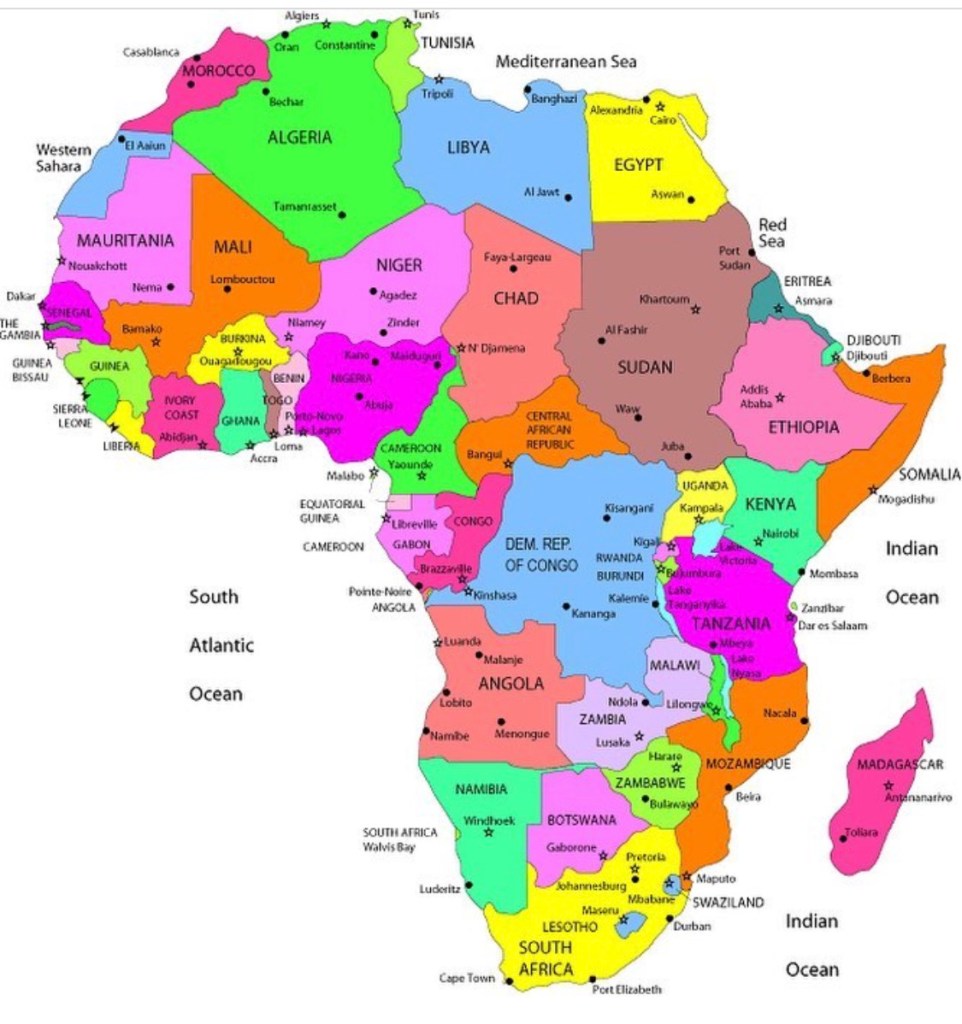
Africa is often described as a poor continent. That statement is repeated so often that it has become accepted as fact. Yet it collapses under the slightest inspection.
The continent holds some of the world’s largest reserves of gold, cobalt, lithium, uranium, diamonds, oil, gas, manganese, rare earth minerals and fertile agricultural land. The phone in your pocket, the electric car of the future, and the energy transition advertised in glossy Western conferences are all impossible without African resources.
So the obvious question is unavoidable: how can the richest continent in raw materials remain perpetually indebted?
The usual explanation is corruption, tribalism, or poor leadership. Those factors exist, as they do everywhere else. But corruption alone cannot explain why countries blessed with strategic resources remain trapped in permanent financial dependence while resource-poor nations become industrial giants.
The answer may lie not in African incompetence, but in the architecture of the global financial system itself, a system largely designed in 1944 at the Bretton Woods Conference.
The 1944 Meeting That Shaped the Modern World
As the Second World War neared its end, forty-four allied nations met in Bretton Woods, New Hampshire, to design the post-war economic order. Out of that conference emerged the International Monetary Fund and the World Bank.
Officially, the institutions were created to stabilize economies, encourage reconstruction and prevent another global depression. In practice, critics argue that the system created a hierarchy where industrial powers controlled global finance while developing nations became structurally dependent borrowers.
The rules were written largely by creditor nations, not by colonised territories that had not yet gained independence. Africa entered the system decades later, but by then the rules were already fixed.
And rules matter.
Because once a country’s development depends on external borrowing denominated in foreign currencies, sovereignty becomes conditional.
The IMF Prescription: Medicine or Economic Austerity?
From the 1980s onward, African nations facing debt crises encountered a familiar prescription from the IMF and World Bank: Structural Adjustment Programmes.
The language sounded technical and responsible:
- Reduce public spending
- Privatise state assets
- Remove subsidies
- Liberalise trade
- Devalue local currencies
- Open markets to foreign competition
On paper, these policies promised efficiency and growth. In reality, many African economies experienced collapsing local industries, rising unemployment, weakened public services and increasing poverty.
Governments were often forced to cut spending on education, healthcare and infrastructure in order to meet debt obligations.
The irony was brutal. Countries rich in resources became poorer while exporting more wealth abroad.
It resembled a modern version of colonial extraction, except this time the mechanism was debt repayments rather than gunboats.
Nigeria: A Country Working for Creditors
Take Nigeria as an example.
In 2024, Nigeria reportedly spent around 69% of government revenue servicing debt obligations. That means most state revenue was not building railways, improving electricity supply, funding schools or modernising hospitals. It was going to creditors.
Then came the devaluation of the naira.
International institutions often support currency devaluation as a way to make exports more competitive. But for heavily indebted countries borrowing in dollars, devaluation can become catastrophic.
If the naira loses value against the dollar, Nigeria’s dollar-denominated debts instantly become more expensive in local currency terms.
A nation may produce the same amount of oil, export the same resources, and still become poorer overnight simply because its currency weakened.
That is not merely economics. That is leverage.
The Three Locks of the Debt Trap
Critics of the global financial system argue that Africa remains trapped through three interconnected mechanisms.
1. Currency Devaluation
Most African debts are denominated in dollars or euros, while government revenues are earned largely in local currencies.
When currencies collapse, debt burdens explode.
It is the equivalent of earning your salary in naira while your mortgage suddenly recalculates itself in dollars every morning.
The debtor works harder while the finish line moves further away.
2. The Refinancing Cycle
Many developing nations no longer borrow primarily to develop infrastructure. They borrow to service existing debt.
Old loans are repaid using new loans.
The cycle resembles a payday lender operating at sovereign scale. Countries remain technically solvent while becoming permanently dependent.
Freedom becomes mathematically impossible because repayment itself requires continued borrowing.
3. The Credit Rating Cartel
Global borrowing costs are heavily influenced by ratings agencies such as Moody’s, S&P Global and Fitch Ratings.
These firms, overwhelmingly based in the West, effectively determine whether countries are viewed as safe or risky investments.
A downgrade increases borrowing costs instantly.
Governments that resist IMF conditions or pursue aggressive state-led development strategies often face market punishment through negative ratings and investor flight.
In effect, unelected financial institutions can discipline sovereign governments more effectively than armies once did.
The empire no longer always arrives in military uniform. Sometimes it arrives in a suit carrying spreadsheets.
Resource Extraction Without Industrialisation
Africa exports raw materials but imports finished products.
Cobalt leaves the Democratic Republic of the Congo cheaply and returns embedded in expensive batteries and electronics. Oil leaves Nigeria crude and returns as refined fuel. Cocoa leaves Ghana and returns as luxury chocolate.
The value-added manufacturing remains elsewhere.
This arrangement preserves dependency. African economies become suppliers of inputs rather than owners of industrial capacity.
And because many governments require foreign exchange to service debts, they are pressured to continue exporting raw commodities even when prices are unfavourable.
The system rewards extraction over transformation.
Debt as a Political Instrument
Debt does not merely shape economics. It shapes politics.
Governments heavily dependent on external financing often lose policy flexibility. Domestic priorities become secondary to maintaining investor confidence.
Entire national budgets can begin to resemble quarterly reports prepared for foreign creditors.
And because credit access determines survival, governments become cautious about challenging the system itself.
This is why discussions about African underdevelopment often avoid the architecture of global finance. It is easier to blame local politicians than to question the structure benefiting international capital.
Corruption is visible. Systems are invisible.
But systems usually matter more.
The Uncomfortable Question
If Africa is genuinely failing because of incompetence alone, why do the same debt patterns repeat across dozens of countries with different cultures, leaders, languages and political systems?
At what point does coincidence become structure?
Critics of the Bretton Woods order argue that the system was never designed to create fully independent industrial competitors in the developing world. Instead, it was designed to stabilise global capitalism under the leadership of creditor nations.
Under that arrangement, Africa’s role is clear: export resources, import finished goods, borrow constantly, and remain financially dependent.
Can the System Be Challenged?
Recognition is the beginning of resistance.
If underdevelopment is treated merely as African failure, then the solution will always be lectures about governance and anti-corruption seminars in luxury hotels.
But if the problem is partly structural, then entirely different conversations become possible:
- Regional African financial institutions
- Trading in local currencies
- Resource-backed industrialisation
- Debt restructuring
- Reduced dependence on dollar financing
- Pan-African manufacturing strategies
- Sovereign wealth retention
The debate then shifts from charity to power.
Because ultimately, the greatest export leaving Africa may not be oil or cobalt.
It may be wealth itself, extracted through a financial system sophisticated enough to appear neutral while ensuring dependency remains permanent.
The tragedy is not simply that Africa borrowed.
It is that the rules of borrowing may have been designed so the continent could never truly stop.

