

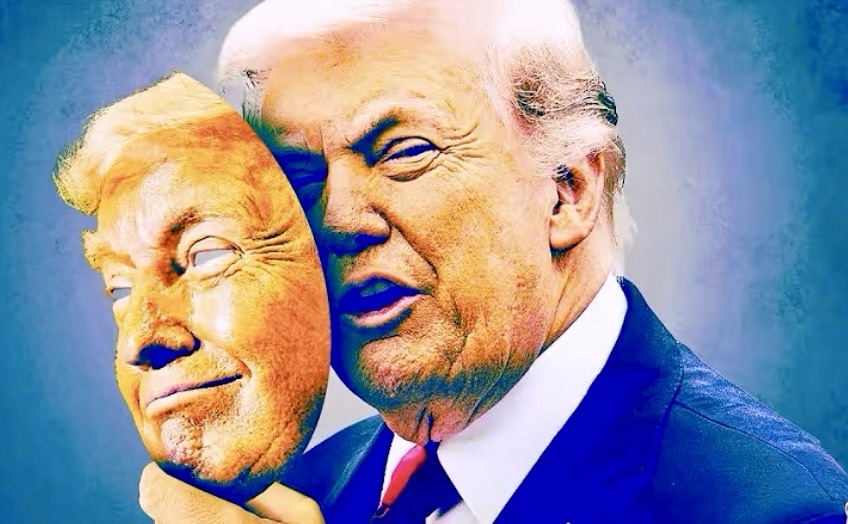
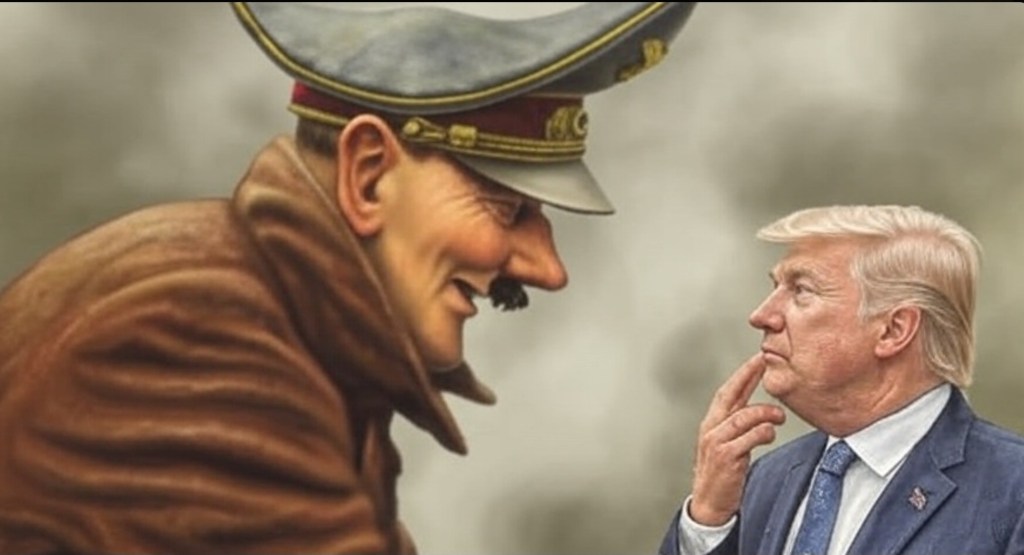
There is a particular kind of comfort in blaming one man. It is tidy. It is satisfying. It requires no structural introspection, no uncomfortable national reckoning, no awkward questions about what the mirror might reveal. For a long time, America’s allies indulged this comfort, patting themselves on the back with the reassurance that Donald Trump was a historical hiccup, a rogue asteroid, a freak weather event that would pass and leave the constitutional furniture roughly intact. That comfort is now in the advanced stages of decomposition. And the smell has reached every allied capital from Ottawa to Abuja.
The growing estrangement between the United States and its traditional allies is not, despite what the more diplomatically charitable observers insist, merely a function of one man’s temperament. It is, increasingly, the product of a system that has looked at the madman at the controls and responded with what can only be described as enthusiastic institutional cowardice.
The Supreme Court: Masters of the Long Grass
Consider the Supreme Court of the United States, that august institution, draped in the authority of two and a half centuries, guardian of the constitutional flame. One might reasonably expect that a court of nine learned justices would serve as the principal bulwark against executive overreach. One would, on the current evidence, be wrong.
The Court has developed a remarkable talent for the strategic delay, the narrowly drawn ruling, and the deferral of inconvenient questions to another day. When confronted with the more egregious excesses of this presidency, it has displayed the moral urgency of a man deciding whether to take an umbrella on a drizzly Tuesday. It has not, it should be noted, been uniformly supine, but the broad direction of travel in areas concerning presidential immunity, executive power, and administrative authority has tracked closely enough to the madman’s preferences to render the distinction largely academic.
The infamous immunity ruling of 2024, which granted a sitting president near-regal protection from criminal accountability for official acts, did not emerge from a vacuum. It emerged from a court ideologically reshaped over years of deliberate judicial strategy, a reminder, if one were needed, that the madman did not materialise in a constitutional garden of Eden. He arrived in a constitutional landscape that had been carefully tended for his arrival.
Congress: The Dog That Forgot How to Bark
If the Supreme Court has been disappointing, Congress has been something closer to a civic tragedy. The framers of the American constitution, in their genius, engineered a system of separated powers precisely to prevent the concentration of authority in a single executive. What they failed to engineer, with rather less genius, was a mechanism to ensure that the legislature would actually use the powers it was given.
Congressional oversight, that grand tradition of committees, subpoenas, and earnest proceedings, has in the current era largely served as an opportunity for performance rather than accountability. Investigations that terminate in partisan gridlock, subpoenas that dissolve into litigation, hearings that produce spectacular television and negligible consequence: this is the oversight apparatus confronting one of the most constitutionally aggressive presidencies in American history. The madman has, with evident accuracy, calculated that Congress is a consideration he need not trouble himself with. He has been, to the considerable embarrassment of the republic, correct.
The abdication is not entirely new, of course. Congress has been voluntarily surrendering its war powers, appropriations leverage, and treaty oversight to successive executives for decades, wrapping the surrender in the polite language of efficiency and national security. What the current moment has done is merely strip away the courtesy fiction that this self-abnegation had any limits.
The People: A Polling Problem
Here is where the analysis becomes genuinely, disturbingly uncomfortable, and where the “aberration” thesis finally collapses under its own weight.
An aberration, by definition, does not sustain a statistically significant approval rating. An aberration does not win one presidential election and come rather close in another. An aberration does not command, through the most turbulent months of constitutional stress-testing, the durable support of a substantial portion of the electorate. What the polling data insists upon, with the remorseless consistency of an unwelcome houseguest, is that a measurable and persistent segment of the American public is not alarmed by what it is witnessing. Some are actively pleased.
This is the fact that allied governments are quietly and somewhat desperately trying to process. It is one thing to wait out a rogue president. It is quite another to wait out a rogue president who reflects a rogue constituency. The former is a scheduling problem. The latter is a civilisational one.
The Press: Amplifiers of the Absurd
No account of the machinery of democratic failure would be complete without a nod to the media ecosystem that has made the madness not merely survivable but entertaining, profitable, and replicable. The American right-wing media complex, a sprawling empire of television networks, podcasts, online platforms, and commentary outlets, has performed a function that propagandists in less sophisticated systems can only envy: it has made the abnormal feel normal, the authoritarian feel patriotic, and the incoherent feel like common sense.
This is not, strictly speaking, a new observation. But its consequences accumulate. Each news cycle normalised becomes the baseline for the next. Each outrage absorbed without lasting consequence raises the threshold for outrage. The press that once prided itself on speaking truth to power has, in considerable swathes, chosen instead to amplify power’s preferred version of truth. The rest of the world watches and draws its conclusions.
The Monied Class: Oligarchy with American Characteristics
And then there is the money. The spectacle of America’s billionaire class, men of almost incomprehensible wealth and, one had assumed, at least rudimentary institutional awareness, performing acts of supplication before this presidency has unsettled observers in a way that transcends ordinary political calculation.
There is a certain kind of behaviour associated, in the Western imagination, with the oligarchs of younger or more fragile democracies: the strategic alignment with power, the public demonstration of loyalty, the private calculation that proximity to the strongman is preferable to the uncertain protections of the rule of law. Watching it manifest in Silicon Valley and Wall Street has produced in foreign observers something between bewilderment and recognition.
It is, as the more pointed commentators have noted, the behaviour of men who no longer trust institutions to protect them and have therefore decided to purchase protection directly. That this behaviour is indistinguishable from what one observes in the early stages of democratic backsliding elsewhere in the world is not a coincidence. It is a data point.
The Verdict the World Has Reached
The conclusion that America’s allies, partners, and anxious observers have been reluctantly assembling is this: Donald Trump is not the disease. He is the most visible symptom of a political system that has, across multiple dimensions and over an extended period, failed to maintain the conditions of its own health.
A functioning supreme court would have drawn clearer lines. A functioning legislature would have asserted itself. A functioning electorate, in sufficient numbers, would have rendered a cleaner verdict. A functioning press would have maintained the distinction between information and entertainment. A functioning plutocracy, if one must have a plutocracy, would at minimum have understood that its long-term interests lie in the preservation of the institutional order from which it profits.
None of these functions has performed adequately. And so the world, watching the sum total of these failures, has arrived at the uncomfortable conclusion that it is not dealing with an American aberration that will eventually correct itself. It is dealing with an American condition, one that may endure, mutate, and recur, with or without the specific madman currently occupying the Oval Office.
The allies are not simply hedging against Trump. They are hedging against America. That is a sentence that, even three years ago, would have seemed hysterical. Today it reads like sober foreign policy analysis. The madman did not build the machine. But the machine, it turns out, was always capable of producing him, and that, for the watching world, is the most unsettling revelation of all.

