

For decades Nigerians have been told that corruption in the oil industry is the product of weak institutions, bad leadership and poor governance. That explanation has become so familiar that many accept it without question.
Yet the deeper problem may not be governance failure alone.
The more troubling possibility is that parts of the system were designed in a manner that made the transfer of public wealth into private hands remarkably easy.
Nigeria’s oil sector did not become opaque by accident. Many of the legal and regulatory structures that governed it for decades concentrated enormous discretionary powers in the hands of a small number of public officials.
The result was a political economy in which access to oil assets often became more valuable than producing oil itself.
The Power of the Minister
The Petroleum Act of 1969 vested extraordinary powers in the Minister of Petroleum Resources.
For decades, the minister possessed substantial discretion in allocating oil prospecting licences and oil mining leases. In theory, such powers were intended to facilitate the development of the petroleum sector. In practice, critics argued that the absence of robust competitive safeguards created opportunities for patronage and rent-seeking.
Unlike jurisdictions where oil blocks are auctioned transparently and competitively, Nigeria often relied on ministerial discretion.
The consequences were predictable.
Political connections frequently appeared to carry greater value than technical competence or financial capacity.
Oil blocks became political rewards.
The licences themselves became commodities.
A company could acquire an oil block for relatively little and subsequently realise enormous value through partnerships, sales or transfers.
The Petroleum Industry Act (PIA) 2021 sought to reform this framework by introducing new regulatory institutions and encouraging more transparent licensing rounds through the Nigerian Upstream Petroleum Regulatory Commission (NUPRC).
Whether the reforms have fundamentally changed the culture of petroleum governance remains an open question.
OPL 245 and the Anatomy of a Controversy
Few petroleum licences have attracted more international attention than OPL 245.
In 1998, the offshore block was awarded to Malabu Oil and Gas, a company associated with former Petroleum Minister Chief Dan Etete.
The transaction would eventually become one of the most discussed petroleum disputes in modern history.
Over the following years, competing claims emerged regarding ownership and entitlement to the block. The matter generated litigation in multiple jurisdictions and attracted the attention of anti-corruption agencies, civil society organisations and international prosecutors.
In 2011, Shell and Eni agreed to pay approximately $1.3 billion in a transaction involving the Federal Government of Nigeria and interests connected to Malabu.
Italian prosecutors later advanced allegations concerning the ultimate destination of portions of those funds. Those allegations led to criminal proceedings involving several individuals and corporations.
However, in 2021, an Italian court acquitted all defendants.
The significance of OPL 245 lies not in assigning criminal responsibility but in exposing how the legal architecture governing strategic national assets permitted a single licence to become the subject of decades of controversy, litigation and political dispute.
The case remains a powerful illustration of the risks associated with concentrated discretionary powers.
NNPC and the Financial Black Box
The former Nigerian National Petroleum Corporation, now NNPC Limited, occupied a unique position in Nigeria’s economic life.
For decades it served simultaneously as operator, partner, marketer and custodian of substantial petroleum revenues.
Critics frequently described the organisation as a “black box” because of the difficulty in tracing revenues, costs and operational decisions through public reporting mechanisms.
Several administrations promised reforms.
Several audits identified concerns.
Several committees recommended transparency measures.
Yet ordinary Nigerians remained largely unable to determine precisely how much crude oil was produced, how much revenue was generated and how much ultimately reached the public treasury.
Former Central Bank Governor Sanusi Lamido Sanusi famously raised concerns regarding unremitted oil revenues during the administration of President Goodluck Jonathan. The ensuing controversy became one of the defining debates of that era.
Years later, similar questions about transparency continue to surface despite repeated reform efforts.
The Local Content Dream and Its Critics
The Nigerian Oil and Gas Industry Content Development Act was enacted to increase Nigerian participation in the petroleum industry.
Its objectives were laudable.
Develop indigenous expertise.
Create jobs.
Retain wealth.
Reduce dependence on foreign operators.
Yet critics have argued that certain transactions carried out under the banner of local participation sometimes benefited politically connected individuals more than ordinary Nigerians.
During the administration of President Goodluck Jonathan, former Petroleum Minister Diezani Alison-Madueke became one of the most influential figures in the sector.
Several transactions approved during that period later attracted scrutiny from regulators and investigators in Nigeria, the United States and the United Kingdom.
Businessmen including Kola Aluko and Jide Omokore became associated in public discourse with some of those petroleum transactions.
Again, it is important to note that legal proceedings involving various parties produced different outcomes in different jurisdictions, and not all allegations resulted in criminal convictions.
What remains beyond dispute is that enormous sums flowed through arrangements that many Nigerians struggled to understand.
The public could see the yachts.
The penthouses.
The private jets.
The luxury lifestyles.
What they could not see was how such wealth aligned with the promise that oil would improve their own lives.
The Foreign Players
The story of Nigeria’s petroleum sector cannot be told without mentioning the international oil majors.
Shell.
Eni.
Chevron.
ExxonMobil.
TotalEnergies.
For decades these companies operated within the legal frameworks established by successive Nigerian governments.
Their primary obligation was to shareholders.
The responsibility for protecting the public interest rested with Nigerian institutions.
Yet the relationship often created a troubling dynamic.
Foreign corporations possessed superior technical expertise, financial resources and negotiating leverage.
Public officials frequently operated within environments characterised by weak oversight and political interference.
The result was a structural imbalance that often favoured sophisticated corporate actors over the Nigerian taxpayer.
The Niger Delta: Rich Soil, Poor People
The greatest victims of this system remain the people living where the oil is produced.
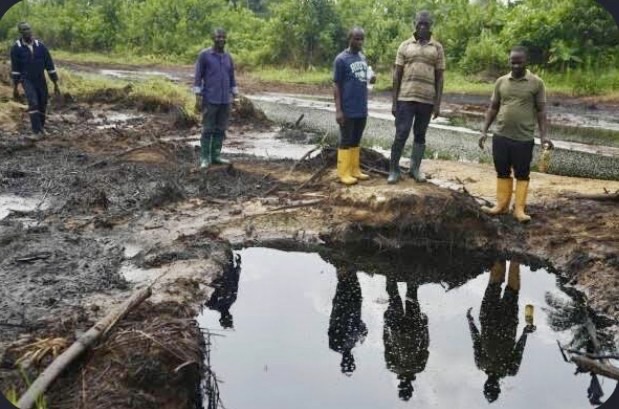
Communities across Bayelsa, Rivers, Delta and Akwa Ibom States have endured decades of environmental degradation.
Oil spills.
Gas flaring.
Polluted rivers.
Destroyed farmlands.
Lost livelihoods.
The United Nations Environment Programme’s findings on Ogoniland painted a devastating picture of environmental damage and public health risks.
Yet while billions circulated through government accounts, joint venture arrangements and corporate transactions, many host communities continued to live without clean water, reliable healthcare or quality education.
The contrast is painful.
The region that feeds the national treasury often struggles to feed itself.
Colonialism by Contract
Many Nigerians increasingly view the petroleum sector through a simple lens.
The names have changed.
The mechanisms have evolved.
But the extraction continues.
Under colonial rule, raw materials left Africa for foreign benefit.
Today, critics argue that contracts, licences, offshore structures and complex financial arrangements sometimes achieve similar outcomes.
The beneficiaries are different.
The methods are more sophisticated.
The legal paperwork is thicker.
But the outcome often appears familiar.
Wealth leaves.
Poverty remains.
This is why some commentators describe the arrangement as “colonialism by contract.”
Not because Nigeria lacks sovereignty.
But because legal and commercial structures can sometimes produce outcomes remarkably similar to those associated with colonial extraction.
The Real Reform Agenda
The Petroleum Industry Act provides an opportunity to break from the past.
But reform cannot stop at new legislation.
Nigeria must continue moving toward:
- Fully competitive licensing.
- Public disclosure of beneficial ownership.
- Independent digital metering of production.
- Publication of petroleum contracts.
- Strong parliamentary oversight.
- Transparent revenue accounting.
- Environmental accountability.
- Greater host community participation.
Most importantly, Nigeria must reduce the role of personal discretion and increase the role of transparent institutions.
No nation can build prosperity when access to public assets depends more on political relationships than public interest.
Conclusion
Nigeria’s oil tragedy is not simply a story of corruption.
It is a story about power.
The power to allocate licences.
The power to approve contracts.
The power to regulate.
The power to conceal.
The power to benefit.
For decades that power was concentrated in too few hands.
The names have changed over time.
Dan Etete.
Diezani Alison-Madueke.
Kola Aluko.
Jide Omokore.
Sanusi Lamido Sanusi.
Goodluck Jonathan.
Successive ministers, presidents, regulators and corporate executives.
But the central question has remained the same.
Who truly benefits from Nigeria’s oil wealth?
Until that question can be answered transparently and convincingly, the country will continue to confront a paradox that has haunted it for more than half a century.
A nation blessed with extraordinary natural resources, yet still searching for the prosperity those resources were supposed to bring.
No criminal allegations are made in this article against any individual mentioned. References are drawn from public records, court proceedings, official reports, media investigations and matters of public interest. Where allegations were made historically, they are identified as allegations, disputes, or matters that have been the subject of litigation, settlements, acquittals or official investigations.

