

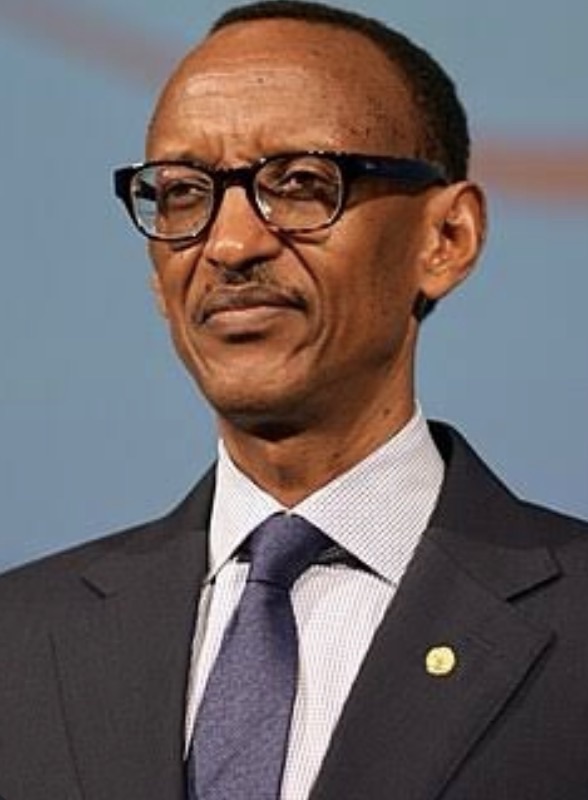
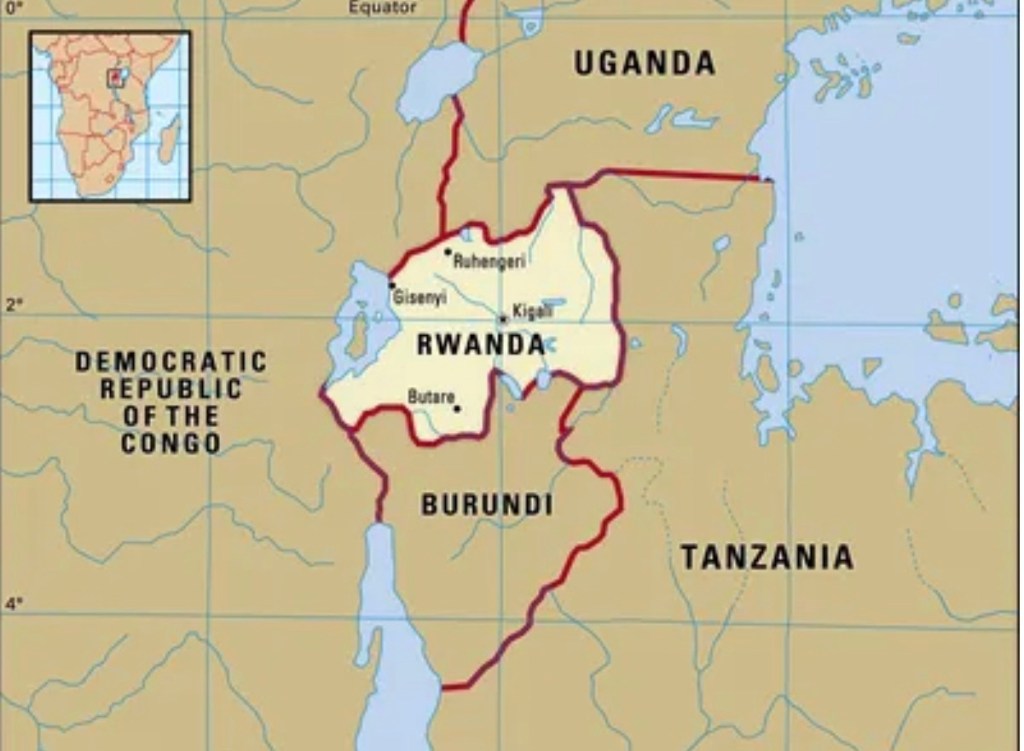
There is a question about Paul Kagame that refuses to disappear, no matter how many roads Rwanda builds, how many conferences Kigali hosts, how many investors arrive at its airport, or how many elections Kagame wins with numbers that would make even the most enthusiastic electoral returning officer blush.
Is Paul Kagame a strongman, a technocrat, or something considerably more complicated?
The uncomfortable answer is probably all three.
Kagame is one of the most consequential African leaders of the modern era. He helped lead the Rwandan Patriotic Front (RPF) that defeated the forces responsible for the 1994 genocide and brought the killing to an end. He inherited a country shattered by slaughter, displacement and institutional collapse.
He then set about rebuilding it.
And rebuild it he did.
But Rwanda presents a political paradox that Africa has encountered repeatedly: the leader who saves the state can eventually become the state.
That is where the Kagame story becomes considerably more complicated than the glossy photographs of Kigali suggest.
From the ashes of genocide
When the RPF took control of Rwanda in 1994, the country was emerging from one of the most horrific episodes of mass killing of the twentieth century.
Approximately 800,000 people were murdered in the genocide, predominantly Tutsi but also moderate Hutu who opposed the killers.
Kagame’s forces stopped the slaughter.
That fact matters.
It cannot be erased by subsequent arguments about democracy, human rights or regional wars. Kagame and the RPF did something that the international community spectacularly failed to do: they ended the genocide.
The United Nations and Western governments had watched the catastrophe unfold with an extraordinary combination of paralysis, caution and bureaucratic vocabulary.
Kagame’s army did not submit a memorandum.
It fought.
The problem begins with what happened after victory.
Kagame first became Rwanda’s de facto vice president and minister of defence. In 2000 he became president. He has remained there ever since.
He was re-elected in 2003, 2010, 2017 and again in 2024.
The 2024 election produced the familiar Kagame arithmetic: 99.18 percent of the vote.
That is not so much an election result as an electoral exclamation mark.
Reuters reported that Kagame’s principal critics were prevented from contesting the election. Freedom House likewise noted that prominent opposition figures including Victoire Ingabire and Diane Rwigara were barred from running. (Reuters)
Kagame’s defenders would say that Rwanda is not an ordinary country and cannot be judged as though its political history began with a ballot box.
His critics would respond that this is precisely how permanent political exceptionalism is born.
Both arguments deserve examination.
The Kagame miracle
There is a reason Kagame has attracted admiration well beyond Africa.
Rwanda today bears little resemblance to the country he inherited.
The World Bank records life expectancy at 68 years in 2024, while Rwanda’s economy grew by 9.4 percent in 2025, following average growth of about 8.5 percent between 2022 and 2024. (World Bank Open Data)
Kigali has acquired a reputation for cleanliness, order and administrative efficiency.
The government has pursued digitalisation, infrastructure development, tourism, financial services and investment. Rwanda has also developed an unusually strong international reputation for female political representation.
This is not imaginary.
The economic numbers are real.
The improvements in health and public services are real.
The administrative discipline is real.
The transformation of Kigali is real.
And therein lies the difficulty for Kagame’s critics.
It is easy to condemn a dictator who leaves his country poorer, dirtier and more chaotic than he found it.
Kagame presents the opposite problem.
He has delivered results.
The World Bank, however, also provides the other half of the economic story. Despite strong growth, Rwanda continues to face high poverty, insufficient job creation, low productivity and inequality. The benefits of economic transformation have not been evenly distributed. (World Bank)
The Kagame model therefore deserves neither worship nor dismissal.
It deserves scrutiny.
The technocrat with a soldier’s instincts
Kagame’s political personality is unusual.
He is not the traditional African strongman who spends his days surrounded by enormous portraits of himself, presides over interminable rallies and treats the presidential palace as a family inheritance.
His style is different.
It is disciplined, controlled and managerial.
Kagame behaves more like the chairman of a very demanding multinational corporation than the traditional political patriarch.
He speaks about targets, performance, investment, infrastructure and national development.
The language is technocratic.
The political architecture is not.
Rwanda is governed by an extraordinarily powerful presidency and a political system dominated by the RPF, the organisation Kagame has led for decades.
Freedom House’s 2026 assessment continues to classify Rwanda as “Not Free,” giving it 21 out of 100 for political freedom. It describes extensive restrictions on political opposition, surveillance, intimidation, arbitrary detention and repression of dissent. (Freedom House)
That produces the Kagame paradox.
He is a technocrat operating within a political system that is heavily personalised around one man.
The roads may be institutional.
The political power is not.
The 99.18 percent question
Perhaps the most revealing number in modern Rwanda is not the GDP growth rate.
It is 99.18.
Kagame received 99.18 percent of the vote in the 2024 presidential election.
The figure is extraordinary.
Not impossible, of course. Politicians occasionally achieve overwhelming victories. But when a sitting president receives virtually every vote while serious opposition candidates are excluded from the contest, the question ceases to be merely whether Kagame is popular.
The question becomes whether voters have a meaningful alternative.
Democracy is not simply the act of placing a ballot in a box.
It is the possibility that the person currently holding power can lose.
That possibility is what gives elections their constitutional significance.
If the governing party dominates the institutions that determine who may contest, what the media may say and how political opposition may organise, an election can remain procedurally intact while becoming substantively hollow.
Kagame’s supporters would argue that Rwanda’s post-genocide political settlement prioritises national cohesion and stability.
But stability and democracy are not synonyms.
A dictatorship can be stable.
A democracy can be chaotic.
The genius of constitutional government is not that it guarantees competent rulers.
It is that it provides a peaceful mechanism for removing incompetent ones.
The 2034 problem
The most significant question surrounding Kagame is no longer whether he will remain president.
He has already answered that.
The question is what happens after Kagame?
The constitutional changes of 2015 opened the way for him to seek further terms. Following his 2024 victory, Kagame can potentially remain president until 2034. (Freedom House)
By then, he will have been at the centre of Rwanda’s political life for approximately four decades.
That is an extraordinary amount of political gravity for one human being.
Kagame himself has rejected the idea that the RPF should groom a successor in the manner of a monarchy.
But there is an irony here.
The longer a leader remains indispensable, the more difficult succession becomes.
If the system works only because one man knows where all the switches are, then the system is not yet a mature institution.
It is a sophisticated machine with one irreplaceable operator.
That is dangerous.
Not necessarily because Kagame intends to become a monarch.
But because institutions are ultimately tested not by how they operate under their strongest leader, but by what happens when that leader leaves.
The other Rwanda: silence
Rwanda’s extraordinary administrative efficiency has another side.
The same state capable of mobilising citizens, building infrastructure and delivering public programmes is also capable of monitoring dissent with extraordinary efficiency.
Freedom House reports restrictions on political expression, surveillance, arbitrary detention and pressure on opposition figures. It also records allegations involving the harassment, disappearance and killing of critics outside Rwanda. (Freedom House)
This is where the argument that Kagame is simply an efficient technocrat begins to collapse.
A technocrat manages institutions.
A strongman controls them.
Kagame has elements of both.
The Rwandan government has repeatedly rejected accusations of systematic wrongdoing and insists that its policies are necessary to protect national unity and prevent a return to the ethnic violence that destroyed the country.
The historical context cannot simply be ignored.
But neither should history become a permanent constitutional exemption.
The genocide explains Rwanda’s obsession with stability.
It does not automatically answer every question about today’s political freedoms.
Congo refuses to disappear
There is another issue that has increasingly complicated Kagame’s international reputation: the Democratic Republic of Congo.
For decades, Rwanda has argued that its security is directly connected to events across the border, particularly the presence of armed groups associated with the aftermath of the 1994 genocide.
That argument has considerable historical weight.
But the eastern Congo conflict has become much larger than a simple question of Rwandan security.
The M23 rebellion has captured large areas of eastern Congo, and Rwanda has repeatedly been accused by the United Nations, Congo and Western governments of supporting the movement.
Kigali denies backing M23 and maintains that its military actions are defensive and linked to threats from armed groups operating in eastern Congo.
The dispute has nevertheless become sufficiently serious that in March 2026 the United States imposed sanctions on the Rwanda Defence Force and senior Rwandan military officials, accusing Rwanda of supporting M23 and contributing to abuses in eastern Congo. Rwanda rejected the sanctions as one-sided and disputed the allegations.
Washington subsequently continued mediation efforts between Rwanda and Congo, with the two governments agreeing in March 2026 to measures including Rwandan troop disengagement from defined areas and renewed efforts by Congo against the FDLR.
The Congo question matters because it tests another dimension of Kagame’s leadership.
A leader who believes passionately in national security may see intervention beyond his country’s borders as strategic necessity.
His neighbours may see the same intervention as aggression.
Both perspectives can exist simultaneously.
History, unfortunately, is rarely kind enough to provide a referee.
The danger of confusing effectiveness with legitimacy
This is perhaps the central lesson of Rwanda.
Kagame demonstrates that an authoritarian political system can produce impressive developmental outcomes.
But that does not establish that authoritarianism caused the development.
Nor does Rwanda’s economic progress prove that political repression is necessary for development.
The relationship is considerably more complicated.
There are authoritarian governments that are incompetent.
There are democratic governments that are incompetent.
There are authoritarian governments that build impressive infrastructure.
There are democratic governments that do the same.
The real test is whether a country can retain its achievements when political power changes hands.
That is the question Rwanda has yet to answer.
Kagame has been extraordinarily successful at building a state that works.
The next challenge is building a state that works without Kagame.
That is a much harder assignment.
Kagame’s extraordinary bargain
Perhaps the fairest way to understand Paul Kagame is not as either a hero or a villain.
He is the product of Rwanda’s history and, in many respects, its author.
He helped end the genocide.
He rebuilt the state.
He created order.
He imposed discipline on a political system emerging from catastrophe.
He presided over impressive economic and social improvements.
But he also built a political system in which the ruling party has dominated for more than three decades, meaningful opposition has been constrained and the president has accumulated extraordinary longevity in office.
That is not a minor footnote.
It is the other half of the story.
Kagame therefore sits somewhere between the technocrat and the strongman.
The technocrat explains how he governs.
The strongman explains how long he governs.
The tragedy is that the two have become so intertwined that it is increasingly difficult to determine where the Rwandan institution ends and Paul Kagame begins.
The final test
The greatest monument Kagame could leave Rwanda would not be another road, airport, convention centre or technology hub.
It would be a political system capable of surviving his departure.
A truly successful state does not require its founding generation to remain in office forever.
It creates institutions strong enough to outlive its heroes.
That is the ultimate test of Kagame’s legacy.
Not whether Rwanda is cleaner than its neighbours.
Not whether Kigali is more efficient than other African capitals.
Not whether GDP has grown at impressive rates.
Not even whether Kagame’s critics are right about every allegation made against his government.
The question is simpler:
Can Rwanda remain stable, prosperous and united when Paul Kagame is no longer the man at the centre of everything?
If the answer is yes, Kagame’s historical achievement will be immense.
If the answer is no, then the man who rebuilt Rwanda may also have unintentionally built a system that cannot imagine Rwanda without him.
And that is the paradox of the Kagame presidency.
He may have been exactly the leader Rwanda needed after the genocide. The unresolved question is whether Rwanda still needs Kagame after Kagame has spent more than three decades defining what Rwanda is.
That is not an indictment.
It is the constitutional question every successful strongman eventually leaves behind.
And eventually, every strongman leaves.
Even the very successful ones.

