

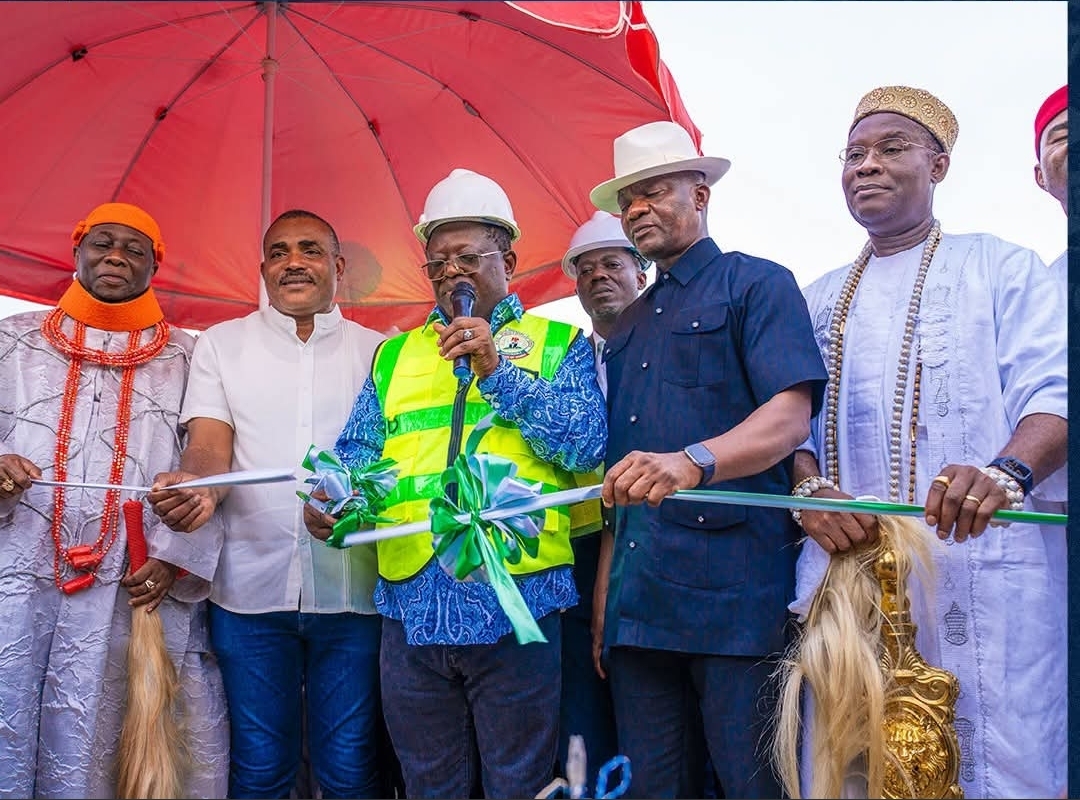
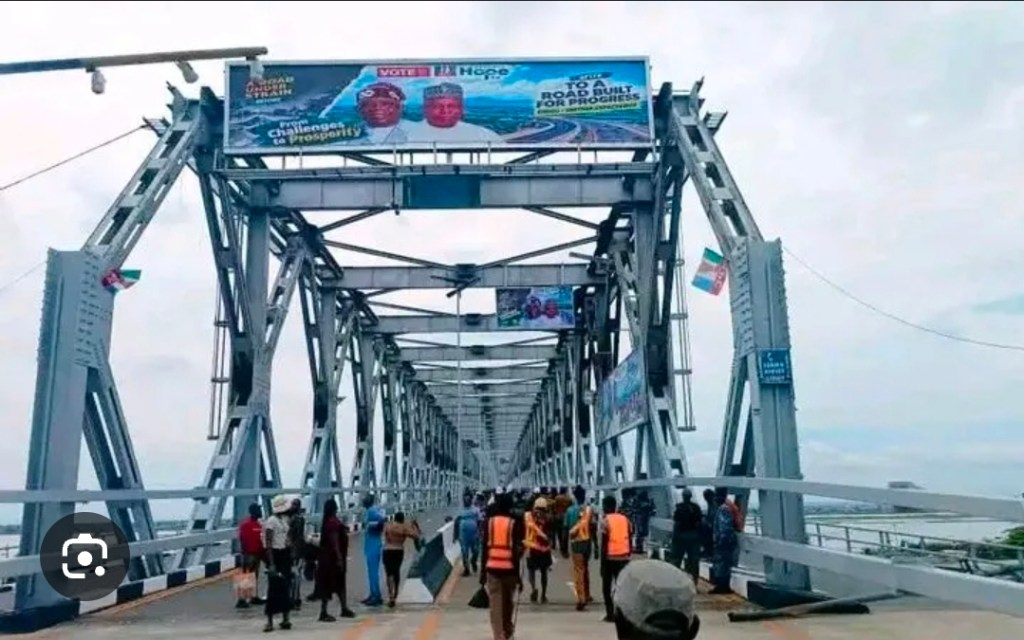
The First Niger Bridge belongs to Nigeria. It does not belong to David Umahi, Bola Tinubu, the All Progressives Congress or any religious congregation.
Yet the conduct surrounding the bridge’s rehabilitation and reopening raises a fundamental question about the character of the Nigerian state. When the Minister of Works invokes Christian prayer at an official public ceremony and subsequently directs that the President’s photographs be displayed on public infrastructure, while urging voters to return the President to office, where does public service end and partisan appropriation begin?
The question is not whether David Umahi has a right to his Christian faith. He does. Nor is it whether the APC may campaign for Tinubu’s re-election. It may. The question is whether the authority of public office and the infrastructure entrusted to the government are being used in a manner consistent with constitutional neutrality, religious freedom and electoral fairness.
Section 10 of the Nigerian Constitution prohibits the adoption of a state religion. Section 38 protects freedom of religion, while section 42 prohibits discrimination on specified grounds, including religion and political opinion. The Constitution does not automatically outlaw a Christian prayer at a government event. But it does require us to distinguish the personal faith of a minister from the religious identity of the state.
The political question is equally serious. A bridge built or repaired with public resources is a public asset. It may legitimately be presented as evidence of governmental achievement. But it cannot simply be converted into a monument to the incumbent President or a partisan campaign platform without scrutiny of the legal authority, arrangements and public resources involved.
Section 99(2) of the Electoral Act 2026 prohibits the use of state apparatus to advantage or disadvantage a political party or candidate at an election. Whether the particular arrangements on the First Niger Bridge breach that provision requires examination of the evidence. The minister’s statements, however, raise legitimate questions about whether the Ministry of Works is administering public infrastructure impartially or facilitating the political interests of the ruling party.
The distinction between government and party is not a technicality. It is a safeguard against the conversion of electoral victory into ownership of the republic.
A government may celebrate its achievements. A President may campaign for another term. A minister may profess his faith. But none of these freedoms entitles the ruling party to appropriate the symbolic and material resources of the state as though opposition parties and citizens of other faiths were guests in their own country.
The bridge is a particularly powerful symbol because everyone must be able to use it, irrespective of religion, ethnicity or political affiliation. Its public character is precisely what makes partisan ownership so troubling.
If every public project becomes a campaign monument, every official ceremony a vehicle for partisan messaging, and every expression of government authority an opportunity to privilege the ruling party, the country risks moving from democratic government towards the gradual capture of the state.
The republic cannot be the ruling party’s property. The Constitution says otherwise.
The bridge belongs to the people. The government is their trustee. And no minister, President or political party has the constitutional authority to confuse the two.

