

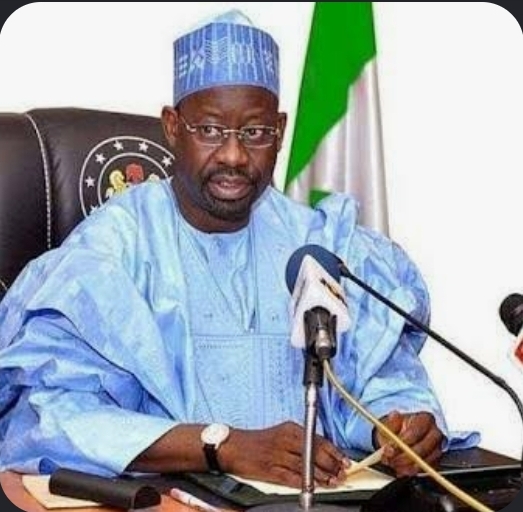

The above bill is sponsored by Senator Ibrahim Hassan Dankwambo (Gombe North), passed second reading in the Senate on 22 July 2026 and was referred to relevant committees (including National Planning and Economic Development, Finance, and Foreign Affairs) for further consideration and public hearings.
It seeks to create a centralised legal framework for all foreign assistance entering Nigeria. Below is an analysis of its main provisions based on available summaries and civil society reviews of the draft.
Core Institutional Provision
The bill establishes a Foreign Aid Regulatory Commission (FARC) with powers to:
- Register recipients of foreign aid.
- Demand information.
- Conduct inspections and audits.
- Impose sanctions.
- Enforce compliance with government-defined national development priorities and policies.
Registration and National Database
- Every recipient of foreign aid — including federal and state government agencies, NGOs, civil society organisations (CSOs), and private entities — must register the assistance with FARC within 30 days of receipt.
- Non-registration is treated as a criminal offence.
- A new National Foreign Aid Register would be created to track all such flows (Clause 8 is frequently referenced in analyses).
Disclosure and Transparency Requirements
Recipients must publicly disclose:
- Source of funding
- Amount
- Purpose and conditions
- Implementing partners
- Funding agreements, disbursement schedules, project outcomes, and audit reports
Donor-funded projects are required to be integrated into national and state budgets.
Alignment with Government Priorities
Funded projects must align with Nigeria’s official development priorities. This applies not only to government-received aid but also to independent organisations receiving foreign grants or technical assistance.
Audit and Oversight Obligations
In addition to existing requirements (e.g., under the Companies and Allied Matters Act / CAMA 2020 and Financial Reporting Council rules), recipients face mandatory annual independent audits.
Penalties and Enforcement
Sanctions for non-registration, false disclosures, diversion or misuse of funds, or implementing unapproved projects include:
- Fines of up to ₦20 million
- Imprisonment of up to five years
- Suspension or revocation of operational licences
- Broad rule-making powers granted to the Commission.
The definition of “foreign aid” is broad, covering grants, donations, humanitarian support, technical assistance, and related inflows. Critics argue this could extend to private philanthropic funding received by religious bodies, community groups, schools, hospitals, and advocacy organisations.
Stated Objectives
Sponsors and supporters cite constitutional provisions on legislative oversight of public funds (particularly Sections 80–83 of the 1999 Constitution) and the Fiscal Responsibility Act. They argue the current system is fragmented, leads to duplication of projects, weak accountability, and potential national security risks from unscrutinised inflows, especially those channelled through NGOs.
Main Criticisms of the Provisions
Civil society analyses (notably from the Nigeria Network of NGOs and a coalition of around 90 organisations) highlight several concerns:
- The bill applies the same registration, audit, disclosure, and criminal-sanctions regime to both public funds received by government and private donations to independent associations, without clear distinction.
- It duplicates existing transparency tools, particularly the publicly accessible Nigeria Development Cooperation Dashboard (already operated by the Federal Ministry of Budget and Economic Planning under the International Aid Transparency Initiative standard).
- It risks overlapping with the Corporate Affairs Commission (CAMA registration and reporting), the Special Control Unit against Money Laundering (SCUML), the EFCC, and the Auditor-General’s mandate.
- Mandatory alignment with government priorities and the threat of licence revocation could enable political interference in legitimate advocacy, humanitarian, anti-corruption, election observation, or community support work.
- This is described as the fourth attempt at creating a dedicated NGO/foreign-aid regulatory commission (previous efforts in 2016, 2017, and 2019/2020 failed at committee stage).
Current Status and Context
As of early August 2026 the bill remains at the committee stage. A public hearing process is expected. Civil society groups have called for its withdrawal or significant amendment, while some lawmakers defend it as necessary for better coordination and security-related scrutiny of large foreign inflows.
The bill’s practical impact will depend heavily on the final wording after committee review, any exemptions that may be introduced (particularly for faith-based or purely domestic community organisations), and how the proposed Commission’s discretionary powers are constrained. Full official text has not been widely published in open sources at the time of analysis, so the above draws from detailed secondary summaries by legislative trackers and civil society regulatory teams.

