

Nigeria’s Senate is advancing a far-reaching piece of legislation that could reshape how foreign grants, donations and technical assistance are handled in the country. Senate Bill 1034, formally titled the Foreign Aid (Regulation, Coordination, Transparency and Disclosure) Bill, 2026, has already cleared second reading and is now before committees for further scrutiny.
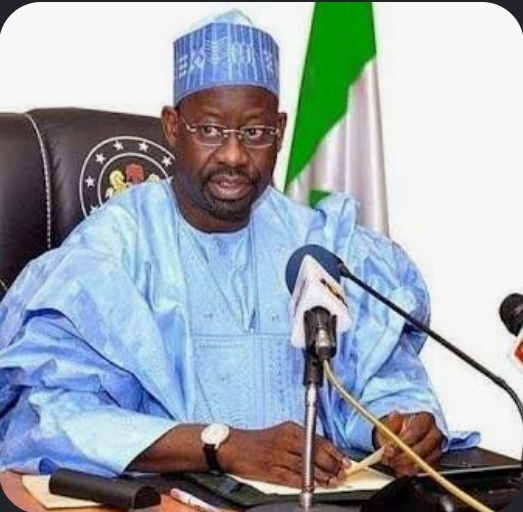
Sponsored by Senator Ibrahim Hassan Dankwambo, the bill seeks to bring all foreign aid under a single regulatory framework. Proponents say it will end the long-standing fragmentation of donor funding, improve accountability and close loopholes that could be exploited for money laundering or terrorism financing. Critics, including a coalition of about 90 civil society organisations and prominent human rights lawyer Chidi Anselm Odinkalu, describe it as one of the most restrictive proposals directed at independent organisations since the return to civilian rule in 1999.
What the Bill Actually Proposes
At its core, the legislation would create a new body called the Foreign Aid Regulatory Commission (FARC). This commission would be given wide powers to register recipients of foreign assistance, demand information, conduct inspections and audits, impose sanctions, and ensure that funded projects align with government-defined national development priorities.
Key requirements include:
Mandatory registration of every foreign grant, donation or technical assistance package with the Commission within 30 days of receipt. Failure to register would be a criminal offence.
Creation of a National Foreign Aid Register.
Public disclosure of the source, amount, purpose, conditions and implementing partners of each grant, along with disbursement schedules, outcomes and audit reports.
Integration of donor-funded projects into national and state budgets.
Mandatory annual independent audits on top of existing reporting obligations under the Companies and Allied Matters Act and other laws.
Alignment of projects with official government priorities.
Penalties for non-compliance, diversion of funds, false disclosure or implementing unapproved projects could include fines of up to ₦20 million, imprisonment of up to five years, and suspension or revocation of an organisation’s operational licence.
The definition of “foreign aid” in the bill is deliberately broad. It covers not only official development assistance received by government agencies but also private philanthropic funding that reaches NGOs, civil society groups, faith-based organisations, hospitals, schools and community initiatives.
The Case for the Bill
Supporters argue that Nigeria, one of Africa’s largest recipients of foreign assistance, has long lacked a coherent system for tracking these inflows. Donor projects are often implemented outside the national budget, leading to duplication, weak coordination and limited public oversight. Lawmakers have also raised national security concerns, pointing to the risk that unmonitored funds could be diverted for illicit purposes.
The bill draws on constitutional provisions giving the National Assembly oversight of public funds (particularly Sections 80–83 of the 1999 Constitution) and the principles of the Fiscal Responsibility Act. In this view, once foreign resources are deployed inside Nigeria, they become a matter of public interest that requires proper scrutiny.
The Concerns Raised
Civil society groups counter that the bill confuses two distinct categories of funding. Public funds received by government ministries are already subject to constitutional and parliamentary oversight. Private donations to independent associations, by contrast, fall under the constitutional right to freedom of association. Treating both under the same heavy regulatory regime, they argue, risks turning financial transparency into a tool of political control.
Critics also note that Nigeria already has transparency mechanisms in place. The Federal Ministry of Budget and Economic Planning operates the Nigeria Development Cooperation Dashboard, a publicly accessible platform based on international aid transparency standards. NGOs are already required to register with the Corporate Affairs Commission, file audited accounts, and comply with anti-money laundering rules administered by the Special Control Unit against Money Laundering (SCUML). Creating another powerful commission with criminal sanctions, they say, duplicates existing systems while adding significant administrative and legal risk.
Particular alarm has been expressed about the requirement that projects must align with government priorities. Organisations working on anti-corruption, election observation, human rights, humanitarian response or public-interest litigation could find themselves exposed to political interference. The same concern extends to churches, mosques and informal community support systems that receive overseas support for welfare activities.
This is not the first time such legislation has been attempted. Similar proposals aimed at regulating NGOs appeared in 2016, 2017 and 2019/2020. All previously failed to become law after sustained advocacy from civil society.
What Happens Next
As of mid-August 2026 the bill remains at the committee stage. Public hearings are expected. The final shape of the law, if it proceeds, will depend heavily on amendments that may introduce clearer exemptions, narrower definitions of foreign aid, proportional penalties, or stronger safeguards against arbitrary enforcement.
For ordinary Nigerians the stakes are practical as well as constitutional. Effective regulation could improve the impact of scarce development resources. Overly broad controls, however, could shrink the space in which independent organisations deliver services, speak for communities, and hold power to account, especially in the run-up to the 2027 general elections.
The debate over SB.1034 is ultimately a debate about the proper balance between accountability and autonomy. Transparency in the use of foreign resources is a legitimate public interest. Whether this particular bill achieves that goal without unduly constraining civic life will depend on how carefully its provisions are refined in the coming weeks.

