


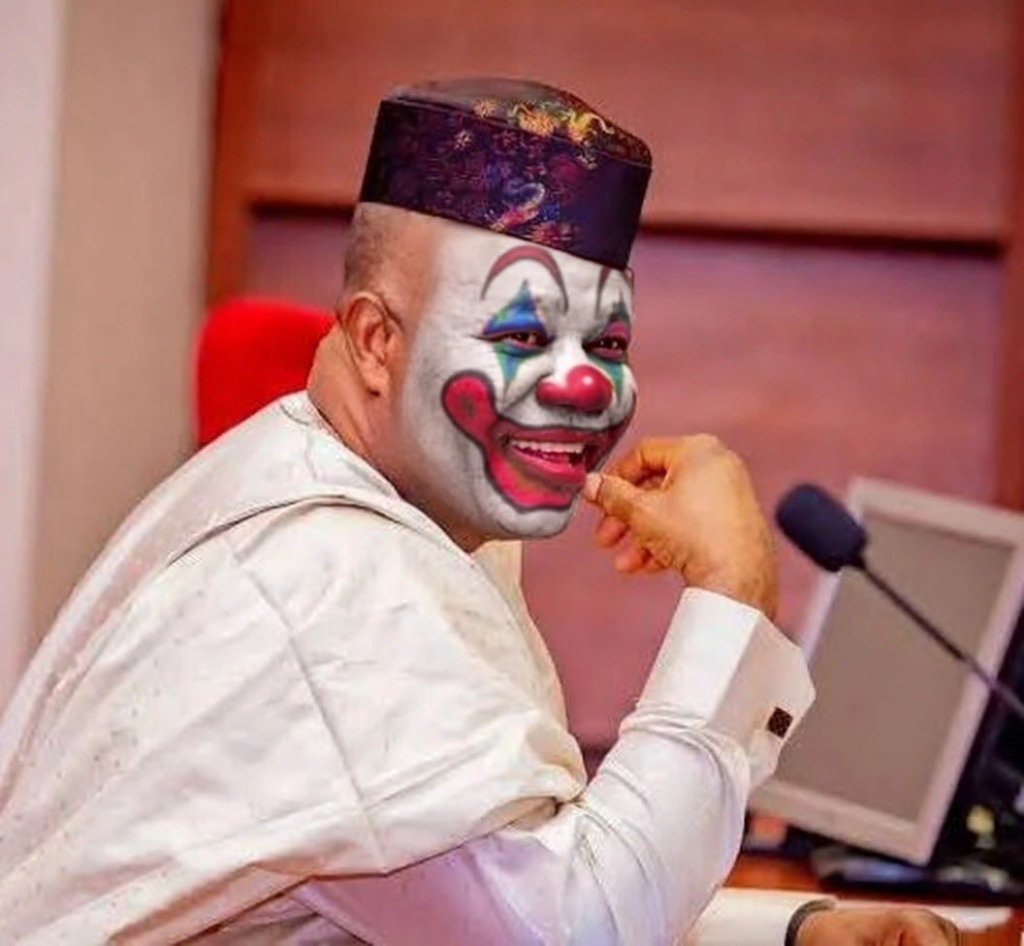
The Doctrine and the Hotel
Every first-year law student learns that no parliament can bind its successors. A.V. Dicey wrote it down in 1885, and the English courts confirmed it in Vauxhall Estates (1932) and Ellen Street Estates (1934). A Parliament may legislate on anything except the freedom of the next Parliament to undo it. A parliament is a hotel, not a freehold: you check in, you make a mess, you check out, and you do not get to reserve the rooms for the next guests.
The Nigerian Senate has now tried to take a reservation for a party that has not been invited, and has not yet been elected. It has not rewritten the doctrine, because doctrines are not rewritten by those who ignore them. It has treated one of the oldest rules of parliamentary government as a suggestion box into which the 10th Senate may post its preferences and then go home.
A Farce in Three Movements
The first movement came in the first week of May 2026. After a marathon closed session, the Senate amended its standing orders so that only senators with at least two consecutive terms, the latest of them immediately preceding nomination, could contest the Senate Presidency and other principal offices in the 11th Assembly. In plain English, only members of the 10th Senate who win re-election would be eligible. Senator Adams Oshiomhole, a first-term senator, objected the next day in a plenary row that turned rowdy, and was threatened with the chamber’s disciplinary powers for his trouble.
The second movement was a retreat. Within days the Senate rescinded parts of its own handiwork, on the stated ground that its internal rules must align with the constitution. Reports differ on how complete the climbdown was, but most accounts say the race was reopened to all elected senators. A chamber that finds, within a few days, that its rules offend the constitution has made a confession, whatever it chose to call it.
The third movement was last Thursday, 15 October. With no bill, no committee and no debate worth the name, the Senate Chief Whip, Tahir Monguno, rose to declare that there was no vacancy in the Senate Presidency, nor in the Deputy Presidency, nor among the principal officers. Senator Cyril Fasuyi seconded, adding that the seat was not open to any contest. Senator Akpabio put the question by voice, the ayes were resoundingly loud, and he invited the nays. By Vanguard’s account he observed that they were not there, and pronounced the matter settled. Senator Ali Ndume, for his part, said he was not in the chamber when the resolution was taken. A unanimous decision, it appears, requires only the senators who are present to agree, and the dissenters to be elsewhere.
What the Constitution Actually Says
Section 50(1) of the 1999 Constitution says the President and Deputy President of the Senate shall be elected by the members of that House from among themselves. Everything turns on three words: that House. It means the House as constituted after the election, and not a predecessor in its dying months with a strong view about who should succeed it.
Section 60 gives each House the power to regulate its own procedure, and a power that belongs to a House belongs to the House that exists now. Section 64 provides that each Assembly stands dissolved four years after its first sitting. The 10th Senate has a term and an expiry date, like yoghurt. Its voice vote of 15 October has, in law, exactly the weight of a voice vote in a pub: it expresses a mood and binds no one. Even ThisDay, hardly an insurgent publication, noted that the endorsement does not remove the constitutional requirement for newly elected senators to elect their presiding officers.
The doctrine has respectable qualifications, and they do not help the Senate. Jennings and his heirs argue that a legislature may prescribe the manner and form of future legislation without limiting its substance. But that is a theory about how laws are made, not a licence for one set of senators to appoint the leadership of another set of senators. The 11th Senate will adopt its own standing orders on day one, by simple majority, and the 10th Senate’s pre-booking will be filed where such things belong.
Five Fingers, One Hand
Here the lawyer must make way for the political observer. A resolution that is legally void can be politically potent. Senators-elect will arrive knowing that the leadership slate was announced before the votes were counted, and that the Senate President’s allies have declared an inheritance in advance. Every aspirant is told, in the politest possible Nigerian way, to go and sit down. The message is aimed less at the lawyers than at the newcomers, who must now decide whether the seat is really vacant and whether it is worth the trouble of finding out.
This is what state capture looks like in motion. The seizure of a chamber rarely arrives with a coup communiqué. It comes through procedure: a standing order here, a voice vote there, a resolution declaring that elections are for other people. Vanguard reports that the Senate President argued the presidency and vice presidency were already beyond the reach of any challenger, leaving only his own seat to fight over. Whatever one makes of the boast, a presiding officer who treats the national result as concluded, with polling still under three months away, has stopped thinking of elections as a contest and started thinking of them as a ratification.
One detail deserves more than a footnote. The resolution also pencilled in the minority leader, the deputy minority leader and the minority whip, drawn from the PDP, Accord and the NDC, each to be returned to office should they win their seats. Read closely, that is a pre-agreed settlement of the next Senate’s order of business: the majority stays the majority, the opposition stays the opposition, and the seats and the titles are all accounted for before a single ballot is cast. None of the published accounts records a single dissenting voice from the minority benches. An opposition that is campaigning for power does not co-sign an inventory of the next chamber’s offices with its own role already filled in. Whatever the parties say on the hustings, in the chamber the five fingers move together, and a legislature whose government and opposition agree on the outcome before the voters do has stopped being a check on anything.
The Nays Will Be Present
The doctrine survives, as doctrines do. The 10th Senate will end, the 11th will be sworn in, and its members will have been elected by the Nigerian people and not by the standing orders of a dissolved chamber. They will adopt their own rules and elect their own officers. Anyone who considers the matter settled should recall that on 15 October the Senate President asked for the nays and found them absent. In June 2027 they will be in the building, and some of them will have brought a motion.

