Captain Louis Renault, played brilliantly by Claude Rains in the 1942 classic Casablanca, delivered one of cinema’s most memorable lines:
«”I’m shocked, shocked to find that gambling is going on in here!”»
No sooner had he uttered those words than he was handed his gambling winnings. His outrage was pure theatre. He knew exactly what was happening all along.
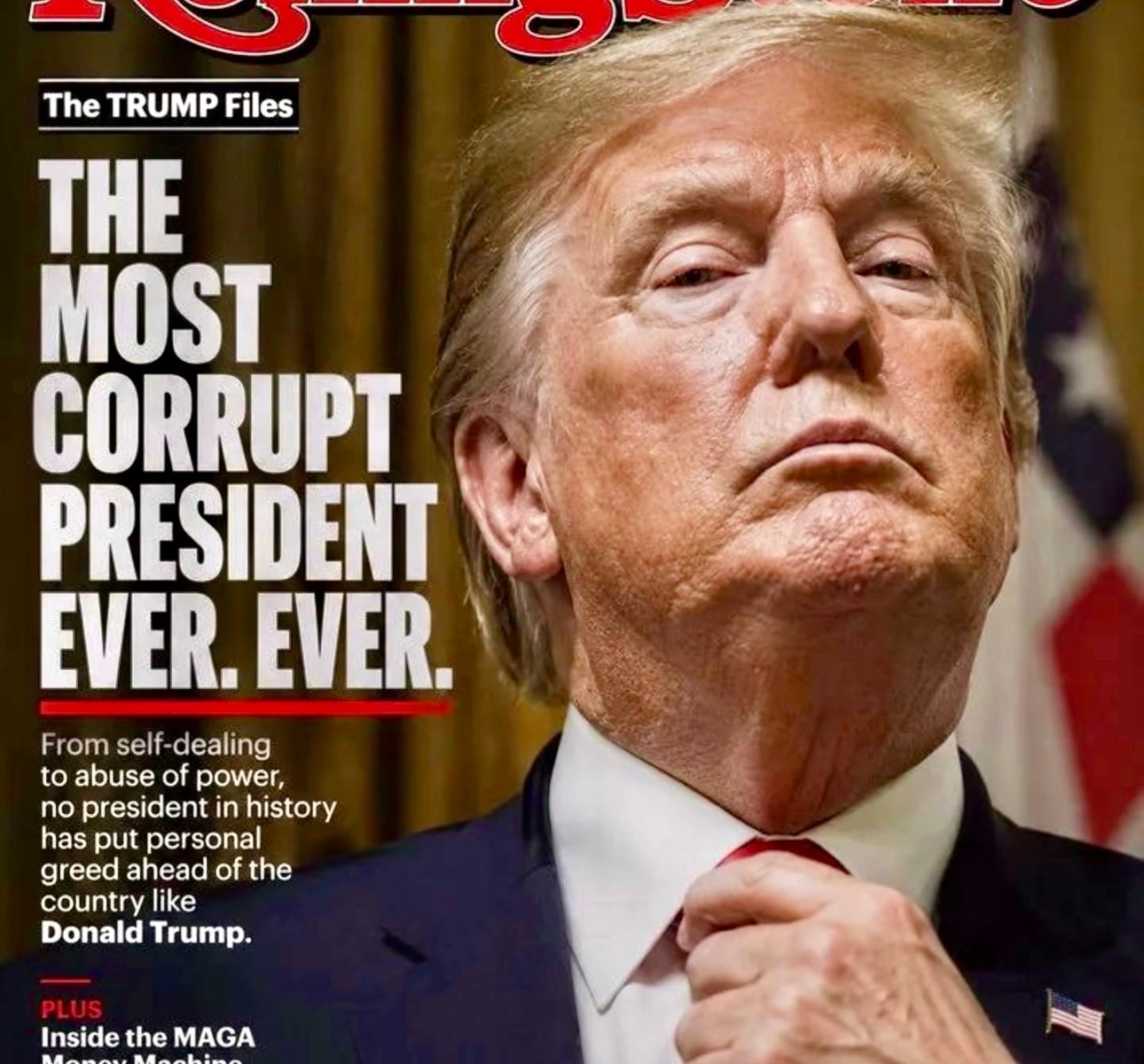
That scene has become a timeless metaphor for political hypocrisy. It perfectly captures the reaction of many Republicans, political commentators, and even some former members of Donald Trump’s inner circle who now profess astonishment at the conduct of the man they enthusiastically elevated to the White House.
They are suddenly shocked that Donald Trump lies.
Shocked that he places personal interests above national interests.
Shocked that public office is frequently treated as an extension of private business.
Shocked that loyalty to him matters more than loyalty to institutions.
The surprise would be touching if it were remotely believable.
Trump did not arrive in politics as an unknown quantity. Long before he descended the golden escalator in Trump Tower in 2015, he had cultivated a public image built on exaggeration, self-promotion, litigation, celebrity spectacle, and a flexible relationship with the truth. His business career was controversial, his public statements often contradictory, and his personal conduct had been examined for decades.
None of this was hidden.
It was simply ignored because many believed he could deliver something they wanted. For some, it was conservative judicial appointments. For others, immigration control, tax cuts, or a combative style against the political establishment. The bargain was made with eyes wide open.
Politics, however, has a nasty habit of presenting the invoice long after the purchase.
Many Republicans convinced themselves they could harness Trump’s popularity while containing his excesses. They imagined the institutions of American government would smooth away the rough edges.
Instead, the opposite occurred.
The institutions found themselves adapting to Trump rather than Trump adapting to them. The Republican Party increasingly reshaped itself around one individual, where disagreement became disloyalty and compromise became heresy.
Today, every fresh revelation is greeted with expressions of disbelief from people who spent years dismissing earlier warnings as partisan hysteria.
The performance resembles Captain Renault collecting his winnings while denouncing gambling.
The real issue is not whether Donald Trump is flawed. Every politician is.
The deeper question is why so many intelligent and experienced politicians convinced themselves that character was somehow irrelevant to the exercise of power. Competence and ideology were treated as sufficient substitutes for integrity.
History repeatedly demonstrates that they are not.
Power does not transform character. It magnifies it.
A presidency is not merely about implementing policies. It is also about setting standards, respecting constitutional boundaries, preserving public confidence, and understanding that public office is held in trust rather than owned.
When personal interests consistently compete with institutional responsibilities, the office itself begins to suffer.
Trump’s supporters often argue that his opponents exaggerate his faults because they dislike his politics. His critics respond that his conduct validates their concerns. Both arguments will continue to fuel America’s political wars for years to come.
But one thing should no longer be credible.
The pretence of surprise.
No one can honestly claim they did not know Donald Trump was an unconventional, deeply polarising political figure before he entered the White House. The evidence was public, plentiful, and discussed endlessly.
Like Captain Renault, those who now proclaim themselves “shocked” risk becoming characters in their own political farce.
Their expressions of disbelief would be more convincing had they not spent years applauding from the front row.
As Casablanca reminds us, some performances are so transparent that the audience already knows the ending before the curtain falls.


Reporting News and opinions