

If the Congo Crisis of the early 1960s was Africa’s first post-independence horror show mutinies, secessions, mercenaries, Cold War meddling, and the tragic assassination of Patrice Lumumba then Major (later Major-General) Johnson Aguiyi-Ironsi was one of the more improbable leads in the United Nations’ attempt to impose a bit of order on the chaos. The mission was called ONUC (Opération des Nations Unies au Congo). It ran from July 1960 to June 1964, peaked at nearly 20,000 troops from a rainbow of mostly African and Asian nations, and remains one of the UN’s earliest and bloodiest large-scale peacekeeping experiments. Nigeria, barely independent itself, sent battalions. Ironsi went with them, swagger stick in hand, and somehow ended up as the last man out.
Early Days: The 5th Battalion in Kivu
In November 1960, then-Lieutenant Colonel Ironsi took the Nigerian 5th Battalion to the Congo. They were stationed in Kivu Province, headquartered in Bukavu. The place was a tinderbox of local politics, residual Belgian influence, and deep suspicion of anything that looked European. On 15 December an Austrian medical unit arrived. Congolese gendarmes, soldiers and civilians, convinced the newcomers were Belgians in disguise, started harassing them. The Austrians were eventually abducted and locked in the city prison.
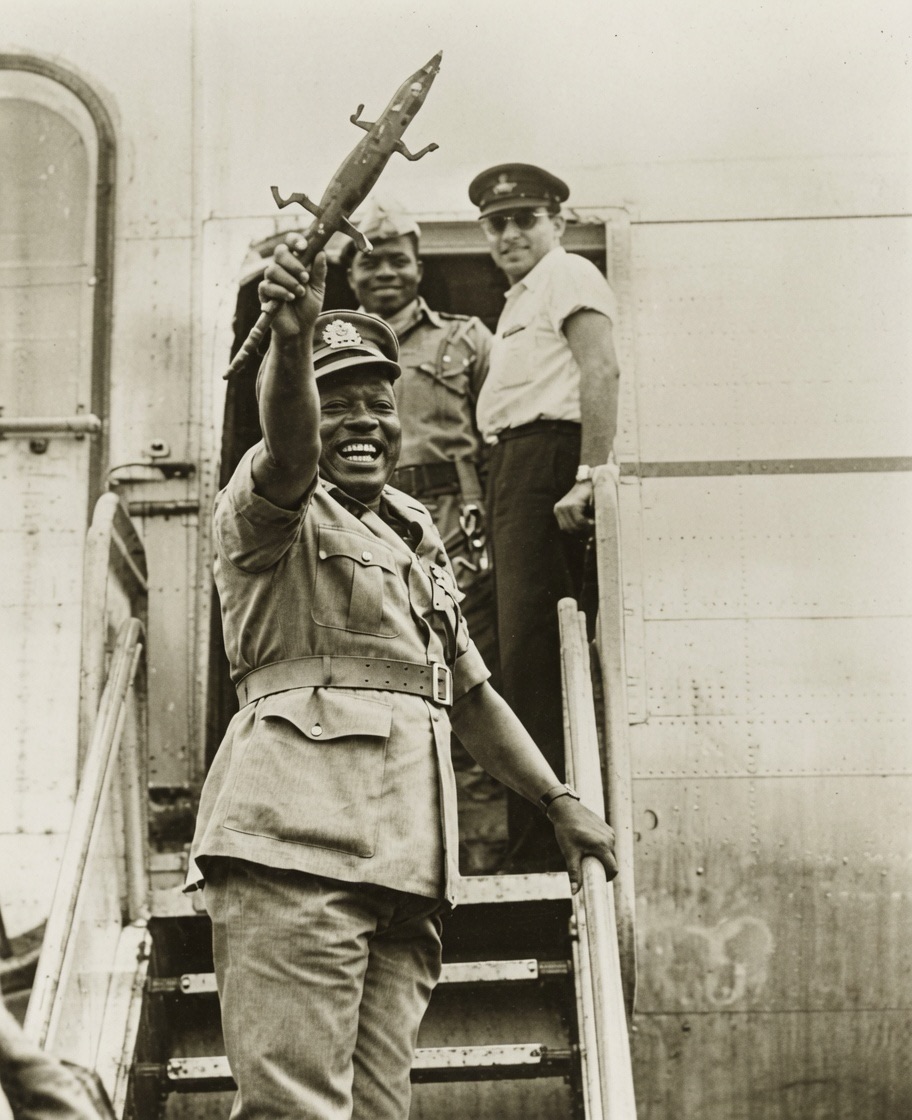
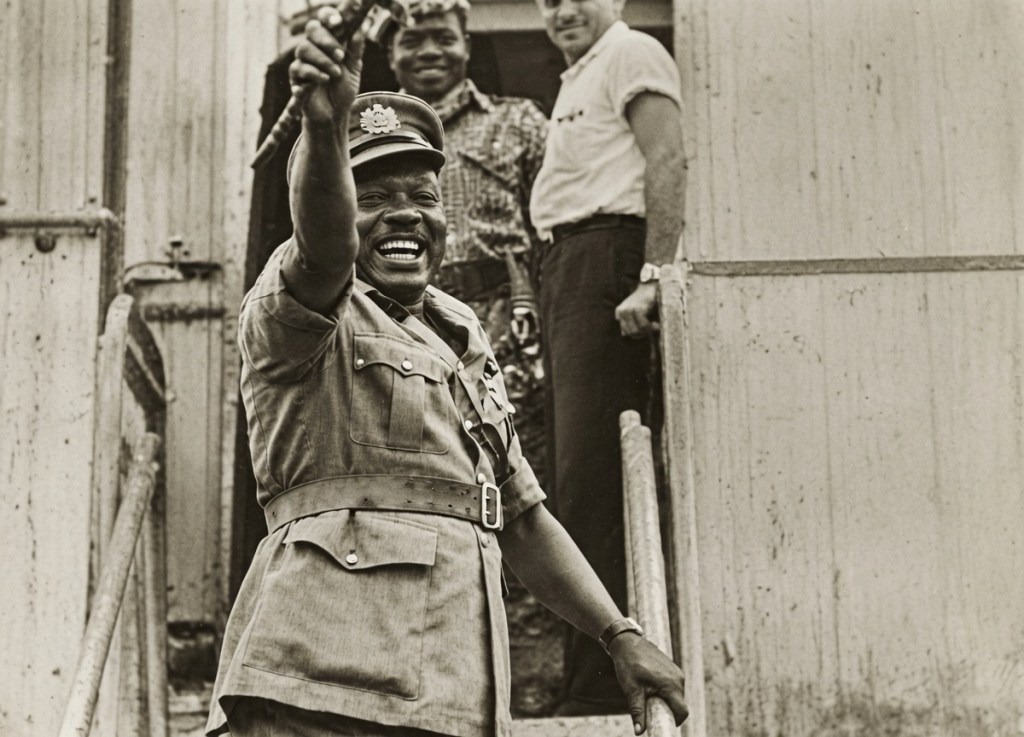
Ironsi tried to talk everyone down. When that failed, he ordered his second-in-command (a British officer named Galloway) to intervene and free the prisoners. Fighting broke out. The provincial president demanded the Nigerians pull back to camp. Ironsi refused and demanded the opposite: Congolese forces withdraw and the Austrians be released. It worked, more or less. Austria later awarded him the Ritter-Kreuz First Class for the rescue. European correspondents covering the mess began calling him “Johnny Ironside” a cheeky mash-up of his name and British military folklore. The stuffed crocodile swagger stick he carried (“Charlie”) only added to the legend. Some Congolese and even some of his own men reportedly believed the thing could deflect bullets. Whether it did or not, Ironsi walked into enough hairy situations that the myth stuck.
Nigeria’s contingent rotated thousands of men through the Congo over the years. Future Nigerian household names served under or alongside Ironsi in those early months among them a young Olusegun Obasanjo and Chukwuma Kaduna Nzeogwu. The Nigerians generally earned a reputation for discipline in a theatre where discipline was often optional.
From Contingent Commander to Force Commander
By late 1963 the big military phase of ONUC was winding down. Katanga’s secession had been crushed (after some vigorous UN offensives that raised their own controversies). The force was being reduced. In December 1963 the UN appointed Ironsi as Force Commander of the remaining operation. He took over in January 1964, succeeding Ethiopian Lieutenant-General Kebede Guebre (and following a short list of earlier commanders that included Swedes, Irish and Norwegians). He was the second African to hold the top military post in ONUC.
His tenure covered the final months: supervising the orderly withdrawal while a civilian technical-assistance mission of about 2,000 experts continued trying to keep the lights on and the administration functioning. Among the quieter achievements attributed to the Nigerian-led residual force was persuading thousands of displaced Kasai people to return home after waves of violence. On 30 June 1964 the last contingents mainly Nigerians and a Canadian signals unit left N’djili Airport in Leopoldville (now Kinshasa). The final soldier to board was Force Commander Johnson Aguiyi-Ironsi, photographed waving Charlie the crocodile as he departed.
What It Meant
The Congo mission was no glamorous parade. ONUC faced constant accusations of bias, excessive force in Katanga, and failure to prevent Lumumba’s murder. It operated under shifting mandates while superpowers and former colonial powers played their own games. For a newly independent Nigeria, though, it was a chance to show the flag as a serious African player. Ironsi’s personal trajectory from battalion commander in 1960 to overall Force Commander in 1964 burnished his credentials at home. When he returned, the path to becoming the first indigenous General Officer Commanding of the Nigerian Army in 1965 looked a lot clearer.
The crocodile stick came back with him. So did the nickname and a reputation for personal courage mixed with a certain theatrical firmness cuffing rioters, walking alone into tense positions, roaring orders in a mixture of English and French. Whether that same style later served him well (or at all) as Head of State is another story entirely. In the Congo, at least, the man with the stuffed reptile managed to leave on his own terms, last man out of a mission that had already claimed far too many lives.
In the grand Nigerian tradition of short political careers and long arguments about them, Ironsi’s Congo chapter remains one of the cleaner pages: professional soldier does difficult international job, comes home promoted, gets a catchy nickname and a prop that will later feature in darker folklore. The rest of the script, as we know, took a rather more tragic turn.

