


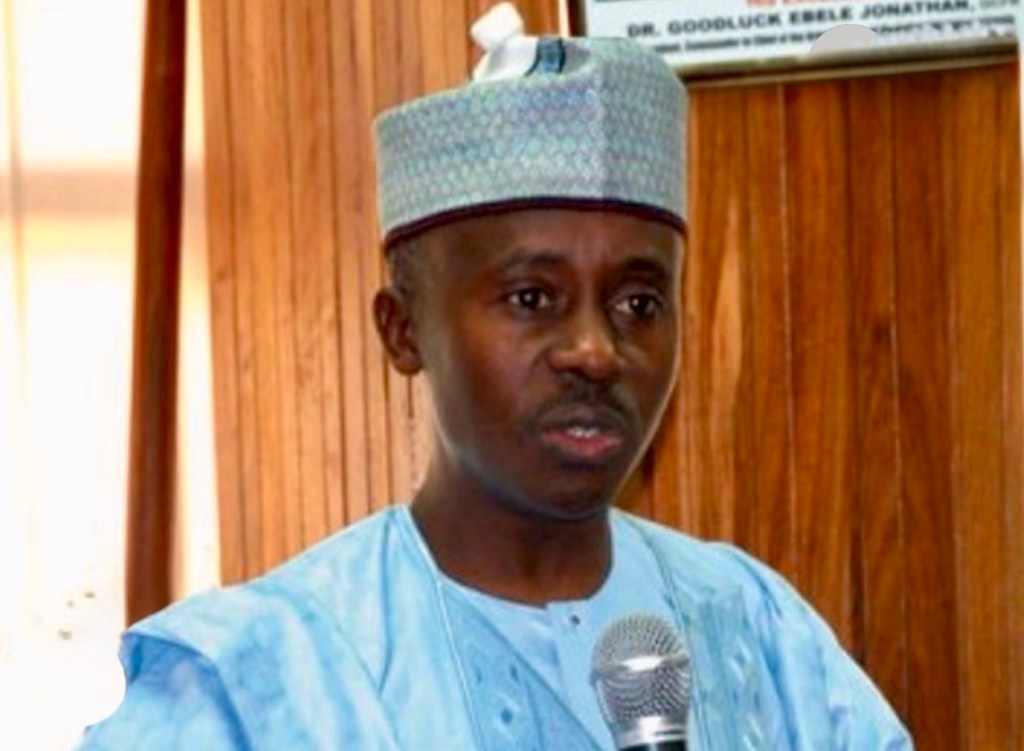
In the fevered early weeks of 2012, while Occupy Nigeria still had the streets and the government still had a pulse, the House of Representatives decided to do something unusual. It set up a committee that actually tried to follow the money. Farouk Lawan, then still wearing the halo of “Mr Integrity,” was handed the gavel. The assignment looked simple on paper: verify the real cost of the fuel subsidy and examine how the Petroleum Support Fund had been managed between 2009 and 2011.
What the committee delivered in April 2012 was less a report and more a post-mortem of a system that had been feeding on the public purse with industrial efficiency.
The numbers alone were enough to make a grown accountant weep. The National Assembly had approved a tidy ₦245 billion for subsidy in 2011. By the time the dust settled, the committee calculated that ₦2.587 trillion had been paid out — more than nine times the budgeted amount. Officialdom had been tossing around figures of ₦1.3 trillion or ₦1.6 trillion. The Central Bank’s books whispered ₦1.7 trillion. Lawan’s team, after wading through mountains of documents and listening to 130 witnesses, settled on the larger, more uncomfortable total.
Even more revealing was the gap between what was claimed and what the country could possibly have used. Vessels were recorded as discharging the equivalent of 59 million litres of petrol a day. Realistic national consumption hovered around 35 million litres, later refined by the committee to something closer to 31.5 million. That left roughly 24 million litres a day that existed mainly on paper — a daily surplus large enough to keep a small fleet of ghost ships busy and a network of smugglers smiling.
The methods were as creative as they were brazen. Marketers collected more than ₦230 billion for volumes that depots could not confirm. Ships that satellite data placed elsewhere cheerfully claimed to have discharged in Lagos. The same cargo sometimes managed to arrive several times. “Offshore Cotonou” and “offshore Lomé” became magical locations where vessels lightered products that somehow never quite reached Nigerian soil. Companies that had only recently discovered the oil business suddenly appeared on the list of preferred importers. The number of licensed players exploded from a handful to well over a hundred in a few short years.
NNPC itself came in for special attention. The corporation had continued to claim subsidy on kerosene long after a presidential directive had removed it, booking ₦310 billion in arrears. It had also taken more than the regulator recommended and granted itself comfortable discounts on crude. The Petroleum Products Pricing Regulatory Agency, the body supposed to police the system, was found to have made substantial excess payments to itself. The picture that emerged was less a public policy and more a closed-circuit wealth-transfer scheme.
The committee’s remedy was blunt. It recommended that ₦1.067 trillion be returned to the Federation Account within three months — money it said belonged to Nigerians, not to the creative accountants of the subsidy era. It called for the overhaul of NNPC’s management, the investigation of officials in the key agencies, the prosecution of those who had collected foreign exchange without importing product, and a more honest budget for the year ahead. It even suggested that the Petroleum Industry Bill might finally force some transparency on the national oil company.
For a brief, shining moment, it looked as if the system had been caught with its hands in the till. Further verification exercises followed. A handful of marketers eventually faced prosecution. Limited recoveries were made. Then the story took its familiar Nigerian turn. The man who had chaired the probe was himself caught on camera accepting a substantial cash inducement in a sting operation. The moral high ground collapsed into a courtroom farce, and public attention shifted from the trillions that had vanished to the hundreds of thousands of dollars that had changed hands in a private residence.
The Farouk Lawan report remains one of the clearest official inventories of how the subsidy regime was gamed. It quantified the overspend, named the methods, and proposed concrete remedies. What it could not do was compel a political class that had grown comfortable with the arrangement to act on its own findings. The ghost ships may have sailed into history, but the fog that allowed them to collect their payments proved far more durable.
In the end, the committee gave Nigerians a rare, detailed map of the heist. The country, true to form, largely chose not to follow it.

