

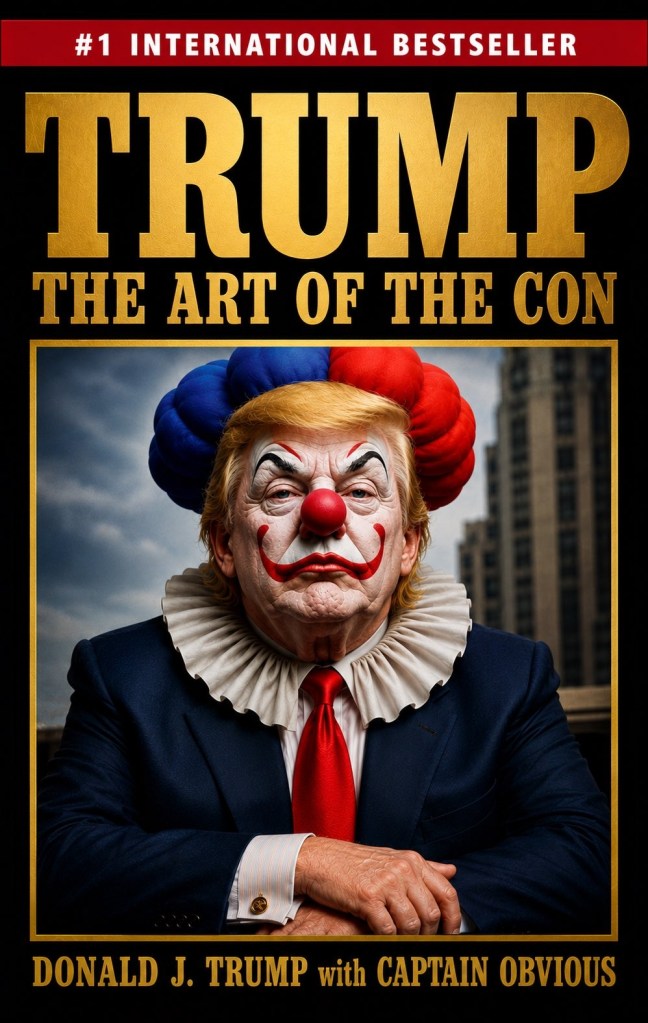
There is a curious relationship between Donald Trump’s business career and his political life. It is a relationship built around an extraordinary talent for self-promotion, an appetite for spectacle and an apparent belief that the presentation of success can sometimes be more important than the substance of it.
Before entering politics, Trump had already perfected the art of selling Donald Trump. His name was his principal product. Hotels, casinos, buildings, golf courses and even ventures that had little to do with his core business carried the Trump insignia. He cultivated an image of extraordinary wealth, commercial genius and an almost supernatural ability to turn everything he touched into gold.
The reality was rather more complicated.
Trump-associated companies filed for Chapter 11 bankruptcy protection six times between 1991 and 2009. These were corporate restructurings, not personal bankruptcies, but they involved substantial business failures, particularly in the casino and hotel industries. Trump, however, was never particularly interested in allowing commercial setbacks to become the dominant story of his public identity.
He had mastered the more important business of selling the brand.
And then he took that business model into politics.
From corporate bankruptcy to political bankruptcy
Trump’s political career has followed a remarkably familiar pattern. The campaign is about Trump, the rallies are about Trump, the merchandise is about Trump, and even the political movement is identified by an insignia that places his name and personality at its centre.
His first presidential victory in 2016 demonstrated the extraordinary effectiveness of that marketing machinery. But his defeat in the 2020 presidential election exposed something more troubling.
Rather than accept the verdict of the electorate, Trump embarked on an extraordinary effort to reverse the result. His allegations of electoral fraud were rejected by courts, contradicted by officials within his own administration and disputed by members of his campaign team.
On 6 January 2021, the dispute reached the Capitol.
The attack on Congress was the political equivalent of a business bankruptcy: an institution entrusted with conducting the orderly transfer of power was subjected to an assault because its principal political beneficiary could not accept a commercial-style loss at the ballot box.
The distinction, of course, is that a company can seek protection under Chapter 11 and reorganise its affairs. A constitutional democracy cannot simply reorganise its way out of an assault on the peaceful transfer of power.
The United States survived that episode, but the damage to its political institutions was considerable.
The midterm bankruptcy
Now comes November 2026.
The midterm elections have delivered another substantial electoral setback. Democrats have taken control of both chambers of Congress, gained at least seven Senate seats and more than two dozen seats in the House. The results represent a major reversal for a president who had sought to make the election a referendum on his leadership.
This is no minor commercial inconvenience. In the language of the Trump business world, this is a blow-up bankruptcy.
A president who has spent considerable political energy demanding personal loyalty has discovered that the American electorate retains an inconvenient constitutional habit: it can change its mind.
The midterms are particularly significant because Trump had invested so much of his political identity in the outcome. His endorsements, his rallies and his personal interventions were intended to reinforce the idea that the Republican Party and his presidency were inseparable.
But an election is not a shareholders’ meeting at which the chairman can simply declare himself re-elected. The voters are not employees, the Constitution is not a company memorandum, and Congress is not a subsidiary of the Trump Organisation.
The electoral results have demonstrated that distinction.
A White House occupied by the Trump brand
There is another revealing feature of this election period.
While Americans were concerned about the cost of living, the economy, the war with Iran and the direction of their country, Trump continued to devote considerable attention to his personal vision of Washington.
His building projects, particularly the proposed White House ballroom and the controversial changes to the presidential residence, have become part of the political conversation.
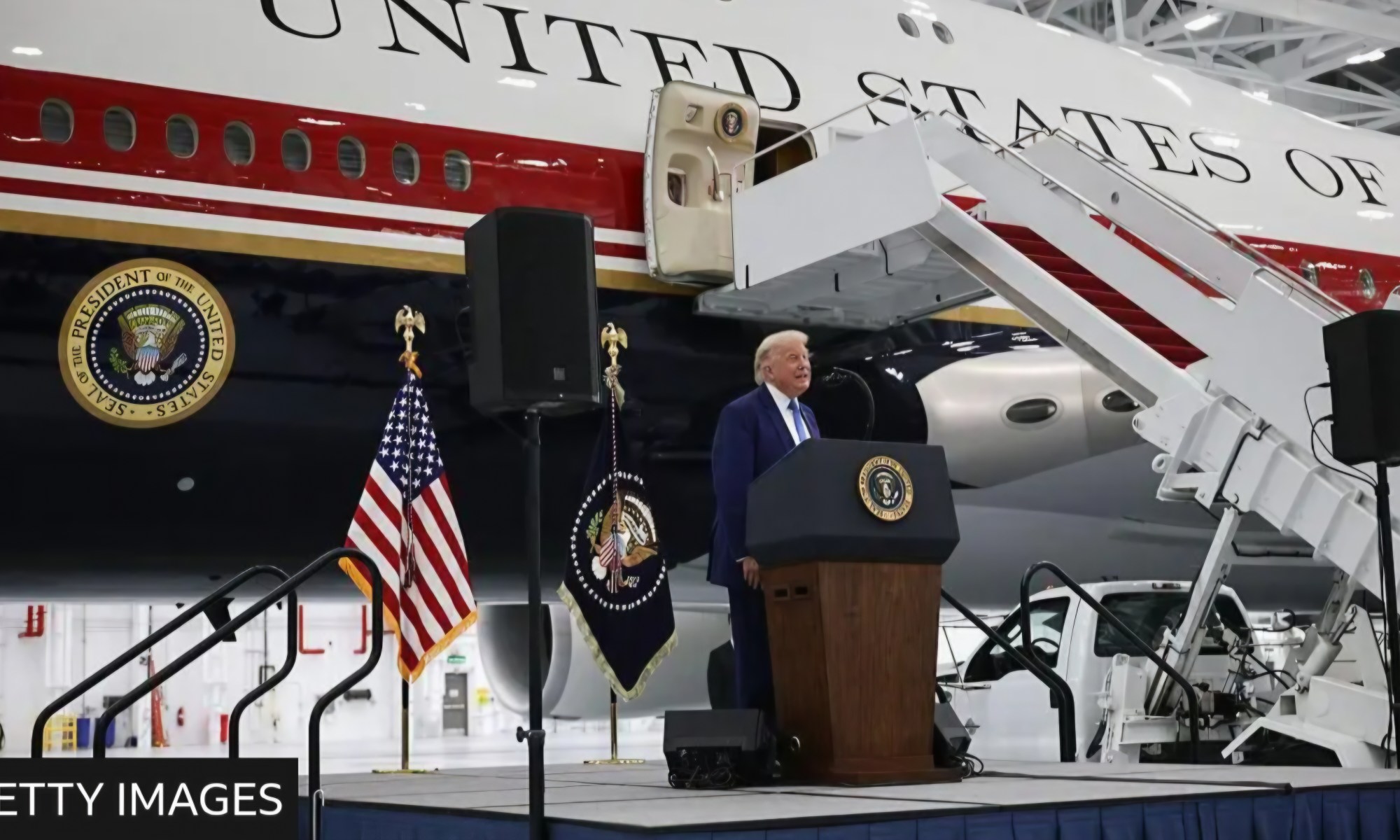
In his first post-election appearance, Reuters reported that Trump was showing off the under-construction White House ballroom.
There is something symbolically important about that moment.
The country had just delivered a major electoral verdict on his presidency. The Democrats had secured control of Congress. The political consequences were enormous. Yet the president’s public presentation was centred, once again, on a building project.
It is difficult to avoid the impression that the White House has become another canvas for the Trump brand.
There is nothing inherently wrong with improving presidential facilities. Presidents leave their mark on public buildings, and the White House has evolved considerably throughout American history. But there is a constitutional distinction between improving a national institution and treating it as an extension of one’s personal property or commercial identity.
The White House belongs to the American people. Its occupant is a temporary custodian, not its proprietor.
The presidency does not manufacture character
Michelle Obama’s observation that the White House does not make you, but reveals who you are, provides an appropriate framework for understanding Trump’s presidency.
The office of President of the United States is one of the most powerful political institutions in the world. It comes with enormous ceremony, authority, responsibility and constitutional restraints.
But the office does not manufacture the character of its occupant.
It exposes it.
Trump arrived in Washington with a personality and a business philosophy already well established. He understood the importance of branding, publicity, personal loyalty and the management of appearances. He understood how to dominate a news cycle and how to turn almost any public controversy into another opportunity to promote himself.
Those skills helped him become president.
But governing is not the same as selling buildings. A country is not a casino, the Constitution is not a licensing agreement, and the electorate is not a collection of customers who can be persuaded to purchase the same product indefinitely.
A president must understand that public office is held in trust. It is not an opportunity to enlarge a personal brand.
The six corporate bankruptcies did not prevent Trump from becoming president. Nor did his 2020 electoral defeat prevent him from returning to the White House in 2025. American democracy has allowed him repeated opportunities to seek public support.
But the 2026 midterms have delivered another verdict, and the consequences are now institutional as well as political.
The final balance sheet
Trump’s business career demonstrated that a powerful brand can survive corporate restructuring. His political career has demonstrated that a powerful personality can survive electoral defeat and return to office.
But neither survival should be confused with an absence of consequences.
The six corporate bankruptcies belong to the history of his commercial ventures. January 6 belongs to the history of American constitutional democracy. The 2026 midterms belong to the history of an electorate exercising its right to impose political accountability.
These are different events, with different consequences, but they raise a common question about the relationship between personal ambition and institutional responsibility.
Trump has spent much of his public life presenting himself as the indispensable centre of every enterprise with which he is associated.
The difficulty with that approach is that institutions are supposed to outlive the individuals who temporarily occupy them.
A company may carry a founder’s name. A hotel may carry his initials. A building may bear his insignia. But a republic cannot belong to its president.
The White House has not made Donald Trump. It has revealed him.
And perhaps the most important lesson of the 2026 midterms is that, whatever the strength of the Trump brand, the American electorate still has the final say on who gets to occupy the building.

