

In 1978, while the rest of the world was busy inventing the Walkman and wondering whether disco would ever die, Nigeria’s military government decided the country needed a single, elegant solution to centuries of messy land tenure. The result was the Land Use Act (originally a Decree, later upgraded to Act status and then welded into the Constitution like a particularly stubborn bolt). Nearly half a century later, it remains the legal equivalent of a 1978 Mercedes that still runs, but only if you keep pouring money into the carburettor and never ask why the ghost of the original owner keeps appearing on the title documents.
What the Act Actually Did
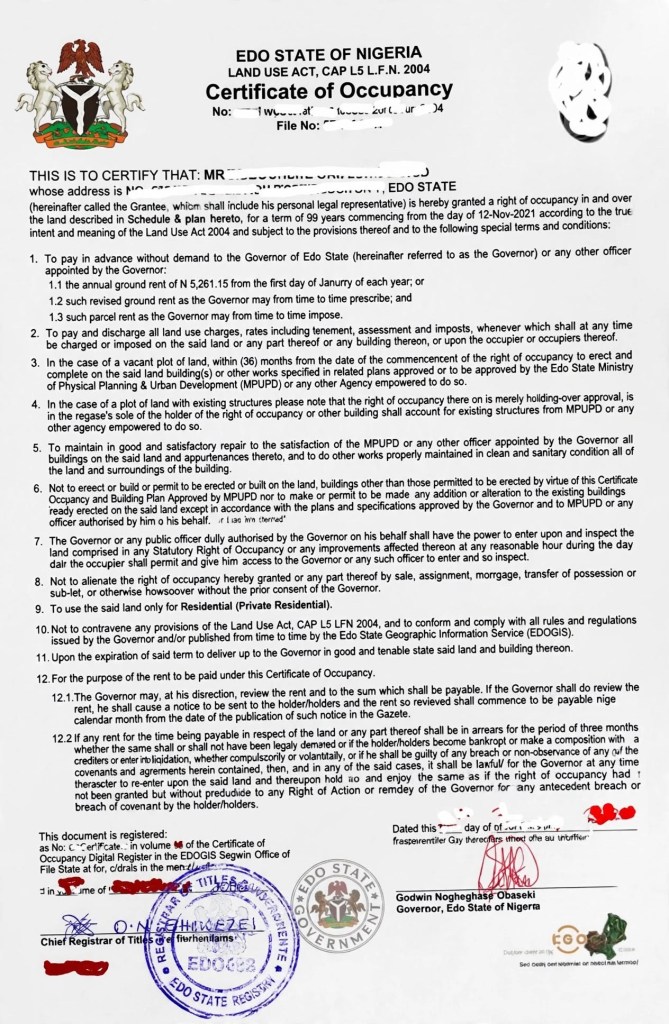
It performed one of the boldest acts of nationalisation in African legal history. All land in each state (except Federal Government holdings) was vested in the Governor, to be held “in trust for the people.” Individuals and companies no longer own land in the freehold sense. They hold a right of occupancy, statutory in urban areas (usually capped at 99 years via a Certificate of Occupancy), customary in rural ones. Want to sell, mortgage, or gift it? You need the Governor’s consent. Want the land back for “overriding public interest”? The Governor can revoke it, compensating you mainly for the buildings and crops, not the dirt itself.
The stated aims were noble enough for a military decree: unify the chaotic dual systems (customary in the South, a more state-controlled model in the North), curb speculation, make land available for development, and stop the rich from swallowing the poor’s ancestral holdings. On paper, it looked like progressive statecraft. In practice, it created a system in which the living Governor’s signature became both the most powerful and the most elusive pen in the land.
The Ghost in the Machine
This is where the satire writes itself. When the official machinery grinds to a halt, files pile up, survey plans go missing, consent fees mysteriously escalate, and the Governor is busy being Governor, human ingenuity does what it always does. It invents workarounds. In Edo State, that ingenuity has occasionally involved the continued productivity of Oba Akenzua II, who died in 1978 yet whose signature has shown a remarkable posthumous work ethic on land documents well into 2026. The dead, it turns out, are less bureaucratic than the living.
The Act did not create the ghost. The Act created the vacuum that the ghost fills. When obtaining a clean Certificate of Occupancy can take years rather than months, when banks treat many titles as radioactive, and when the formal path is perceived as selectively open, people reach for whatever documentary cover is available. Historical weight, oral tradition, and a palace signature from the previous century become rational adaptations to an irrational system.
The Structural Bottlenecks That Refuse to Die
Several features of the Act have aged particularly badly:
- The Governor as personal choke-point. Requiring the Governor’s consent (and often personal signature) for routine transactions turns land administration into a political favour rather than an administrative function. Files wait. Economic value sits idle. “Dead capital” is not a metaphor; it is a description of land that cannot easily be used as collateral.
- Constitutional entrenchment. Because the Act is embedded in the 1999 Constitution, amending it requires the full constitutional alteration process, National Assembly plus two-thirds of state assemblies. Successive governments have discovered that governors rather like controlling land. Reform talk is cheap; actual amendment is expensive and politically radioactive.
- Compensation that insults the intelligence. When the state takes land, it pays for improvements, not the land. The legal fiction is that you never owned the land in the first place. Communities that lose ancestral holdings notice the difference.
- Persistent dualism. Customary systems did not vanish. They simply learned to coexist uneasily with the statutory overlay, producing the very uncertainty the Act was supposed to eliminate.
Recent Attempts to Civilise the Fossil
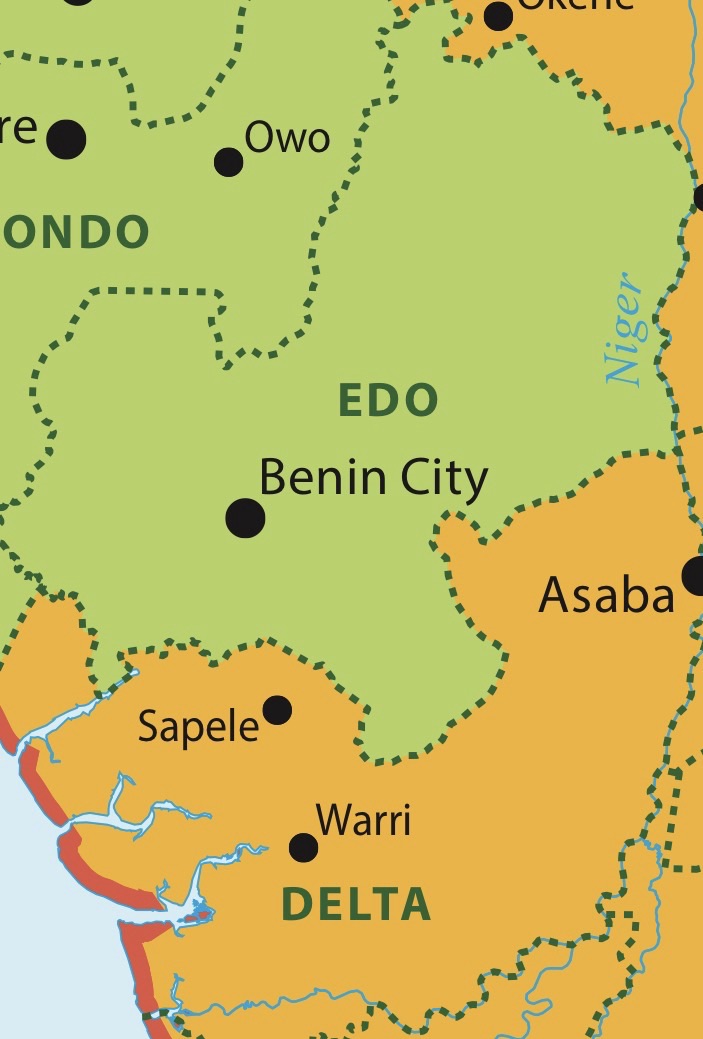
There are signs of life. Vice President Kashim Shettima has publicly declared the 48-year-old Act overdue for review. The Tinubu administration set up Land Reform Task Teams in 2024. Some states have moved faster than the federal framework: Edo’s Geographic Information Service (EdoGIS) has digitised records, cut processing times dramatically, and reduced costs, proving that technology can mitigate some of the Act’s worst frictions without waiting for constitutional perfection. Other states are experimenting with unified land-use charges and streamlined ground rents.
Yet digitisation alone cannot fix a law that still treats the Governor’s pen as a ceremonial object rather than a bureaucratic tool. Until consent becomes a time-bound administrative act rather than a discretionary political one, until compensation reflects market reality, and until the Act is taken out of the constitutional deep freeze, the anomalies will continue.
The Punchline
The Land Use Act was sold as a modernising instrument that would unlock land for the common good. Instead, it has produced a system in which the most reliable signatory in some jurisdictions may be a monarch who has been dead since the year the Act itself was born. The ghost keeps signing not because Nigerians revere the past, but because the present machinery remains too obstructed, too discretionary, and too slow.
Until that changes, the dead will continue to outperform the living in the quiet business of making land transferrable. And that, one suspects, is not quite the legacy the drafters of 1978 had in mind.

