

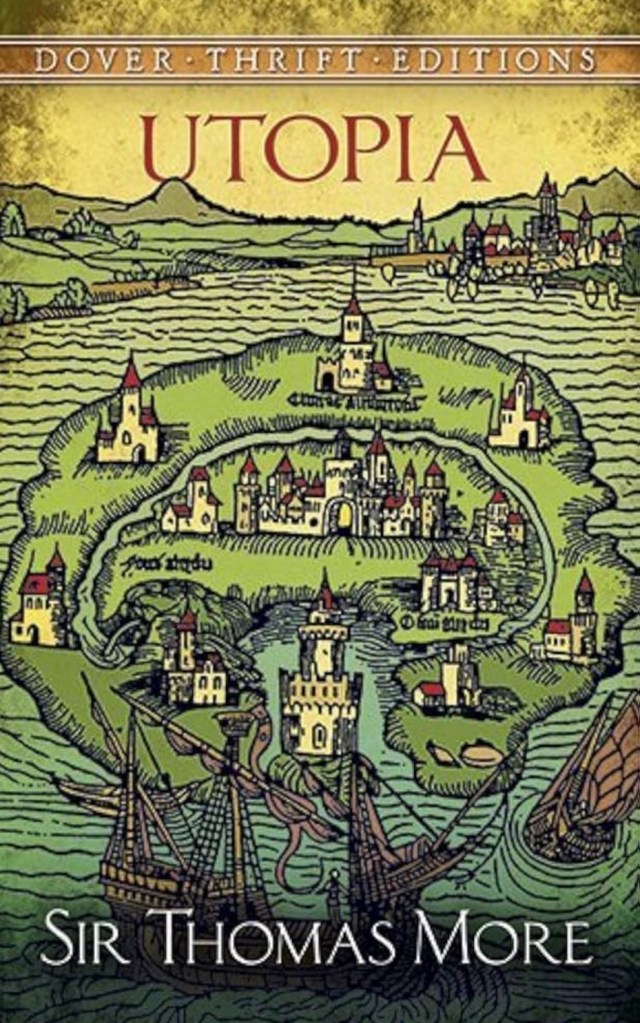
Utopia (full Latin title: Libellus vere aureus, nec minus salutaris quam festivus, de optimo rei publicae statu deque nova insula Utopia) is a seminal 1516 work by Sir Thomas More (1478–1535). It is one of the most influential books of the Renaissance and the founding text of the modern utopian literary genre. Understanding its historical context reveals it as a sophisticated product of its time—blending humanism, social criticism, travel literature, and political philosophy—while also serving as a subtle mirror to the anxieties and aspirations of early Tudor England and Europe.
1. Thomas More’s Personal and Intellectual Milieu
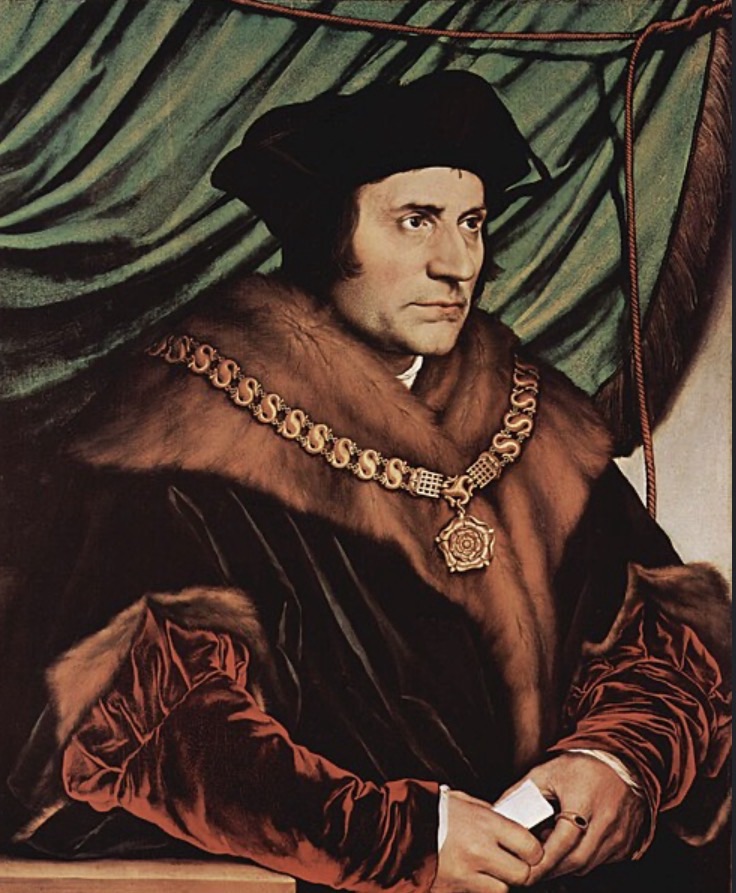
Thomas More was a prominent London lawyer, scholar, and statesman. By 1516 he was a rising figure in Henry VIII’s court (he would later become Lord Chancellor in 1529). He was deeply embedded in the Northern Renaissance humanist circle, counting Desiderius Erasmus as a close friend (Erasmus stayed with More and wrote The Praise of Folly while there). Humanists emphasized classical learning, moral philosophy, rhetoric, and the reform of society through education and reason rather than solely through religious authority or tradition.
More wrote Utopia in 1515–1516 while on a diplomatic mission to Flanders (part of the Habsburg Netherlands) negotiating trade issues. The book’s frame narrative reflects this: the traveler Raphael Hythlodaeus (a fictional Portuguese sailor) meets More and his friend Peter Giles in Antwerp. This setting grounds the work in real diplomatic and mercantile networks of the time.
More’s later life adds tragic irony. He was executed in 1535 for refusing to accept Henry VIII’s supremacy over the Church of England. Utopia was written well before the English Reformation’s major ruptures, but it already grapples with questions of conscience, governance, religion, and the tension between ideal principles and political reality—issues that would define More’s fate.
2. Broader European Context (c. 1490–1520)
Utopia emerged during a period of profound transformation:
- Age of Exploration and Discovery: Christopher Columbus’s voyages (1492 onward) and Amerigo Vespucci’s accounts (published widely around 1503–1505) shattered medieval worldviews. Europeans encountered new peoples, societies, and “noble savages,” prompting comparisons with European flaws. More explicitly draws on Vespucci; Hythlodaeus claims to have sailed with him. The “new island” of Utopia is presented as a genuine traveler’s report, a common literary device that lent plausibility and wonder.
- Economic and Social Upheaval in England: The enclosure movement (landlords converting arable land to sheep pasture) caused rural poverty, vagrancy, and crime. More’s famous passage in Book 1—where sheep “devour men”—is a direct, biting critique of these policies. Crime and punishment were harsh (theft often carried the death penalty), yet More’s Utopians emphasize rehabilitation over retribution.
- Religious Ferment: The Catholic Church faced growing criticism for corruption, pluralism, and worldliness. The Protestant Reformation was imminent (Luther’s 95 Theses in 1517, just a year after Utopia). More remained a devout Catholic but used the book to explore religious tolerance (Utopia allows multiple faiths, though atheism is barely tolerated) and the role of religion in a just society.
- Political Instability: Europe was dominated by monarchies engaged in dynastic wars (e.g., Italian Wars, Anglo-French conflicts). Renaissance political thought, later crystallized by Machiavelli’s The Prince (1513, published 1532), contrasted sharply with More’s ideal. Utopia can be read as a counterpoint to emerging realpolitik.
3. Literary and Philosophical Influences
- Plato’s Republic: The most obvious model. Both works describe ideal states with communal property, philosopher-rulers (or at least wise governance), and strict social organization. More’s humanists revered Plato.
- Classical and Medieval Sources: Aristotle, Cicero, Augustine (City of God), and monastic ideals of communal living.
- Travel Literature and Satire: Lucian’s satirical dialogues, medieval travelogues (e.g., Mandeville), and the emerging genre of “discovered” societies.
- Christian Humanism: More integrates Christian ethics (charity, humility) with classical reason. Utopia has no private property, echoing early Christian and monastic communism, but also functions as a highly ordered, almost monastic society.
4. Structure and Dual Nature of the Text
Utopia is divided into two books:
- Book 1: A dialogue critiquing contemporary European (especially English) society—corrupt kings, unjust wars, enclosures, capital punishment, etc. This is often seen as the more “realistic” and satirical section.
- Book 2: A detailed description of the island of Utopia (“no-place” in Greek, a deliberate pun with eutopia = “good place”). It covers governance, economics (no money, communal ownership), education, warfare, religion, and daily life.
Scholars debate its intent: Is it a serious blueprint, a playful thought experiment, a satire, or all three? More never claimed the society was perfect or fully achievable. The name “Hythlodaeus” means something like “speaker of nonsense,” signaling irony. Yet many contemporaries and later readers took its ideas seriously.
5. Key Themes Reflecting the Era
- Property and Equality: Private property breeds greed; communal ownership promotes harmony. This resonated with critiques of emerging capitalism and agrarian distress.
- Work and Leisure: Six-hour workdays, universal labor (including for women and officials), and emphasis on useful crafts over luxury.
- War and Diplomacy: Utopians avoid war when possible but are pragmatic and use mercenaries—reflecting the era’s reliance on condottieri and the horrors of mercenary armies.
- Tolerance and Uniformity: Religious freedom with limits; strict moral codes and surveillance. This mirrors both humanist optimism and the era’s anxieties about heresy and social order.
- Colonial undertones: Utopia was founded partly through conquest and rational reorganization of conquered peoples—echoing European expansion.
6. Immediate Reception and Long-Term Legacy
Published in Latin in 1516 (Louvain), it spread quickly among European intellectuals. Translations followed: English in 1551. It influenced:
- Later utopian writers (Campanella, Bacon, Harrington).
- Socialist and communist thought (Marx and Engels referenced it; 19th-century radicals drew inspiration).
- Dystopian literature (as a foil—e.g., Huxley, Orwell).
- Political theory, urban planning, and intentional communities.
More was canonized as a saint by the Catholic Church in 1935. Utopia remains a key text in history, literature, and political science curricula.
Nuances and Modern Interpretations
- Irony vs. Sincerity: Modern readings often emphasize its ambiguity. More may have been highlighting the gap between ideal and real rather than proposing literal reforms.
- Gender and Hierarchy: Utopia is patriarchal and hierarchical despite relative equality in some areas—reflecting 16th-century norms.
- Relevance Today: It prefigures debates on universal basic income, work-life balance, globalization, religious pluralism, and the role of the state. Its colonial and eugenic-tinged elements (e.g., euthanasia for the terminally ill, slavery for criminals) provide cautionary lessons.
- Edge Cases: Some see proto-totalitarian elements in its uniformity and suppression of dissent; others view it as a humane critique of judicial cruelty and inequality.
In short, Utopia is not an escapist fantasy but a deeply engaged response to the intellectual excitement, social injustices, and political uncertainties of the High Renaissance and early Reformation era. It uses the imaginary to illuminate the actual, a technique that remains powerful half a millennium later. Reading it alongside More’s own life, Erasmus’s writings, and contemporary accounts of enclosure and exploration provides the richest understanding.

