

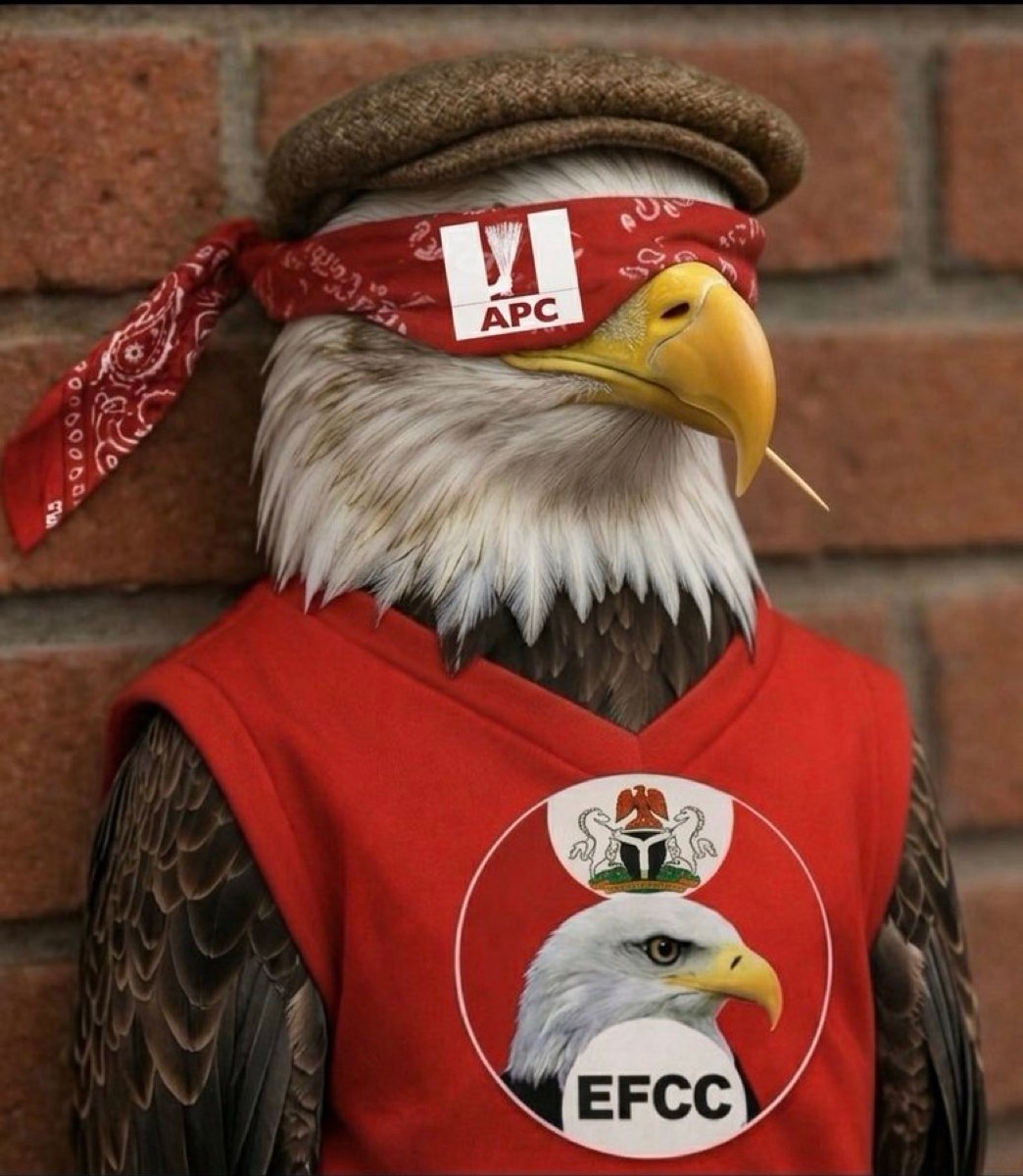
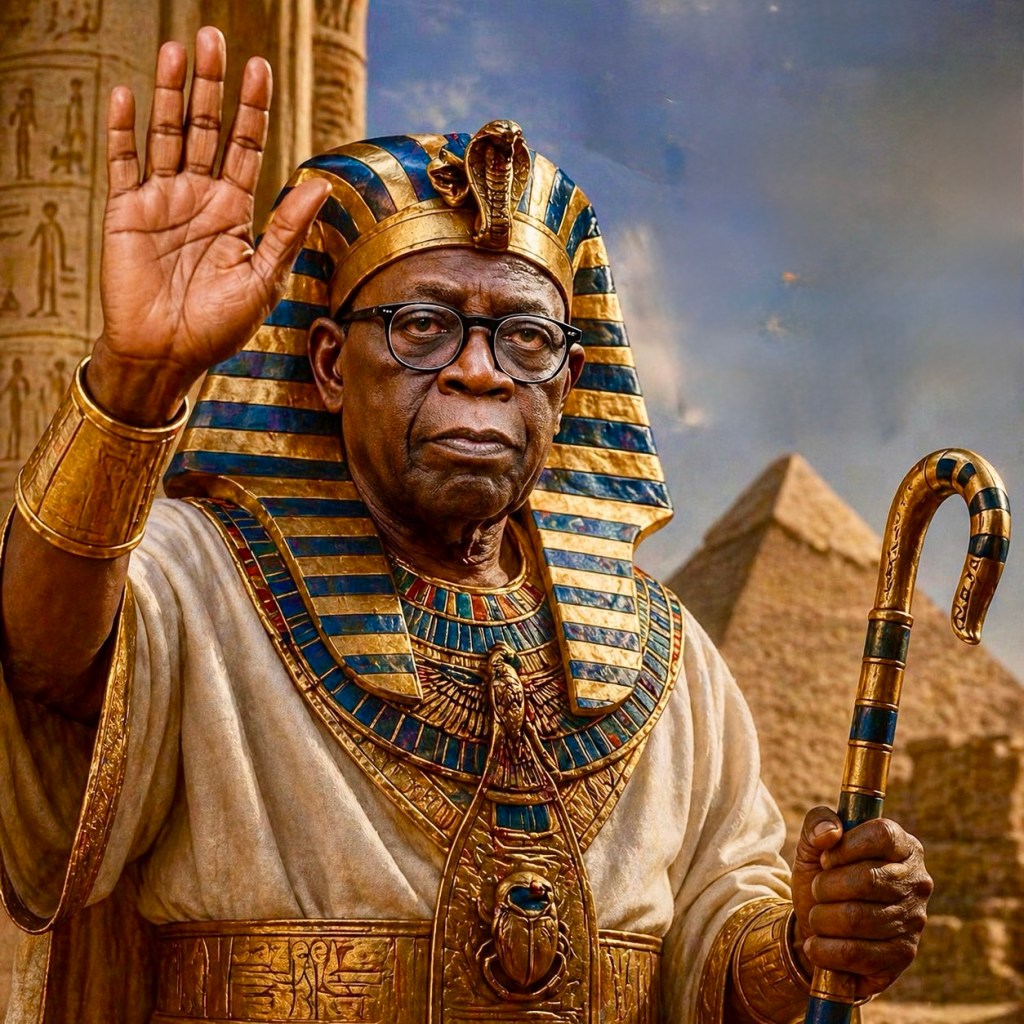
In 2006, Nuhu Ribadu presented the Nigerian Senate with a list of the country’s five most corrupt governors. Twenty years later, every man on that list holds high national office. So does Ribadu.
In the spring of 2006, Nuhu Ribadu walked into the chambers of the Nigerian Senate with the bearing of a man who believed the Republic still meant something. As Chairman of the Economic and Financial Crimes Commission, he carried a list. Five governors, he told the assembled senators, represented the worst of what corruption had produced in Nigeria’s young democratic experiment. He named names. He presented material. The Senate received his testimony, recorded it, and in the way that Nigerian institutions have perfected into an art form proceeded to do absolutely nothing about it.
Twenty years later, we can now evaluate what that list was really for. As a prosecution document, it failed entirely. As a career directory, it has proven eerily accurate. Every man Ribadu named has since ascended to higher national office. Not one has been definitively prosecuted and punished. Several now occupy the most powerful positions in the Nigerian state. And Ribadu himself, the list’s architect, the man who compiled the dossier and testified under his own authority, serves today as National Security Adviser to the man he placed at number two.
In any functioning democracy, this document would be a charge sheet. In Nigeria, it was a shortlist.
“The Senate that received the dossier is now populated by the dossier. The man who compiled it now works for it.”
EFCC Classified Reference · Governors of Concern · 2006 Filed: Senate Chambers, Abuja | Status Review: 2026
Promoted Subject State Status, 2006 Status, 2026
Orji Uzor Kalu Abia Listed by EFCC as among most corrupt governors; later convicted of ₦7.1bn fraud (2019) conviction set aside on procedural technicality Senator, Federal Republic of Nigeria
Senator Bola Ahmed Tinubu Lagos Listed by EFCC; allegations of revenue diversion never prosecuted; forfeited $460,000 to US authorities in 2002 drug-related asset proceedings President of the Federal Republic of Nigeria
Commander-in-Chief
Ahmed Sani Yerima Zamfara Listed by EFCC; separately notorious for introducing Sharia law to Zamfara in 1999 and international controversy over child marriage in 2010 Senator, Federal Republic of Nigeria
Senator God’swill Akpabio Akwa Ibom On EFCC watch list; later faced multiple corruption allegations as governor; EFCC investigations initiated, later stalled Senate President, Federal Republic of Nigeria
Senate President George Akume Benue Listed by EFCC among most corrupt governors in Nigeria Secretary to the Government of the Federation (SGF), appointed by President Tinubu
SGF
Chimaroke Nnamani Enugu Listed by EFCC; charged with corruption , charges eventually discontinued Senator, Federal Republic of Nigeria
Senator Nuhu Ribadu, EFCC Chairman; compiler of the above list; testified before the Senate; subsequently dismissed from police service; fled Nigeria under threat National Security Adviser to President Bola Ahmed Tinubu, NSA to the President
The Graduates, One by One
I. Orji Uzor Kalu: Abia State
Ribadu’s list was, for Kalu, an inconvenience rather than a terminus. He was eventually arraigned, tried, and in 2019 convicted by a Federal High Court on 39 counts involving the alleged diversion of ₦7.1 billion in Abia State funds. He was sentenced to twelve years. He served a portion of that sentence before the Supreme Court intervened, not to acquit him on the merits, but to set aside the conviction on the technical ground that the trial judge had been elevated to the Court of Appeal mid-proceedings, thereby losing jurisdiction to deliver the verdict. Kalu walked free on a procedural technicality so elegant it might have been engineered specifically for the purpose. He returned to his Senate seat as if he had merely stepped out for lunch.
II. Bola Ahmed Tinubu: Lagos State
This is the one that makes the list historically significant. Tinubu’s appearance on Ribadu’s dossier did not slow his trajectory. If anything, survival of his own exposure became the credential. The two decades between 2006 and his 2023 inauguration saw Tinubu construct a political architecture of extraordinary scope a network of alliances, debts, and dependencies that made him the most indispensable figure in Nigerian politics before he took the throne himself. The EFCC’s file became a footnote. The 2002 Chicago drug-related asset forfeiture became a footnote. The unanswered certificate questions became a footnote. He is now Commander-in-Chief of the Armed Forces and President of the Federal Republic of Nigeria. The footnotes, it turns out, do not accumulate into a paragraph if you have sufficient structural power to ensure they never do.
III. Ahmed Sani Yerima: Zamfara State
Yerima has been a Senator for many years which is, at this point, the least remarkable thing about him. He is also the man who introduced Sharia criminal law to Zamfara in 1999, and who attracted international condemnation in 2010 for his marriage to a thirteen-year-old Egyptian girl. His presence on both Ribadu’s corruption watchlist and the floor of the Nigerian Senate speaks less to any particular failure and more to the consistent operating logic of a system in which the Senate is where such men go when they have completed the governorship stage of their career. Onwards and upwards.
IV. God’swill Akpabio: Akwa Ibom State
Akpabio’s arc deserves a separate study in institutional irony. He was on the EFCC watch list in 2006. He later faced a thicket of corruption allegations as Governor of Akwa Ibom. EFCC investigations were initiated; they subsequently lost momentum in the way that Nigerian anti-corruption proceedings frequently do when the subject is sufficiently prominent. He is now the President of the Nigerian Senate, the same institution that received the document bearing his name. He presides over the chamber that was handed the dossier. One wonders whether there is a filing cabinet somewhere in the Senate complex that contains the 2006 Ribadu testimony, and whether Akpabio has occasion to walk past it.
V. George Akume: Benue State
Akume served as Senator for several terms after leaving the governorship. President Tinubu has since appointed him Secretary to the Government of the Federation, the chief administrative officer of the Nigerian state, responsible for coordinating the machinery of federal governance. The man Ribadu identified as among Nigeria’s most corrupt governors now runs the federal bureaucracy. This is either a very sophisticated joke or a very honest statement of what the Nigerian state considers necessary experience for senior executive office. Perhaps both.
VI. Chimaroke Nnamani: Enugu State
Nnamani was charged with corruption after his governorship. The charges were eventually discontinued. He is a Senator. There is very little more to add, except that the discontinuation of charges against former governors has, in Nigeria, become so routine that it barely registers as news. It is simply the final stage of a process whose primary purpose, one begins to suspect, was never prosecution.
The Crowning Irony: The Man With the List
And then there is Nuhu Ribadu himself.
It would be unfair, and also inaccurate, to cast Ribadu as a straightforwardly cynical figure. His tenure as EFCC Chairman was genuinely consequential. He was dismissed from the police service for his efforts. He fled Nigeria under genuine threat to his life. He was held up internationally, and not without reason, as evidence that anti-corruption work in Nigeria was possible in principle. He ran for president in 2011. He was not entirely without principle.
But he is now Tinubu’s National Security Adviser.
He serves, at the highest level of the Nigerian executive, the man he placed on his own corruption watchlist in 2006. They share security briefings. They attend the same cabinet-level councils. At some point and one imagines this moment arrived without ceremony or recorded minutes Ribadu looked across the table at the President of the Federal Republic and concluded that the list was a chapter, not a verdict, and that chapters can be closed.
In fairness, this is a calculation many Nigerians in public life are eventually asked to make. The system is designed to present it as the only rational option. But Ribadu did not merely acquiesce to the system. He built the most famous anti-corruption document in recent Nigerian history, and then accepted a senior appointment from the man at its centre. That is not capitulation. That is architecture.
“In any functioning democracy, this list would be a charge sheet. In Nigeria, it was a promotion shortlist. Ribadu built it. Tinubu climbed it. Now they share an office.”
What the List Was Always For
This is the moment in such an analysis where a less sardonic commentator would reach for the word disappointing, sigh appropriately, and conclude with a call for institutional reform. But disappointment requires prior expectation, and the Nigerian political class stopped offering reasonable grounds for expectation some time ago.
The 2006 EFCC watchlist was not, in retrospect, a prosecution document. It was and we can now say this with the authority of twenty years of evidence, a directory of the durable. The men on that list had already demonstrated the quality that matters most in Nigeria’s political ecology: the capacity to survive their own exposure. They had money, networks, constituencies, and the particular kind of ruthlessness that outlasts institutional attention spans. In that ecosystem, those qualities are not disqualifying. They are qualifying.
You cannot govern the country if you can be removed by the country. The men on Ribadu’s list had already passed that test. They were, in the most literal sense, proven. And the Nigerian state, which is not so much a Weberian institution as a negotiated arrangement between proven men, eventually found appropriate placements for all of them.
The Senate that received the dossier now seats four of the six governors listed in it, and is presided over by a fifth. The presidency is occupied by the second name on the list. The man who compiled the list serves that president. The circle, to use the appropriate word, is complete.
A Note on the Structural Argument
It would be tempting to frame this as a story about individuals, about the moral compromises of specific men and the failures of a specific institution. That framing is comforting because individuals can, in theory, be replaced. But the 2006 list tells a structural story. It does not matter who sat in the EFCC chair, or which governor was named, or which Senate received the testimony. The outcome was determined not by the participants but by the architecture.
An anti-corruption agency in a state that does not guarantee prosecutorial independence, judicial insulation from political pressure, or consequences for obstruction is not an anti-corruption agency. It is a pressure-release valve. It allows the appearance of accountability without the substance. It generates lists. It conducts investigations. It receives publicity. And then the men on the lists become senators and presidents, and the chairmen of the agencies become their advisers, and twenty years later a commentator writes a piece that is fundamentally just a description of the process.
Which is, one supposes, its own kind of accountability. A very quiet, very late, very ineffective kind, but accountability of a sort. The list exists. The promotions exist. The comparison is not hard to make.
Nigeria is not short of documentation. It is short of consequences.
Ribadu’s list was meant to be the beginning of accountability.
Instead, it was a graduation ceremony.
Same people. Same circle. Different stationery.
 Centre for Nigeria Progress