

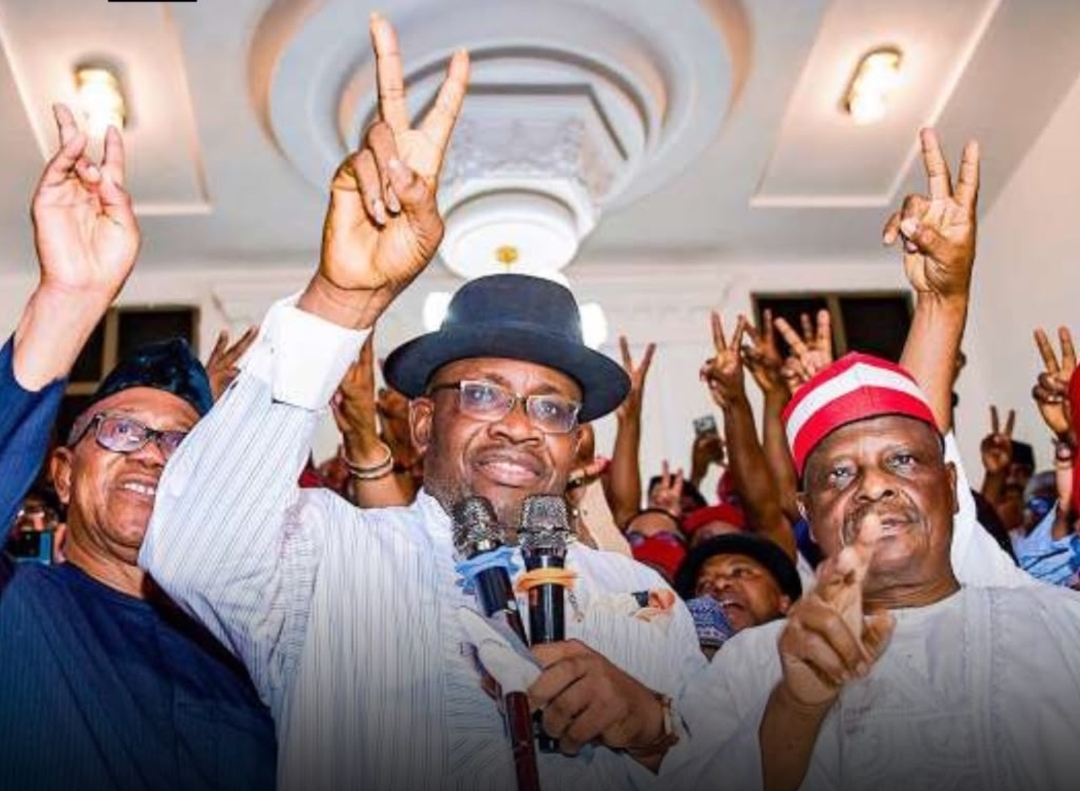
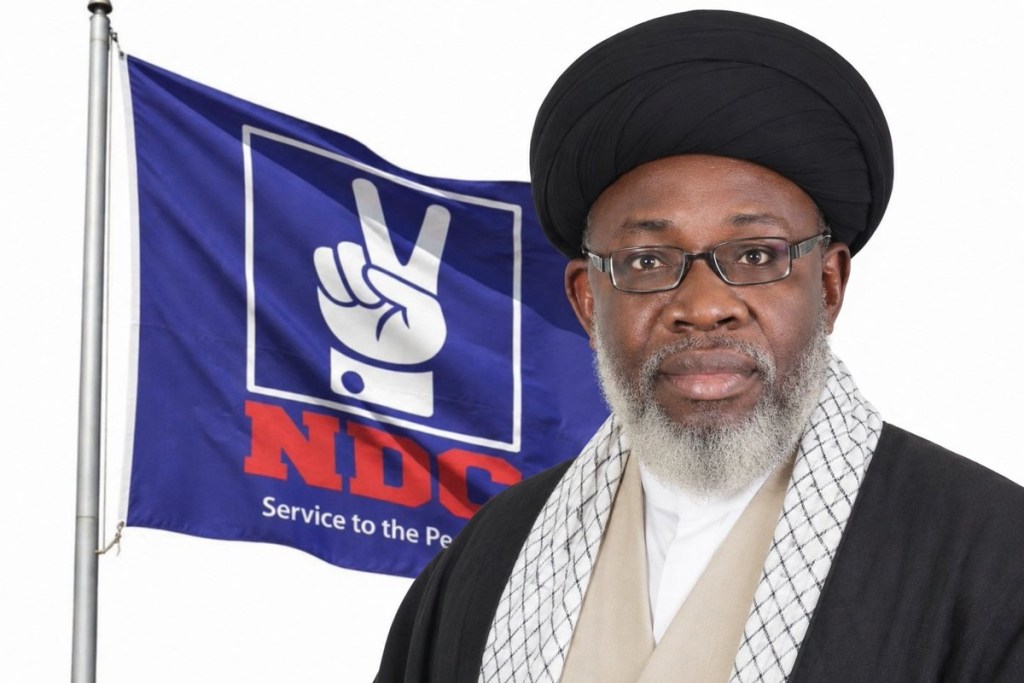
When Senator Henry Seriake Dickson stood before the microphones at the national convention of the newly minted Nigeria Democratic Congress (NDC) in Abuja, he spoke with the booming confidence of a seasoned political godfather. Proclaiming the NDC as his “baby” and welcoming opposition heavyweights into what he described as a new democratic dawn, the former Bayelsa State governor positioned himself as the ultimate orchestrator of a burgeoning anti-establishment alliance.
Yet, beneath the lofty rhetoric of national redemption lies a persistent, inconvenient reality. For all his efforts to present himself as an enlightened, national statesman on the floor of the Senate and within the national executive committees of party politics, Dickson remains haunted by the structural failures and administrative criticisms that defined his eight-year tenure in Creek Haven.
The political template used by his fiercest critics a decade ago is no longer just local history it has become the primary lens through which his current national leadership, institutional combativeness, and volatile alliances are judged.
The Local Genesis: The Akene Indictment
To understand the vulnerabilities in Dickson’s national armor, one must return to the bitter domestic feuds of Bayelsa State. The structural critique of Dickson’s leadership was pioneered most aggressively by Furoebi Akene, the former Commissioner for Lands and Survey under Dickson’s self-styled “Restoration Government.”
Akene, who resigned in frustration in late 2015, blew open the internal dynamics of that administration. Following a leaked, highly confrontational 2020 phone call triggered by Akene’s analytical essay, “Bayelsa’s Rising Debt Burden,” the core vulnerabilities of the Dickson legacy were laid bare before the public:
- The ₦1.7 Trillion Paradox: Akene pointed out that despite Bayelsa receiving over ₦1.7 trillion in revenue through federal allocations, 13% derivation funds, and economic bailouts during Dickson’s tenure, the state’s domestic debt surged from roughly ₦50 billion to astronomical heights.
- The “Glorified Village” Slum: Akene argued that the massive cash inflows did not match the concrete developmental output, famously characterizing the capital city of Yenagoa as remaining stagnant rather than evolving into a modern urban metropolis.
- The Toxic Ecosystem: Beyond numbers, Akene alleged an internal governance culture driven by sycophancy, heavy-handedness, and a complete lack of executive protection for independent-minded public officials who refused to bow to internal blackmail.
From the Creeks to the Red Chamber
This local template has followed Dickson directly into the National Assembly, where he represents Bayelsa West. As Chairman of the Senate Committee on Ecology and Climate Change, Dickson has attempted to pivot to intellectual policymaking and constitutional defense.
However, his past fiscal decisions have locked him into a perennially defensive posture. Whenever Dickson takes to the Senate floor to criticize federal spending, debt accumulation, or national economic mismanagement, political opponents waste no time pulling the conversation back to his record in Yenagoa.
His combative temperament has similarly transitioned from the executive chambers to the legislative floor. His public, high-profile clashes with Senate leadership such as his sharp procedural confrontation with Senate President Godswill Akpabio over a state of emergency debate for Rivers State mirror the exact unyielding, adversarial posture that Akene claimed alienated key cabinet members and allies a decade ago.
The NDC Gamble and the “Suitor” Friction
Recognizing that internal crises had left the People’s Democratic Party (PDP) effectively “in the ICU,” Dickson made a high-stakes gamble: building the Nigeria Democratic Congress (NDC) as a fresh vehicle to challenge the status quo ahead of the next major electoral cycle.
But building a new house does not mean your old habits stay behind. The exact criticisms leveled against his gubernatorial style have re-emerged within the NDC’s National Executive Committee (NEC). Critics have already accused him of trying to run the new party with the same unilateral, top-down authority that triggered early departures from his Bayelsa cabinet, forcing the Senator to publicly dismiss “manufactured stories” regarding internal funding scandals and the controversial sale of nomination forms.
More intriguing, however, is how Dickson’s polarizing reputation has interacted with the incoming opposition figures he is trying to court.
The Obi-Kwankwaso Dynamic
At the NDC convention, Dickson made waves by enthusiastically welcoming Peter Obi (leader of the “Obidient” movement) and Rabiu Musa Kwankwaso (leader of the Kwankwasiyya movement) into the fold. In a viral address, Dickson famously used a traditional marriage analogy, calling Obi and Kwankwaso “two of the biggest political brands in our nation” and declaring them “in-laws” whose courtship with the party was practically a done deal, leaving the formalities for later.
But this public display of camaraderie masks a profound underlying friction. Before rolling out the red carpet, Dickson was forced to issue stern, public warnings that the NDC was “not a mere placeholder” for the personal ambitions of Obi or Kwankwaso.
Furthermore, the ideological gap between Dickson and the passionate base of these movements remains stark:
- The Accountability Clash: The core appeal of Peter Obi’s movement is a fierce, almost puritanical demand for fiscal prudence, lean governance, and accountability. To many of these hyper-vigilant supporters, a political godfather facing unresolved questions over a ₦1.7 trillion revenue legacy is the antithesis of their political philosophy.
- The Godfather Dilemma: Kwankwaso’s movement relies heavily on tight-knit, ultra-loyal regional solidarity that fiercely resists external manipulation. Dickson’s warning to these movements to “shine your eyes” and respect the newly laid party structures has been interpreted by many in the grassroots as an attempt to assert old-guard dominance over an organic, anti-establishment wave.
The Verdict: Seriake Dickson remains one of the most formidable political strategists in Nigeria, capable of surviving bruising local battles and engineering entirely new national political platforms. But as he steps onto the national stage to lead a fragile coalition of disparate movements, he faces an enemy he cannot out-maneuver: his own track record. If the NDC is to truly challenge the status quo, its chief architect must first figure out how to outrun the long shadow of his past governance.

