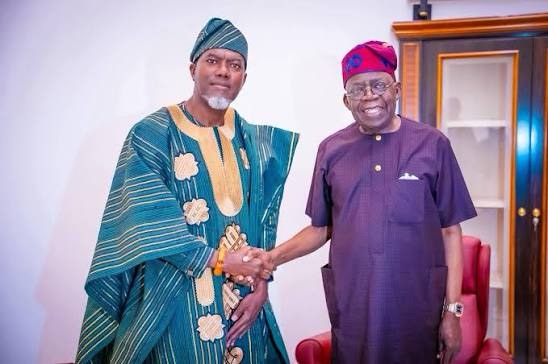
In the theatre of Nigerian political history, certain names dominate the marquee lights. Azikiwe got the airport. Awolowo got the statues. Ahmadu Bello got the reverence of an entire region. Tafawa Balewa got the tragedy of martyrdom. History, as usual, rewarded the dramatic and the deceased with suitable generosity. But lurking in the corridors of power, armed with elite connections, Savile Row suits, and the constitutional instincts of a man who had clearly read more than one law book, was Remilekun Fani-Kayode one of the First Republic's most sophisticated political operators, and one of its most thoroughly forgotten. Today, the Fani-Kayode name conjures images of fiery television appearances, combustible social media dispatches, and the particular rhetorical energy his son Femi brings to every available platform. But long before hashtags became a substitute for statesmanship, the elder Fani-Kayode was doing something considerably more difficult: trying to hold Nigeria together through elite negotiation in a federation that was, structurally speaking, a hostile inheritance dispute among suspicious cousins. He failed, as did everyone else. But the question he was asking how do you keep Nigeria together without anyone feeling cheated remains the one question no Nigerian government has successfully answered since independence.
Punching Down is Not a Policy by Lawson Akhigbe
PM Kier Starmer As of June 29, 2026, the 1824 Vagrancy Act has officially been repealed by the Labour government led by Kier Starmer. For over two centuries, this archaic law did something truly remarkable in its cruelty: it made the catastrophic misfortune of having nowhere to live a literal crime. Under the Act, sleeping …
Continue reading "Punching Down is Not a Policy by Lawson Akhigbe"
The Republic of Impunity: How Nigeria Rewards Rule-Breakers and Punishes Accountability By Lawson Akhigbe
Nigeria's culture of impunity, where laws are treated as optional and accountability is viewed as unnecessary, is a significant obstacle to its development. Despite a conviction by the Supreme Court in 1997 for a serious criminal offence, Bello Magaji was never imprisoned. He was instead pardoned by President Goodluck Jonathan and later appointed as Dean of the Faculty of Law at the American University of Nigeria. This case highlights the arbitrary nature of the legal system in Nigeria, where convictions are often disregarded and individuals with criminal records can rise to high positions.
The Ghost of Governance Past: How NDCโs Seriake Dicksonโs Bayelsa Legacy Shadows His New Political Frontier by Lawson Akhigbe
Henry Seriake Dickson When Senator Henry Seriake Dickson stood before the microphones at the national convention of the newly minted Nigeria Democratic Congress (NDC) in Abuja, he spoke with the booming confidence of a seasoned political godfather. Proclaiming the NDC as his "baby" and welcoming opposition heavyweights into what he described as a new democratic …
Just Say the Word: Trumpโs Governing Method Is a Four-Decade Con Finally in the Oval Office By Lawson Akhigbe
There is an old saying, so old it has outlived the dogs it was originally about, that you cannot teach an old dog new tricks. The charitable reading of this proverb is that experience builds expertise. The less charitable, and far more accurate, reading is this: some animals find a thing that works and simply …