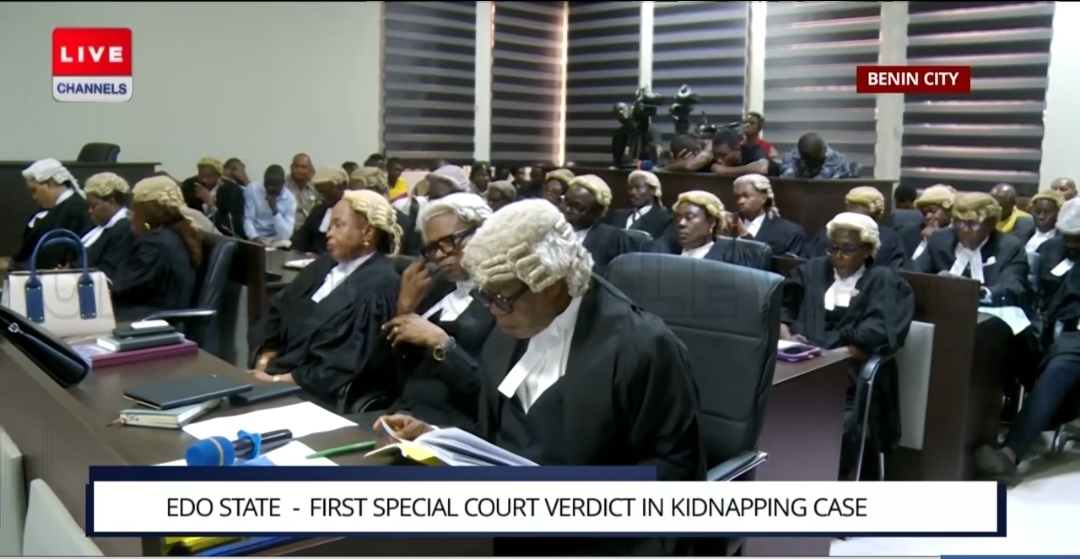
The intersection of law and politics in Nigeria is profound and longstanding. Lawyers have disproportionately shaped the country’s political landscape, from pre-independence nationalism to post-1999 democratic governance. Legal training emphasizing advocacy, constitutional interpretation, negotiation, evidence-based reasoning, and oratory equips practitioners exceptionally well for political roles. This pattern reflects both the profession’s prestige and Nigeria’s constitutional emphasis on legal expertise in governance.
Anarchism in judicial robes, by Owei Lakemfa
My mind raced back to British jurist, Lord Denning who famously declared in 1964: “Justice has no place in darkness or secrecy. When a judge sits on a case, he himself is on trial… If he is suspicious, biased, or unfair, then the judge is the one who is condemned in the eyes of public opinion.” But these words of wisdom seem not to have any meaning to Justice Lifu, shockingly, a former lecturer of Public and International Law, University of Ibadan. For me, what was more distressing was that despite the uproar, Justice Lifu seemed oblivious of the damage he had done to the body polity, the judiciary and his thirty five years post-call to bar history.
“If you cannot afford an attorney, one will be appointed to you,” Gideon v. Wainwright
If you cannot afford an attorney, one will be appointed to you
The Changing Face of Justice: A Deep Dive into Nigeria’s Judicial Funding Reforms (2024–2026) by Lawson Akhigbe
Nigeria has finally built the legal architecture for a self-sufficient judiciary. The challenge for the remainder of 2026 and beyond is ensuring fiscal discipline. With the judiciary now managing its own billions, the public is shifting its focus from "Why is the court broke?" to "How transparently is the court spending our money?" For the first time in history, the Nigerian judiciary has the tools to be truly independent, now, it just needs to prove it can manage them.
Independent and Unaccountable: A New Code for Nigeria’s Judiciary by Chidi Anselm Odinkalu
Among the doctrines that underpin the legal process in Nigeria, few are as profound and pervasive as judicial independence, but no doctrine in the ecosystem of the law rivals its elusiveness. The idea is ubiquitous in the syllabus of every programme leading to the award of a degree in law, in political science or public …