


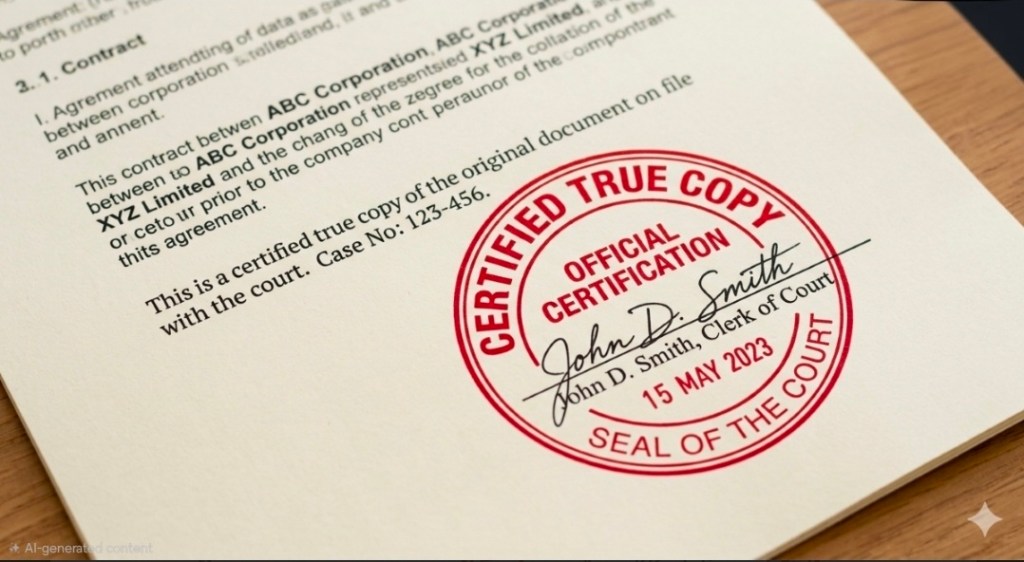
A Certified True Copy (CTC) is an officially certified duplicate of an original document kept in court records or government custody. In Nigeria, CTCs are commonly required for court appeals, land matters, visa applications, verification processes and legal transactions involving public documents.
Documents such as court judgments, affidavits, Certificates of Occupancy, sworn declarations and other public records are often requested as Certified True Copies because ordinary photocopies may not be legally recognised in official proceedings.
In this article, Tribune Online explains the cost and process of obtaining a Certified True Copy at the High Court in Nigeria.
CTC fees are usually charged per page
The cost of obtaining a Certified True Copy is commonly calculated per page, also known as folio charges, at the court registry. Depending on the court, document type and state judiciary system, the fee may range from about N100 to N500 per page.
Longer documents such as judgments and land documents may therefore cost more because charges increase with the number of pages requested and the amounts are usually arbitrarily set by officials.
Some courts now also process CTC requests digitally through online judiciary platforms where folio c are generated automatically.The National Industrial Court also provides online CTC application and folio payment systems.
Payment is made through official court channels
Applicants are generally expected to pay through the court’s designated revenue account or approved electronic payment platforms instead of making direct cash payments to court staff. Courts now use Remita and other government-approved payment systems for judiciary fees and document certification payments. After payment, applicants are usually issued receipts required for processing the document.
The document must carry the court stamp and registrar’s signature
For a Certified True Copy to be valid, it must have the official certification stamp of the court together with the signature, name and designation of the authorised registrar or public officer. Under Nigerian evidence law, certification confirms that the copied document matches the original record kept in official custody.
Applicants usually submit a written request
Applicants are required to submit an application letter or request form at the court registry before the CTC can be processed. The request usually contains details such as the suit number, names of parties involved, date of judgment or document description. Registry officials then retrieve the original file before calculating the certification fees.
Processing time may vary
Processing time often depends on the court, availability of records and the volume of applications at the registry.
Simple documents may sometimes be certified within the same day, while older case files or lengthy judgments may take several working days before completion.
Applicants are usually advised to keep all payment receipts and acknowledgement slips until collection is completed.

