

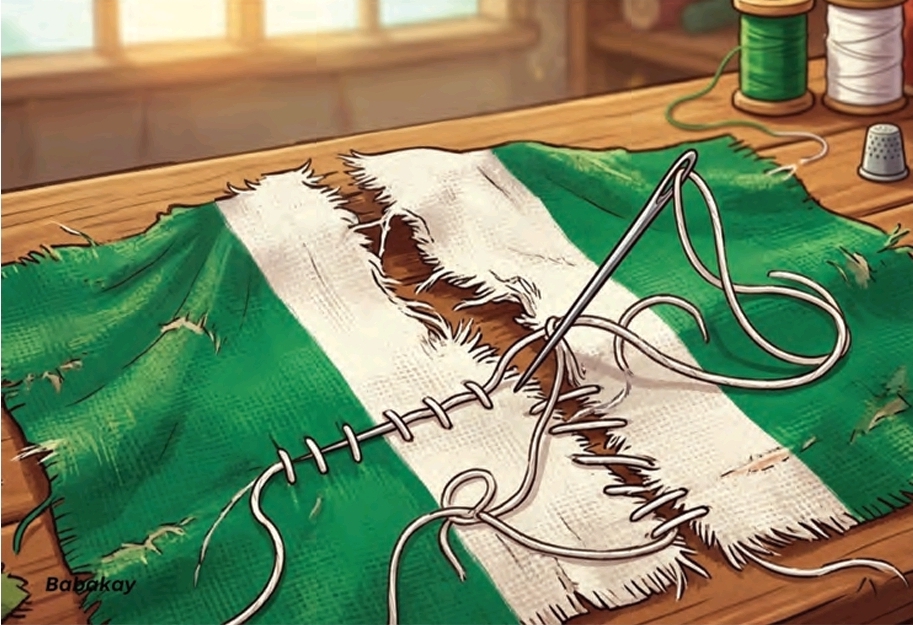
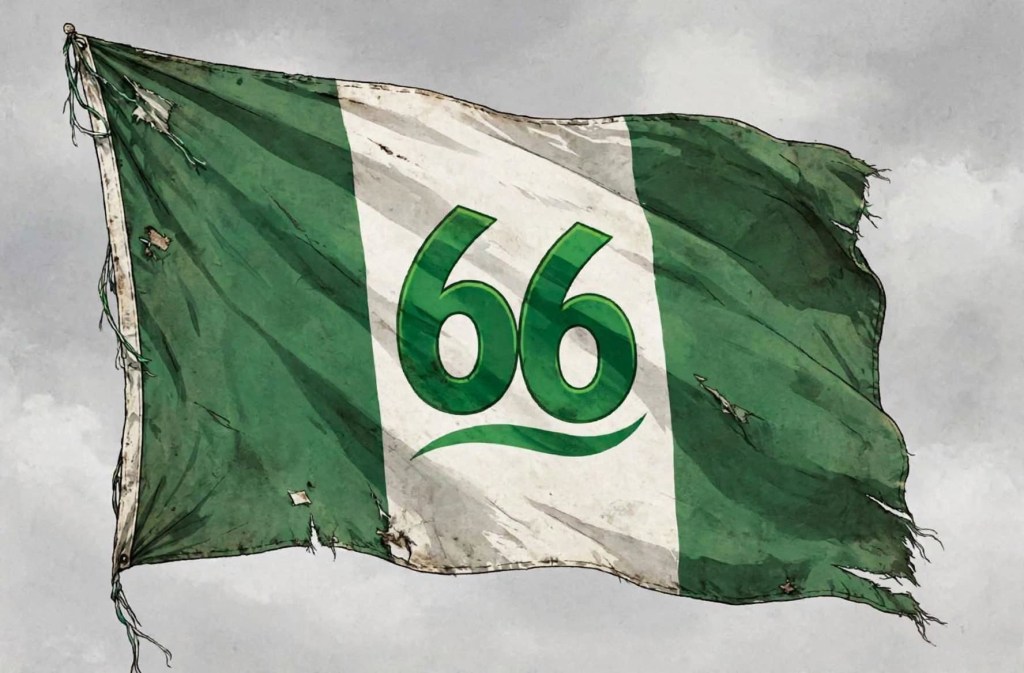
Nigeria turns 66 today, and the mood is not celebratory. Sixty-six years is long enough for a nation to have settled into itself. This one still feels suspended between promise and disappointment.
The country’s history explains some of that exhaustion. From the ceremonial optimism of the First Republic to the violent ruptures of military rule, from a civil war that nearly ended the union to two uncertain returns to democracy, Nigeria has spent much of six decades starting over. The Fourth Republic has now outlasted every other, but stability on the calendar has not delivered stability on the ground.
Consider power supply. Sixty-six years on, the country still cannot generate and distribute beyond 5,000 megawatts with any consistency, a capacity barely sufficient for a mid-sized city, let alone Africa’s most populous nation. Billions of naira have gone into the sector under successive governments, and the private generator remains the country’s real national grid.
We have said on this page before that Nigerians who fuel their own generators every day are entitled to a public accounting of what successive administrations have actually spent on the grid against what has been added to it. That accounting has never come, and without it, the next set of budget lines for power will be as hard to trust as the last.
Insecurity tells a harsher story. Between 2006 and 2021, more than 169,000 Nigerians lost their lives to violence linked to Boko Haram, banditry, farmer-herder clashes and state abuses, a toll that exceeds the death count of the civil war the country fought to stay one nation. The killing has not slowed. In the past three months alone, more than 800 Nigerians have been kidnapped in a series of raids: 47 farmers seized in Niger State’s Mariga council area, with a ransom of N2 million demanded for each; 40 women taken from Yargada village in Zamfara; 18 travellers abducted on the Adoka-Ankpa road on their way to a burial. These are not isolated tragedies. They are a pattern the state has failed to break.
None of this excuses inaction. The abductions of the past three months alone demand more than statements of concern from security chiefs. They demand rural policing that reaches Mariga and Yargada village as readily as it reaches Abuja, and a ransom economy that the state treats as the emergency it has become, not a recurring news cycle. Citizens should not have to wait another 66 years for the state to show up where they actually live.
The country heads into general elections next year still waiting for the free and fair contest that every cycle promises and few deliver. Vote-buying, intimidation and endless litigation have become as routine as the ballot itself. Worse, 66 years after independence, tribe, region and religion still decide more elections than manifestos do, and the country’s leaders have done little to make Nigerians see one another as Nigerians first.
Corruption remains the base rot beneath every other failure. By one estimate, Nigeria had lost more than $400 billion to graft from independence to 2012 alone, money that could have built railways, schools, hospitals and factories rather than private fortunes. Power failures, insecurity and poverty all draw from this same well.
Chinua Achebe was writing about a country barely two decades old when he diagnosed leadership, not resources or character, as Nigeria’s real trouble. Forty years on, that diagnosis has aged worse than it should have. The election cycle ahead offers another chance to test whether the political class has absorbed the lesson, but recruitment into public office remains dominated by money and godfathers rather than competence, with a judiciary too often willing to bless the outcome regardless of the process. Until that changes, elections will keep producing office holders rather than leaders.
The anniversary is not without grounds for hope. Nollywood and Afrobeats have carried Nigerian culture to audiences the country could not have imagined at independence, with Davido, Wizkid and Burna Boy filling stadiums across Europe and Nigerian films finding a home on global streaming platforms. Lagos and Abuja have produced financial technology companies that now dominate the continent’s digital payments and lending markets, built by entrepreneurs younger than the Fourth Republic itself.
More than 60 per cent of Nigeria’s population is under 25, a demographic weight that ought to be the country’s greatest asset. It could just as easily become its greatest liability. Youth unemployment has pushed millions toward crime, fraud and emigration, and the same energy that builds start-ups can destabilise a nation that offers it no outlet. Regional platforms such as the Economic Community of West African States and the African Continental Free Trade Area offer Nigeria room to lead on the strength of its market size and cultural weight alone. But leadership abroad is difficult to sustain when governance, infrastructure and security remain unsettled at home.
This newspaper will not write Nigeria off. A country whose citizens excel wherever they are given a functioning system to work within has not run out of potential; it has run out of excuses. Sixty-six years is long enough to have learned every lesson this nation needed. The only question left is whether its leaders will finally apply them.

