When the FCT Became a Personal Fiefdom: Wike, His Underlings, and the Quiet Death of Oversight by Lawson Akhigbe
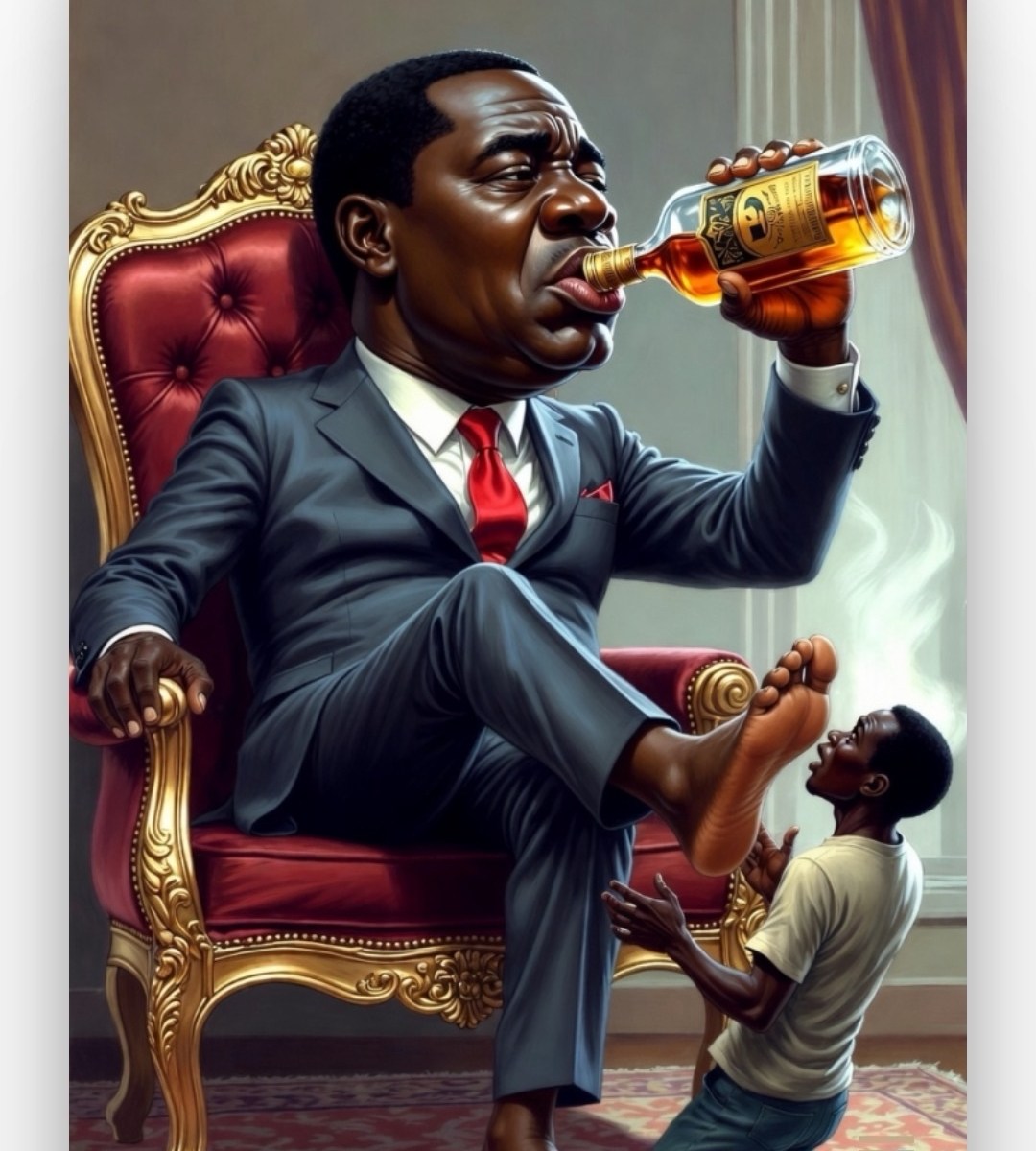
This is not merely a personality clash. It is a blot on the democratic experiment. It reveals how thin the democratic impulse runs in the organs of government and the people who staff them. Effectively, the FCT is under non-democratic governance inside a country that still insists on calling itself a democracy. The Minister acts. The Senator is sidelined. The President remains serenely above the fray. The National Assembly discovers urgent business elsewhere. The circle is complete.

The Moths to the Flame: Why Do Populist Movements Always Attract Such “Enterprising” Characters? By Lawson Akhigbe

There is an eternal, almost Newtonian law of modern politics: wherever a politician loudly proclaims they are "standing up for the forgotten working man," you will inevitably find a discreet corner table in a private Mayfair club where someone is eagerly trying to launder foreign money.

Who Voted for Lord Denning? – When the Street Cross-Examined the Bench by Lawson Akhigbe

The slogan gained prominence in the aftermath of the Birmingham pub bombings and the subsequent conviction of six Irish men the now infamous Birmingham Six. Their case quickly became a lightning rod for allegations of coerced confessions, police misconduct, and a justice system more interested in closure than correctness.

ANDY BURNHAM MUST GIVE BRITAIN AN IDEOLOGY, NOT ANOTHER MANAGEMENT CONSULTANT’S POWERPOINT by Lawson Akhigbe

There was something important about Andy Burnham's intervention at Prime Minister's Questions. Not simply because of what he said, but because of what it appeared to recognise: Britain has not merely been badly governed. Britain has been travelling in the wrong ideological direction for decades.

Back to Basics, Rebranded: Burnham’s High Streets and the Politics of Looking Busy by Lawson Akhigbe

John Major's government never intended "Back to Basics" to become a punchline. Launched in 1993 as a pitch for moral and civic renewal, family values, personal responsibility, respect for the old certainties, it was retail politics in the purest sense: cheap to announce, easy to photograph, and entirely disconnected from the actual machinery of governing a mid-sized post-imperial economy adjusting to the ERM's wreckage. Section 28 sat quietly in the background as inherited scaffolding for this mood music, and the Education Act 1993's sex-education clauses supplied a fresh, deniable coat of paint. None of it required legislative heavy lifting. All of it signalled seriousness to an audience that wanted reassurance more than reform. The scheme collapsed, memorably, when half the cabinet turned out to be failing the basics they were instructed to return to.